
CALL TODAY for FREE In home consultation
SEND EMAIL
1995 East Norse Avenue
Cudahy, Wisconsin 53110
414-727-2524
4445 W Forest Home Avenue
Milwaukee, Wisconsin 53219
414-727-2525
2140 American Drive
Neenah, Wisconsin 54956
920-257-6060
65 Copeland Avenue
La Crosse, Wisconsin 54603
608-784-9980
Artistic Decorative Tiles can change the feel of a room before furniture or paint does. A blue-and-white floral panel brings movement to a quiet kitchen. A small, uneven mosaic catches light along a shower wall. The right choice depends on more than appearance; scale, finish, installation, and maintenance matter too.
Arts and Crafts designer William Morris offered a useful principle: “Have nothing in your houses that you do not know to be useful, or believe to be beautiful.” His words were not about modern tile shopping, but they capture the balance these surfaces demand. A striking tile should suit the room as well as delight the eye.
This guide explores ten standout styles, from hand-painted ceramics and encaustic patterns to sculptural relief and glass mosaics. Each has distinct strengths. Glossy finishes brighten dim corners, while textured surfaces add depth but may need more careful cleaning. Handmade pieces can have subtle variations. That is part of their charm, though not everyone wants irregular edges or shifting color.
There is no universal “best” tile. A vivid pattern can feel joyful in a sample and overwhelming across a large wall. The selections ahead consider visual character, practical use, and how each style might work in a real home. A little restraint helps. So does a sample.
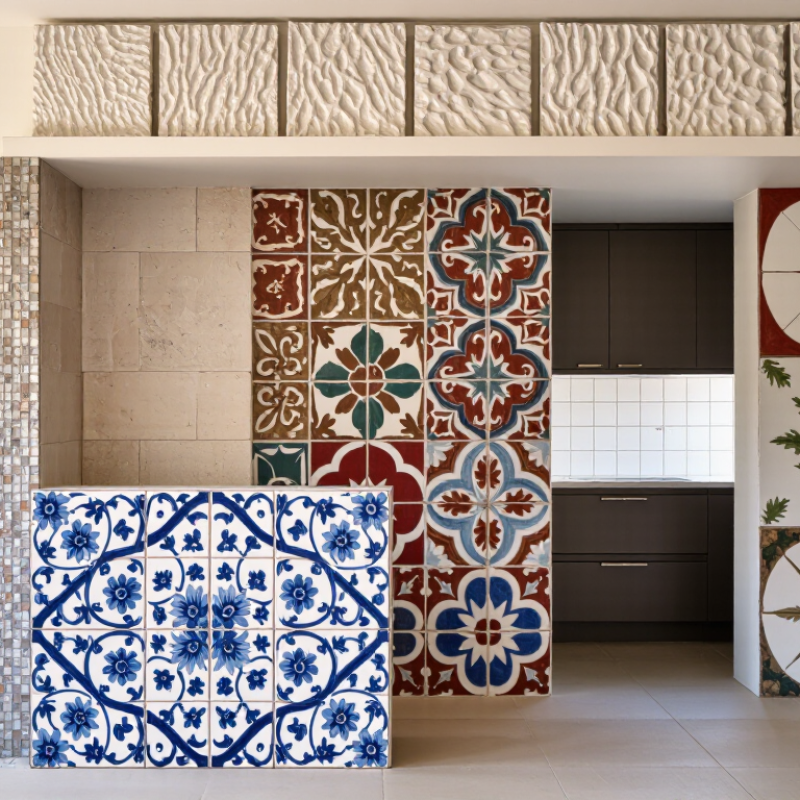
An artistic decorative tile is more than a patterned surface. It uses color, line, texture, and repetition with intention. Look closely. A hand-painted edge may wobble slightly, while raised ridges catch light across a wall. These details can add warmth, though irregularity without rhythm may simply look unfinished. A compelling design gives the eye somewhere to pause, then move.
Scale and setting matter. A bold motif can energize a small backsplash, but repeating it across a large room may feel busy. Grand View Research estimated the global ceramic tile market at about US$227.9 billion in 2023, with a projected 6.2% compound annual growth rate from 2024 to 2030. This market figure does not measure artistic quality; it does suggest a crowded field of finishes and styles. Distinctive tiles earn attention through thoughtful composition, not decoration alone.
Before choosing, view samples under the room’s actual lighting. Warm bulbs can soften a crisp blue glaze; daylight may reveal uneven color or surface variation. Check that the tile suits the room’s moisture, traffic, and cleaning needs, and consider how grout changes the pattern. A beautiful sample can disappoint when installed wall to wall. That risk is worth admitting.
Decorative tiles record how people made beauty practical. In Islamic architecture, artisans arranged small glazed pieces into star patterns and interlocking geometry. Their repeated shapes could cover a fountain wall or catch light above a doorway. Color carries memory. In China, kiln traditions produced durable glazed surfaces, while Spanish and Mexican Talavera traditions blended Iberian forms with local materials and craft. Later, Dutch Delft tiles often turned ordinary hearths into scenes of ships, animals, and daily life.
These traditions traveled through trade, migration, and changing tastes. A blue-and-white tile might suggest distant porcelain, while a hand-cut mosaic shows the patient labor behind a larger pattern. Yet “influence” is not always a neat story; styles borrowed, shifted, and sometimes lost their original meanings. That deserves a closer look. The Metropolitan Museum of Art’s collection records examples of Islamic tiles and Dutch tilework, offering useful object-level context for these changes.
Contemporary demand keeps the craft relevant, though it cannot explain its full history. Grand View Research’s 2024 ceramic-tile industry report estimated the global market at 207.7 billion U.S. dollars in 2023, with projected annual growth of 6.2% from 2024 to 2030. Those figures describe a market, not cultural value. In a room, tiny differences in glaze, edge, and firing can matter more than perfect repetition. A slightly uneven surface may be the detail that feels most human.
Artistic decorative tiles bring pattern, color, and texture to walls, floors, and smaller focal areas. Hand-painted tiles show brush marks and subtle color shifts; encaustic cement tiles create matte, graphic patterns. Zellige tiles have irregular edges and reflective glazes, while glass mosaics catch light in tiny, vivid pieces. Each style behaves differently. Check surface texture and maintenance needs before choosing.
Relief tiles add raised lines or shapes that cast small shadows. Geometric tiles use repeated forms for a crisp, ordered look; botanical designs bring leaves and flowers into a room. Delft-inspired blue-and-white tiles offer fine, illustrative scenes, while terrazzo-look tiles mix scattered chips into a lively surface. Metallic-glazed tiles add a soft gleam, though they can feel too bright across a large area.
Use detailed patterns where people can see them up close, such as a backsplash or shower niche. Larger, busier patterns may compete with other finishes. I’ve found that handmade variation can make a wall feel warmer, but it can also complicate alignment. Keep spare tiles for repairs. Always review a sample in the room’s actual light; screen colors can mislead.
| Tile Style | Typical Material or Technique | Distinctive Features | Common Applications | Practical Considerations |
|---|---|---|---|---|
| Hand-Painted Ceramic | Glazed ceramic decorated by hand before firing | Brushwork, varied motifs, and subtle differences between individual tiles | Kitchen backsplashes, bathroom walls, fireplace surrounds, and accent panels | Glazed surfaces are generally easy to clean; suitability for floors depends on the tile’s wear and slip ratings. |
| Encaustic Cement | Hydraulic cement with differently colored layers forming a pattern through the tile body | Matte finish, crisp geometric or floral designs, and colors that are not merely a surface glaze | Entryways, bathroom floors, kitchen floors, and feature walls | Typically porous and may require sealing; use a compatible cleaner and follow the maker’s care instructions. |
| Moroccan Zellige | Hand-cut, glazed terracotta tiles traditionally made in small pieces | Irregular edges and softly varied glaze tones create a reflective, textured surface | Backsplashes, shower walls, niches, and decorative wall panels | Variation in size, surface, and color is characteristic; careful setting helps maintain a balanced layout. |
| Porcelain Pattern Tile | Dense porcelain body, often with a printed or glazed decorative surface | Can reproduce detailed motifs, stone-like patterns, or bold graphic designs | Floors, wet-area walls, kitchens, and high-traffic spaces | Porcelain generally has low water absorption; check the specific product’s slip and wear suitability for the intended use. |
| Glass Mosaic | Small pieces of colored or clear glass, usually supplied on sheets | Bright color, light reflection, and fine detail suited to intricate compositions | Shower features, pool interiors, backsplashes, and decorative borders | Use an installation system suitable for glass; grout lines and surface texture affect cleaning and traction. |
| Relief or Three-Dimensional Tile | Ceramic, porcelain, or other tile formed with raised or recessed surfaces | Sculptural profiles create changing shadows and tactile visual interest | Interior feature walls, fireplace surrounds, and accent areas | Raised patterns can collect dust or residue, so consider cleanability before using in cooking or heavy-splash areas. |
| Terracotta Decorative Tile | Fired natural clay, sometimes glazed or hand-finished | Warm earth tones, natural variation, and a handcrafted appearance | Courtyards, kitchens, entryways, and rustic-style interiors | Unglazed terracotta is porous and commonly needs sealing; confirm whether the tile is suitable for the climate and location. |
| Quarry Tile | Dense, typically unglazed fired clay | Simple earthy color palette and a practical, understated surface | Kitchens, utility areas, patios, and traditional interiors | Often chosen for durability, but slip performance and weather suitability should be checked for the specific tile and installation. |
| Enamelled or Majolica-Style Tile | Glazed ceramic with opaque, colorful surface decoration | Rich colors, illustrative motifs, and a glossy or softly reflective finish | Decorative wall panels, backsplashes, bathrooms, and fireplace surrounds | Decorative glazes can vary in durability; check the product’s intended application before using on floors. |
| Geometric Mosaic Tile | Small ceramic, porcelain, stone, or glass pieces arranged in a repeating pattern | Repeating shapes—such as hexagons, diamonds, or chevrons—add rhythm and visual structure | Bathroom floors, shower floors, backsplashes, and borders | More grout joints can improve visual detail but require regular cleaning; confirm slip suitability for wet floors. |
Decorative tiles are shaped by material choice long before pattern appears. Clay supplies the body; feldspar helps it vitrify, while silica supports strength and stability. The European Commission’s Ceramic Manufacturing Industry reference document describes tile firing at roughly 1,000–1,300°C, depending on the body and process. That heat can deepen a glaze’s color, but it can also distort a delicate relief. Test pieces matter.
Surface techniques create very different effects. Hand-painted mineral pigments leave small variations around a brushstroke; screen printing repeats motifs cleanly, while digital inkjet can reproduce fine lines and layered colors. Cut glass or ceramic mosaics add visible grout lines and a tactile grid. The ACIMAC report World Production and Consumption of Ceramic Tiles estimated global tile output at about 15.6 billion square metres in 2023. That scale makes material efficiency important, yet a handmade tile may still contain slight differences that machines cannot imitate exactly. Small flaws matter. They can give a wall more character, though they may also make matching replacement pieces difficult.
Decorative tiles should suit the room’s daily demands, not just look striking in a sample photo. In a kitchen, glazed ceramic or porcelain can handle splashes and wipe clean; use patterned tile on a backsplash to add character without crowding the counters. Check grout color beside your cabinets. Pale grout can show cooking stains sooner than expected.
Bathrooms need surfaces that tolerate frequent moisture. For shower floors, choose small tiles with plenty of grout lines, and check that the tile is rated for the intended wet area. Floors also need suitable slip resistance. Ask the supplier or installer about the product’s specifications; a glossy finish that looks lovely on a wall may be a poor choice underfoot. Small rooms need restraint.
In entryways, durable porcelain with a subtle encaustic-style pattern can disguise everyday dust, though deep grooves may collect grit. For living spaces, consider a decorative border, hearth surround, or single feature wall rather than covering every surface. Look at full-size samples in the room’s actual light, then view them morning and evening. Light changes everything. One sample may appear warm near a window and oddly gray beneath ceiling lamps. It is worth admitting that even careful planning cannot make every pattern feel right once installed; order enough material from the same production batch and confirm the layout before work begins.
Water absorption is one practical factor when selecting ceramic tiles. The chart shows the upper absorption boundary for four pressed-tile groups classified by ISO 13006.
How to use this: Lower absorption is generally preferable in wet areas, but suitability also depends on slip resistance, installation, and local requirements. Decorative style alone does not determine whether a tile is appropriate for a space.
1995 E Norse Ave
Cudahy, WI 53110
Phone: 414-486-6249
Fax: 414-486-5728