
CALL TODAY for FREE In home consultation
SEND EMAIL
1995 East Norse Avenue
Cudahy, Wisconsin 53110
414-727-2524
4445 W Forest Home Avenue
Milwaukee, Wisconsin 53219
414-727-2525
2140 American Drive
Neenah, Wisconsin 54956
920-257-6060
65 Copeland Avenue
La Crosse, Wisconsin 54603
608-784-9980
An Automatic Pergola can change a patio’s daily rhythm. With a button press, adjustable louvers can open to daylight or close for shade. But a smooth product photo tells only part of the story. Motor noise, drainage, wind ratings, wiring, and installation access matter once the system is in use.
Architect Frank Lloyd Wright wrote, “The space within becomes the reality of the building.” His observation offers a useful lens for comparing pergolas: the goal is not just a moving roof, but a comfortable outdoor room. This guide examines ten systems through practical details, including control options, frame materials, customization, maintenance, and the conditions each design suits best. Features vary by model, so buyers should confirm specifications with manufacturers and installers.
Small details count.
A quiet motor may matter on a calm evening. A well-planned gutter can keep rain from spilling beside a doorway. And a beautiful structure may still disappoint if its footprint blocks a view or its controls feel confusing. Some comparisons make automation sound effortless; real patios are less tidy. Existing walls, uneven surfaces, and limited power access can complicate installation.
The following selections are intended as a starting point, not a universal ranking. Consider your climate, available space, budget, and willingness to maintain moving parts. The best Automatic Pergola is the one that fits the site—and the way you actually spend time outside.
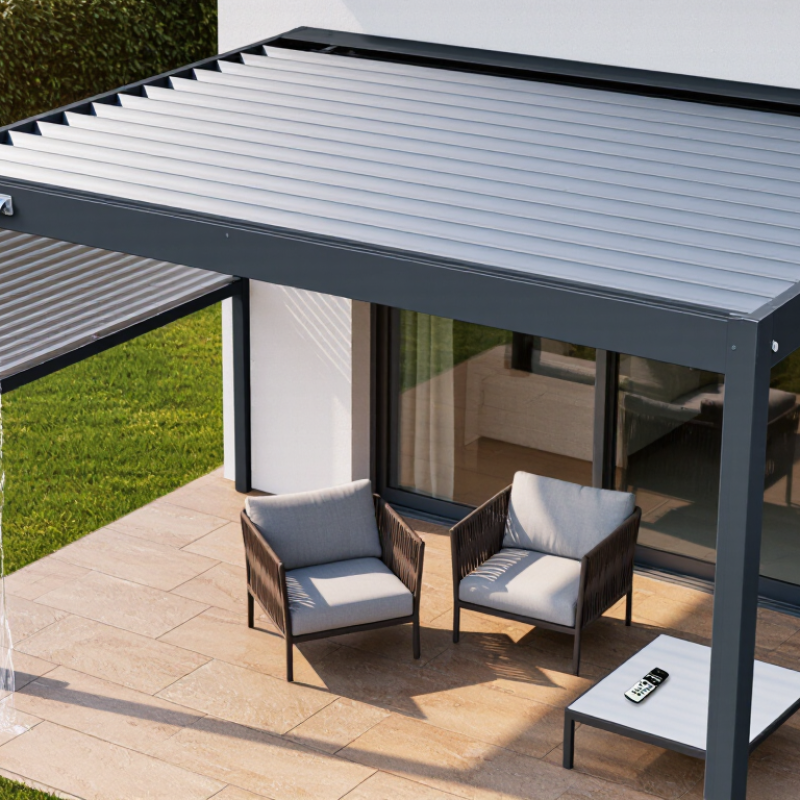
An automatic pergola system is an outdoor structure with motorized louvers or a retractable canopy. A switch, remote, or app adjusts the roof, changing how much sun and rain reach the space below. Some systems add wind or rain sensors that trigger movement automatically. The core parts are the frame, motor, moving roof, controls, and drainage path. It is more than a shade feature. It is a small mechanical system exposed to weather.
Installation details matter. The frame needs a suitable foundation, and water must drain away from the house and seating area. Check the stated wind limits, sensor settings, and manual operation method before choosing a system. Houzz’s 2024 U.S. Houzz & Home Study reported that 54% of surveyed homeowners renovated in 2023, with a median renovation spend of $24,000. That broad home-renovation figure is not pergola-specific, but it shows why clear planning matters. A polished roof can still disappoint if rain pools near a doorway.
Tips: Ask how the system behaves during a power outage, and test the controls before installation is complete. Keep moving parts accessible for cleaning and inspection. One detail is easy to overlook: sensors need careful placement, and no automatic setting can anticipate every gust or storm. That limitation deserves an honest conversation before purchase.
Automatic pergola systems use a motor to move roof louvers or a retractable canopy. A wall switch, remote, or phone app sends the command. The motor then adjusts the roof to admit sunlight or provide shade. Some systems include rain or wind sensors. A rain sensor may close the roof when drops reach its surface, while a wind sensor can trigger a protective response. Sensors do not replace supervision, though. Their placement and settings affect how well they work.
Inside a louvered model, linked slats rotate together on a drive mechanism. Small adjustments can change the light beneath the structure. With a retractable canopy, the motor pulls fabric along tracks instead. Many systems connect to household power, and some include a manual override for outages. Water still needs somewhere to go. Gutters and drainage channels guide runoff away, but blocked outlets can cause pooling. Even a well-designed system needs occasional checks of moving parts, fasteners, and drains.
Tips: Ask how the system behaves during a power cut, and test any manual control before relying on it. Keep sensor surfaces clear, especially after dusty or wet weather. Check the roof’s movement through its full range; a slight hesitation may signal debris or misalignment. Installation details matter, and I would not assume every sensor setting suits every patio.
Automatic pergola systems differ less by appearance than by how they handle sun, wind, and rain. A key distinction is the roof mechanism: rotating louvers adjust shade and airflow, while retractable canopies open a wider patch of sky. Check for manual controls, obstacle detection, and weather sensors. Sensors can respond to rain, but placement and calibration matter. Smart features help only when setup is clear.
Tips: Ask how the system behaves during a power outage. Check the drainage path, too. Water should not spill onto a doorway or seating area.
Also compare frame stiffness, finish quality, and motor noise. A sturdy frame matters when the roof moves, especially across a broad span. Ask what maintenance the moving parts need and whether replacement components remain available. Controls should be easy to reach, not buried in an app menu. Small details matter. No system is perfect: sensors may react late, and a quiet motor can still need service. Review the installation plan and operating limits before choosing a model.
A comparison of common automatic pergola system types, their operating principles, and the features that may matter most for different outdoor spaces.
| System | Roof or Shade Movement | Automation Options | Standout Feature | Best Suited To | Planning Consideration |
|---|---|---|---|---|---|
| Motorized louvered roof | Roof slats rotate to adjust shade and airflow; some designs also retract. | Remote control, wall switch, or smart-home control; rain and wind sensors may be available. | Adjustable slats provide more control over sunlight and ventilation than a fixed roof. | Patios used in changing sun and light-rain conditions. | Confirm drainage, closed-roof weather limits, and the structure’s rated wind conditions. |
| Retractable fabric-roof system | A motor extends or gathers a tensioned fabric canopy along tracks. | Remote or wall control; compatible systems may support sensors or scheduled operation. | Opens the overhead area fully when the canopy is retracted. | Spaces where users want both open sky and retractable shade. | Fabric performance depends on its specification; check care requirements and wind limits. |
| Motorized sliding-panel roof | Rigid roof panels slide along guides to open or cover the space. | Motorized open-and-close control; automation features depend on the system. | Uses solid panels rather than a fabric canopy. | Projects that prioritize a more substantial overhead covering. | Review panel storage space, drainage details, and the manufacturer’s operating limits. |
| Automatic roof with rain sensing | Typically uses motorized louvers or a retractable canopy. | A compatible rain sensor can trigger a preset response, such as closing the roof. | Can respond to detected rainfall without waiting for a manual command. | Owners who want weather-responsive operation. | A sensor does not make every system waterproof; verify the roof’s design and rain-management provisions. |
| Wind-aware motorized system | May use rotating louvers or a retractable canopy. | A compatible wind sensor can trigger a configured safe position or alert. | Automation can help respond to changing wind conditions. | Exposed sites where wind management is a key design concern. | Sensor behavior and operating thresholds vary; follow the system’s wind ratings and instructions. |
| Pergola with motorized side screens | The roof may be fixed or motorized; vertical screens lower or raise by motor. | Separate controls for screens and roof; some setups allow grouped or smart-home control. | Adjustable side screening helps manage low-angle sun and visual exposure. | Patios that need flexible side shade or added privacy. | Screen fabrics differ in visibility, airflow, and shade; screens may need to be raised in strong winds. |
| Integrated lighting and roof system | Motorized louvers or a retractable roof, paired with built-in lighting. | Roof and lights may use coordinated remote, wall, or smart controls. | Combines overhead adjustment with task or ambient lighting. | Outdoor dining and entertaining areas used after dark. | Check lighting dimming options, wiring access, and electrical suitability for outdoor use. |
| Smart-home compatible pergola | Roof movement depends on the selected louver or canopy design. | May integrate with a compatible hub or platform; functions vary by controller. | Can bring pergola controls into a broader home-automation setup. | Homes where users want centralized control or automation routines. | Confirm platform compatibility, connectivity requirements, and manual operation options. |
| Freestanding automatic pergola | Motorized louvers or a retractable canopy on an independently supported frame. | Remote or wall control; optional sensors depend on the chosen configuration. | Can be positioned away from the house rather than attached to its exterior. | Gardens, poolside areas, or detached outdoor seating zones. | Foundation design, site drainage, and local wind and snow requirements need careful review. |
| Wall-attached automatic pergola | Motorized louvers or a retractable canopy connected to the building. | May use remote, wall, sensor, or compatible smart controls. | Creates a covered transition between an indoor room and an outdoor patio. | Patios directly beside a house or another suitable structure. | Check attachment details, water management at the wall, and any required permits. |
Note: These are system categories, not ranked products. Sensors, controls, materials, weather performance, and available features vary by configuration and installation. Verify specifications and local building requirements before choosing a system.
Ten Leading Automatic Pergola Systems in 2026
Automatic pergolas now range from adjustable louvered roofs to retractable fabric canopies. The right choice depends on climate, patio layout, and how much control you want from a remote or weather sensor. Look closely at drainage channels, motor access, wind limits, and the clearance needed for moving parts. Small details matter.
The U.S. Department of Energy’s Energy Saver guidance says window awnings can reduce summer solar heat gain by up to 65 percent on south-facing windows and 77 percent on west-facing windows. Those figures apply to awnings, not pergolas, but they underline why shade placement deserves attention. Ask installers for site-specific shade studies and written wind and rain performance limits. Numbers without test conditions can mislead.
A useful comparison of ten leading systems should cover more than appearance: louver rotation, canopy retraction, rain sensing, manual backup, and replacement-part access all affect daily use. Stand beneath each type, if possible. Notice the sound of the motor and where water drains after a shower. One awkward truth: automation cannot fix poor placement. And sensors need checking. A polished showroom display rarely reveals how a system behaves in gusty weather or after years of exposure.
Illustrative automation capability scores based on a five-function checklist: motorized roof, rain response, wind response, app control, and integrated lighting. These are configuration examples, not independently tested product rankings.
Higher scores indicate more of the listed functions are included in the example configuration. Actual features vary by model, installation, and region.
Selecting an automatic pergola starts with the space, not the motor. Measure the patio, note nearby doors, and watch where afternoon sun falls. Choose a louvered or retractable canopy based on the shade and rain protection you need. Check the frame material, drainage path, wind rating, and required service clearance. A polished rendering can hide practical problems, like water dripping onto a doorway. That detail matters.
Before installation, confirm the base is level and strong enough for the system’s load. Follow the manufacturer’s instructions, and use a qualified installer when electrical connections or structural work are involved. Keep wiring protected from moisture. Test the controls and safety features before regular use. Leave access to the motor; repairs are harder when it is boxed in. Even careful plans can miss something.
Maintenance is simple, but it needs consistency. Clear leaves from gutters and drainage channels after storms. Wipe the frame with mild soap and water, and avoid abrasive cleaners that may damage its finish. Inspect fasteners, moving joints, and fabric for wear every few months. Listen for new rattles. Stop using the system if movement becomes uneven, then check the manual or arrange professional service. A small issue can become an expensive one.
1995 E Norse Ave
Cudahy, WI 53110
Phone: 414-486-6249
Fax: 414-486-5728