2026 How to Choose the Best Home Wheelchair for Your Needs?
Choosing the right home wheelchair can greatly impact daily life. A home wheelchair should offer comfort and functionality. Each person’s needs are different, making the choice personal and unique.
Consider your living space and mobility requirements. Some wheelchairs are more suitable for narrow hallways and doorways. Others may provide features for outdoor use as well. It's vital to evaluate your lifestyle before making a decision. Many users overlook the importance of proper fit and support. A wheelchair that fits well can enhance your independence and overall satisfaction.
Don't forget about accessories and customization. Options like cushions or adjustable armrests can make a significant difference. Researching and trying different models is important. You may find your ideal home wheelchair among various choices. A thoughtful approach will ensure that you make a decision aligned with your needs. Take time to understand what works best for you. Your choices can define your quality of life.

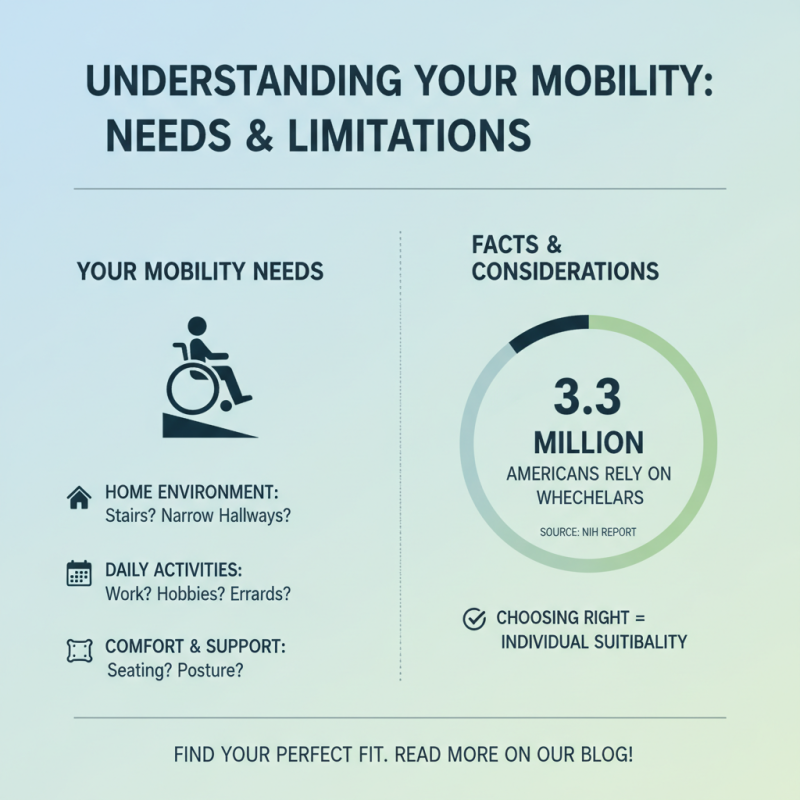
Understanding Your Mobility Needs and Limitations
Choosing the right home wheelchair requires a thorough understanding of your mobility needs and limitations. A report from the National Institute of Health (NIH) indicates that about 3.3 million Americans rely on wheelchairs for mobility. This statistic highlights the importance of selecting a wheelchair that suits individual requirements.
Begin by assessing your physical condition. Are your challenges temporary or permanent? Your daily activities will greatly influence your choice. A lightweight wheelchair may suit those who require help from caregivers. In contrast, a more robust model could be necessary for individuals with greater independence.
Next, consider your home environment. Narrow hallways and doorways can limit certain wheelchair styles. According to data from the World Health Organization (WHO), accessibility in living spaces is crucial. Outdated home designs may require adaptations that can complicate your mobility. Evaluating the space allows for a better fit, ensuring freedom of movement. It's important to reflect on both your current capabilities and future needs. Adapting to change is a process, and remaining flexible in your options can lead to better long-term satisfaction.
Types of Home Wheelchairs: Manual vs. Electric
When selecting a home wheelchair, understanding the distinction between manual and electric options is vital. According to a 2022 report by the National Institute of Health, approximately 64% of wheelchair users prefer manual wheelchairs for their simplicity and control. Manual wheelchairs offer a more active approach, allowing users to engage their upper body strength. They are typically lighter and more affordable. However, they require more physical effort, which may not be suitable for everyone.
On the other hand, electric wheelchairs provide enhanced comfort and independence. The same report indicates that electric models have become increasingly popular, with a 35% rise in user preference over the past five years. These wheelchairs offer features like speed control and tilt functions, catering to users with limited mobility. Yet, they often come with a higher price tag and require more maintenance. A study published in the Journal of Rehabilitation Research notes that electric chairs can be limited by battery life, causing frustration for users in need of consistent mobility.
Choosing the right type often involves personal circumstances. Preferences, lifestyle needs, and physical capabilities play a significant role. Users should reflect on their daily routines and consider the potential weight of the chair, ease of transport, and storage requirements. Home accessibility also influences this decision. It's essential to weigh these factors carefully to find a solution that enhances daily living.
2026 How to Choose the Best Home Wheelchair for Your Needs?
| Type |
Weight Capacity |
Weight |
Drive Type |
Features |
| Manual Wheelchair |
250 lbs |
40 lbs |
Human-powered |
Foldable, Compact |
| Electric Wheelchair |
300 lbs |
100 lbs |
Battery-powered |
Joystick Control, Comfort Seat |
| Lightweight Manual Wheelchair |
220 lbs |
30 lbs |
Human-powered |
Ultra-portable, Easy to Store |
| Heavy-Duty Electric Wheelchair |
400 lbs |
120 lbs |
Battery-powered |
Robust Build, Long Range |
Factors to Consider: Weight, Size, and Maneuverability
Choosing the perfect home wheelchair requires evaluating crucial factors such as weight, size, and maneuverability. Research shows that the average wheelchair user weighs between 140 to 250 pounds. A lightweight wheelchair, typically under 35 pounds, is vital for easy transportation and handling. Users looking for mobility in tight spaces should prioritize lightweight models. The balance between durability and ease of use is essential during selection.
Size also plays a critical role. A standard wheelchair has a width of approximately 24 inches. However, narrow wheelchairs can fit through tighter doorways. The right seat width can reduce pressure sores. A study by the National Mobility Equipment Dealers Association highlights this risk. Users must consider their comfort alongside a good fit.
Maneuverability is another key aspect. A wheelchair should turn smoothly in small areas. The wheel placement affects this significantly. Users admit to issues like getting stuck or struggling on ramps. Understanding personal needs can lead to better choices. Test-driving different models in various environments is advisable. This practical experience helps to identify potential shortcomings.
Assessing Comfort Features: Seat Design and Cushion Options
When selecting a home wheelchair, comfort is paramount. Assessing features like seat design and cushion options can significantly impact your daily experience. A study by the National Institute of Health highlights that an uncomfortable seat can lead to pressure sores in 30% of wheelchair users. Therefore, understanding various cushion types is essential.
Memory foam cushions are popular due to their ability to contour to the body. This support can reduce pressure points and enhance comfort. However, they may retain heat, causing discomfort for some users. Gel cushions also provide pressure relief, but are heavier and can be more challenging to maintain. It’s vital to test different types to find the best fit for individual needs.
The seat design is equally important. A well-contoured seat can promote good posture, which is crucial for long-term health. Unfortunately, many wheelchairs come with standard seats that may not suit every user. Custom options can offer better support but may not always be available. This gap in options can leave users feeling frustrated and uncomfortable, impacting their overall quality of life.
Assessing Comfort Features in Home Wheelchairs
Budgeting for Your Wheelchair: Costs and Insurance Options
Budgeting for a wheelchair is essential. The costs can vary widely based on type and features. A manual wheelchair can cost between $300 to $2,000, while electric wheelchairs typically range from $1,500 to $3,500. According to the National Institute on Disability, nearly 1.5 million Americans use wheelchairs.
Health insurance can reduce out-of-pocket expenses. Many plans cover wheelchairs under durable medical equipment. Medicare generally pays 80% of the approved cost. However, eligibility and coverage details differ. A significant gap exists; 30% of wheelchair users report difficulties getting insurance approval.
Additional costs include maintenance and repairs, which can add up quickly. Users might spend $100 annually on routine check-ups. Some may overlook these expenses during planning. Not fully understanding your needs can lead to poor choices.
Seeking professional advice is crucial. Evaluating all options creates a more accurate budget. Always ask questions and clarify coverage before committing.