
How to Choose the Best Recliner for Small Business?
Choosing a Recliner For Small Business means balancing comfort with the realities of a working space. A chair that feels inviting in a showroom may block a narrow aisle or crowd a reception desk. Measure the room, doorway, and chair’s full recline depth before buying. Small details matter. Industrial designer Charles Eames is often credited with saying, “The details are not the details. They make the design.” That principle fits commercial seating, where dimensions and daily use shape the customer experience.
Think about who will use the recliner and how often. A wellness studio may need supportive cushioning and easy-to-clean upholstery. A waiting area may benefit from sturdy arms that help guests sit down and stand up. Check the weight capacity, warranty terms, upholstery care instructions, and replacement-part availability. These details can affect long-term value more than a low purchase price. Still, no checklist predicts every issue. A chair can meet its listed dimensions yet feel oversized once people move around it.
This guide explores how to compare size, comfort, materials, durability, and cost for your business. It also considers practical trade-offs, including manual versus powered recline and the space needed for safe movement. The aim is not to find one perfect chair. It is to identify a well-suited option for your floor plan, customers, and budget—then check it in person when possible. A short trial may reveal what a product page cannot.
Assess Your Business Needs and How the Recliner Will Be Used
Before comparing recliners, define the job it needs to do in your business. A client waiting area, staff break room, and treatment space have different demands. Note who will use the chair, how often, and for how long. A few minutes of waiting may call for simple comfort and easy cleaning. Longer breaks require supportive cushioning and a footrest that stays steady. Small details matter.
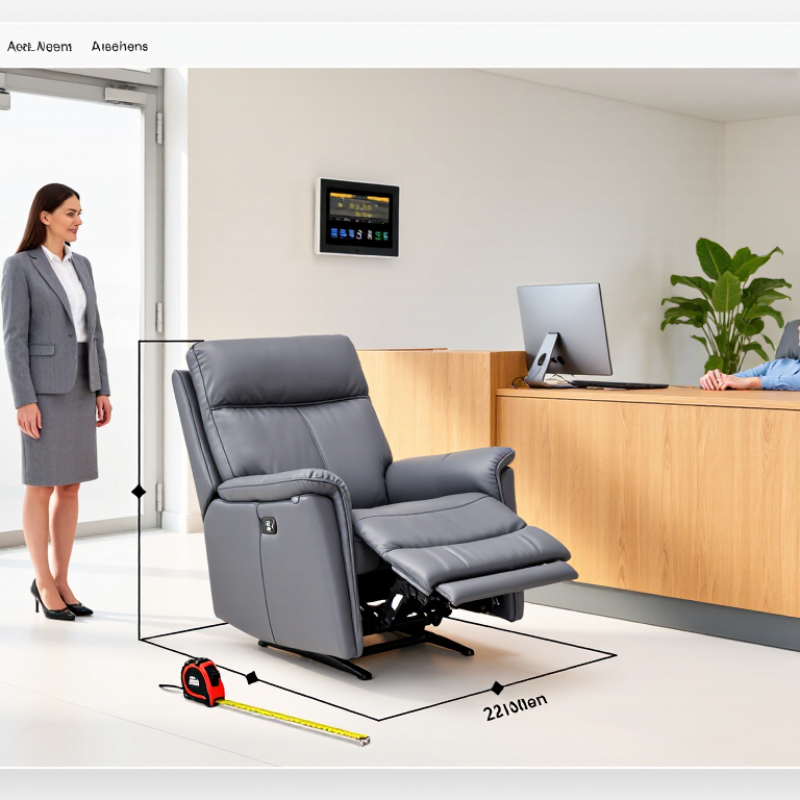
Measure the room with the recliner fully open, not just upright. Check its path through doorways, too. In a compact office, a chair that blocks a cabinet or walkway can quickly become a nuisance. Measure twice. Consider who will clean the upholstery and whether the chair’s controls are easy for different users to operate. For frequent use, inspect the frame, reclining mechanism, seams, and warranty terms. These details can reveal more than a plush showroom seat.
It is easy to overvalue appearance. A soft chair may feel wonderful during a short test, then offer poor support after an hour. Ask several likely users to try it in the intended position. Their feedback may not agree, which is useful rather than inconvenient. Record what feels comfortable, what is awkward, and what needs more thought before buying.
How to Choose the Best Recliner for Small Business? — Assess Your Business Needs and How the Recliner Will Be Used
Practical assessment guide: Match the chair to its intended setting, available floor space, expected use, and cleaning needs. Recommendations below are planning guidance; verify dimensions, weight capacity, care instructions, and warranty terms for each model before buying.
| Business Setting | Typical Use | What to Prioritize | Space and Layout Check | Material and Maintenance | Before You Buy |
|---|---|---|---|---|---|
| Therapy or wellness practice | One client at a time; seated sessions may last 30–90 minutes. | Supportive seating, smooth recline operation, stable armrests, and easy entry and exit. | Measure the chair upright and fully reclined. Keep a clear route around it for clients and staff. | Choose upholstery that can be cleaned using products suitable for the material and the practice’s hygiene routine. | Test the recline mechanism and confirm the chair’s listed dimensions and weight capacity meet the intended users’ needs. |
| Salon, spa, or waiting area | Short, intermittent rests by different visitors throughout the day. | Durable construction, simple controls, stable movement, and upholstery suited to frequent use. | Check the fully reclined footprint, nearby walkways, and clearance from walls and other furniture. | Consider wipeable, colorfast upholstery; follow the care instructions to avoid damaging the finish. | Ask how the upholstery and mechanism are covered by the warranty, and whether replacement parts are available. |
| Small office or staff break room | Occasional staff breaks, reading, or quiet recovery between tasks. | Comfort for the expected break length, a compact footprint, and straightforward operation. | Measure the doorway and delivery path as well as the room. Allow space for the footrest to extend. | Select a finish that fits the cleaning schedule and is appropriate for the room’s expected use. | Compare the chair’s overall width and depth with the available floor area; do not rely on the seat dimensions alone. |
| Client consultation or hospitality space | Occasional seating for visitors during meetings or appointments. | A professional appearance, firm support, and a recline function that is easy to control. | Check that reclining will not obstruct doors, circulation paths, or adjacent seating. | Choose a material that balances appearance with the cleaning methods used on site. | Consider whether a recliner suits the space’s purpose; a more upright chair may be easier for quick conversations. |
| Shared or high-turnover space | Frequent use by multiple people, with limited time for adjustment between users. | Robust frame and mechanism, simple adjustments, secure footrest movement, and accessible controls. | Allow enough room for safe movement and for staff to inspect or clean around the chair. | Favor materials with clear, practical care instructions and check that cleaning products are compatible. | Review the manufacturer’s stated user-weight limit, usage guidance, warranty exclusions, and maintenance requirements. |