
How to Choose the Best Carbon Padel Racket?

Choosing a carbon padel racket is not simply a matter of buying the lightest frame or the model with the boldest power claims. Carbon fiber can make a racket feel firm and responsive, but the result also depends on its shape, balance, weight, and core. These details show up on court: in the effort needed to defend a low ball, or the control you feel on a fast volley.

Padel coach and equipment educator Manu Martín’s practical message is to match a racket to your level and playing style before chasing headline specifications. A useful starting point is the frame shape. Round rackets often offer a more forgiving sweet spot, while diamond shapes tend to reward precise contact and confident attacking. Teardrop designs sit between those options. None is automatically best. Your comfort matters more than a label.

Small details matter. Check the racket’s balance and grip, then consider how its surface and foam feel during play. A stiff carbon face may suit players seeking a crisp response, yet it can feel demanding if timing is inconsistent. Softer materials may offer a more forgiving touch, though they do not guarantee better control. Try a racket if possible, and notice how your arm feels after a full session. Specs can guide you, but they cannot predict every player’s experience.

This guide explains how to compare carbon construction, shape, weight, and playing feel. It also points out a common trap: choosing advanced equipment before your technique is ready. A premium racket may look convincing in a product photo. On court, the right fit is the one you can swing confidently, repeatedly, and without forcing your game.
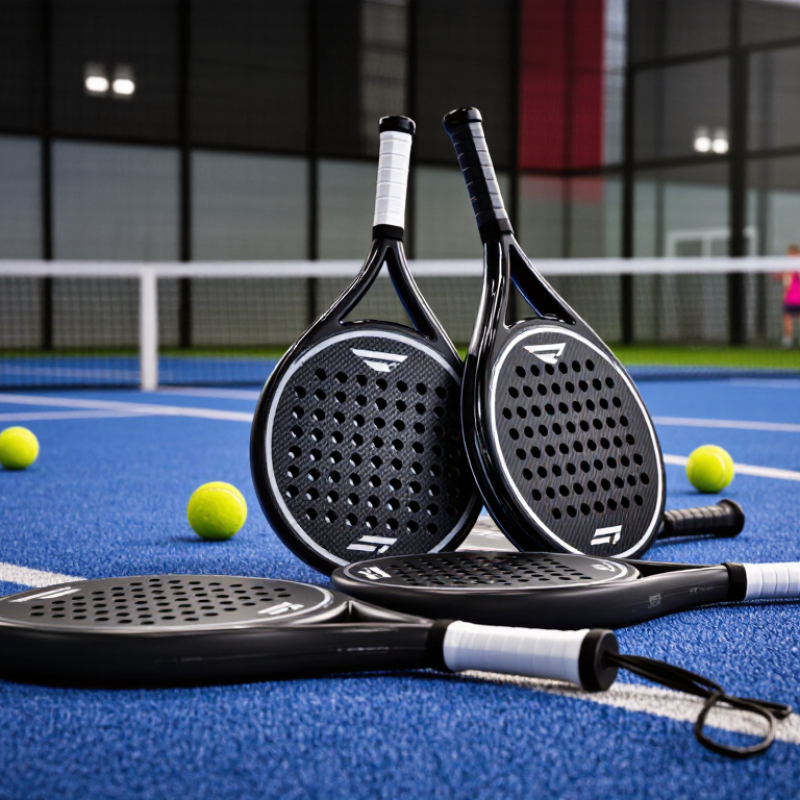
How to Choose the Best Carbon Padel Racket?

Understanding Carbon Fiber in Padel Rackets

Carbon fiber is not one fixed performance setting. Its effect depends on the cloth, resin, layer direction, and racket shape. In padel rackets, carbon sheets are usually combined with a foam or other core material. The face and core work together. A stiffer carbon construction can feel crisp and respond quickly to firm shots. It may also feel less forgiving when contact is off-center. That matters.

The word “carbon” alone tells you little about the racket’s overall feel. Weight, balance, core density, and surface texture all influence control and comfort. A carbon face paired with a softer core may feel different from a firm face-and-core combination. Product descriptions do not always explain these details clearly, which makes comparisons imperfect. If possible, hold the racket and try several controlled swings. Notice whether the head feels easy to move, and whether the handle stays comfortable during repeated strokes. Small comfort clues matter. A racket that feels impressive for one point may tire your arm during a longer session.

Tips: Check the listed weight and balance alongside the carbon description. Ask what the core is made from, and test the racket with gentle volleys and a few overhead shots. Choose the feel you can control, not just the stiffest face.

Assessing Your Skill Level and Playing Style

Assessing Your Skill Level and Playing Style

A carbon padel racket should match your current habits, not an imagined future game. The International Padel Federation’s 2024 World Padel Report estimates more than 30 million players worldwide. That broad player base includes very different abilities, so there is no single ideal racket. If you are learning, prioritize a forgiving sweet spot and manageable balance. A round head can make off-center contact less punishing. Notice where your shots land during a session, not just how powerful they feel.

Experienced players may prefer a diamond-shaped racket for attacking overheads, but extra head weight can slow defensive reactions. Do you build points patiently from the back, or step forward to finish at the net? A lighter, balanced frame may suit quick volleys and frequent direction changes. Stronger players who generate their own pace may value a firmer carbon face, though stiffness can feel unforgiving on mishits. Try several rackets during real rallies. Short test swings can mislead. I learned that the hard way. Track control, comfort, and arm fatigue over more than one session; your first impression may be wrong.

Comparing Carbon Face, Frame, and Core Materials

A carbon padel racket is not defined by its face alone. The face affects how the ball feels at contact and how directly energy returns. A stiffer carbon surface can feel crisp on hard drives, but may offer less comfort on off-center hits. Weave and layer count matter, yet they do not tell the whole story. The frame supports stability and can influence durability; some designs combine carbon with more flexible materials. A frame that feels solid in a shop may still feel demanding during a long match.

The core changes the experience, too. Softer foam often feels more forgiving and can help with touch shots, while firmer foam may feel more controlled on faster swings. These are tendencies, not guarantees. Shape, balance, thickness, and your swing all interact with the materials. I still find material labels easy to overread. A racket with a carbon face can feel quite different from another one with the same broad description.

Tips: Test a few rackets with similar balance, then compare volleys, lobs, and off-center contacts. Notice comfort after repeated hits, not just power on one clean shot. Ask about the core’s firmness and the frame’s construction. If you cannot test before buying, choose based on your usual playing pace and any comfort concerns. Small differences matter. So does fit.

Evaluating Racket Shape, Balance, Weight, and Grip

How to Choose the Best Carbon Padel Racket?

Shape and balance change how a racket feels in real rallies. A round head usually offers a broader sweet spot, helpful when contact drifts toward the frame. A diamond shape shifts weight toward the head, which can support attacking shots but feel slower at the net. Teardrop designs sit between these tendencies. The International Padel Federation’s 2024 World Padel Report estimates around 30 million players worldwide. That growing community brings more equipment choices, but a popular shape is not automatically right for your game. Test defensive blocks and overheads, not just a few warm-up hits.

Weight and grip matter over a full match. Many adult rackets weigh roughly 340–375 grams, though balance can make two rackets of equal weight feel quite different. A head-heavy model may tire your wrist sooner; a lighter one may feel easier to position but less stable on hard returns. Hold the racket with your usual grip and check that your fingers do not press tightly into your palm. Add an overgrip only if the handle feels too narrow or slips when your hand gets warm. Small detail. I would not treat these checks as a perfect formula: fatigue, technique, and even a damp grip can change the feel. Retest after several sessions before deciding.

How to Choose the Best Carbon Padel Racket? - Evaluating Racket Shape, Balance, Weight, and Grip

Factor Common options or typical specs How it affects play Best suited to What to check before buying
Shape: Round Usually has a more central sweet spot and a rounded head. Often feels forgiving on off-center contact and can make defensive placement easier. Beginners, control-focused players, and players who value consistency. Check that the racket still feels quick enough for volleys and overhead shots.
Shape: Teardrop A hybrid outline, commonly positioned between round and diamond shapes. Aims to balance maneuverability, control, and attacking power; the exact feel depends on balance and core construction too. Intermediate players seeking an all-court option. Compare the balance and weight, since shape alone does not determine how a racket plays.
Shape: Diamond Often has a higher sweet spot and a head shape designed for attacking play. Can provide leverage for powerful overhead shots, but may be less forgiving when contact is off-center. Experienced, attack-minded players with reliable timing. Test maneuverability and comfort; a high sweet spot may be harder to use consistently for some players.
Balance Low (more weight toward the handle), even, or high (more weight toward the head). Lower balance generally feels easier to maneuver; higher balance can add leverage but may feel slower in quick exchanges. Low: defensive or quick-hand players. Even: all-court play. High: players prioritizing overhead power. Balance figures and measurement methods can differ between manufacturers; compare the feel in hand when possible.
Weight Many adult padel rackets are in the approximate 350–375 g range; models outside this range are also available. A lighter racket can feel easier to move; a heavier one can feel more stable on impact but may require more effort to maneuver. Choose according to strength, comfort, playing frequency, and swing control rather than power alone. Check the listed weight and whether it includes accessories. Grip tape and overgrips add weight and can change the feel.
Grip Grip feel can be adjusted by replacing or adding overgrips; handle dimensions vary by model. A secure, comfortable grip supports control and helps limit unwanted slipping during play. All players, especially those who sweat heavily or experience hand discomfort. Hold the racket with a relaxed grip and check that your fingers fit comfortably. Add overgrips gradually, since extra layers increase handle size.
Carbon face Carbon fiber may be used in the face, with different constructions and layups across rackets. The feel and response depend on the full construction, including the core, face layup, and racket design; carbon alone does not guarantee more power or control. Players comparing materials alongside shape, balance, weight, and comfort. Look for clear construction details and prioritize a comfortable test hit over material claims alone.

Selection tip: Treat shape and material descriptions as general guidance. The racket’s balance, weight, core, and your own comfort all influence its feel.

Choosing Features That Fit Your Needs and Budget

Choosing a carbon padel racket is less about buying the highest specification and more about matching its feel to your game. The International Padel Federation’s 2023 World Padel Report estimated more than 25 million players worldwide, but growing popularity does not make every premium feature worthwhile. Start with the basics: racket weight, balance, shape, and core firmness. A head-heavy model can add power, yet may feel tiring during repeated volleys. A lighter, more evenly balanced racket can be easier to manoeuvre at the net. Try a few swings, if possible. Notice how the handle feels and whether the racket turns comfortably in your hand.

Carbon on the face can improve stiffness and response, but carbon content alone does not guarantee better control or durability. Check the frame construction, surface texture, and warranty, then compare these with your budget. Softer cores may feel more forgiving on off-centre hits; firmer ones often provide a more direct response. Your technique matters, too. A beginner may benefit more from a forgiving shape than from an expensive, demanding design. Even careful buyers can overvalue a carbon label. I would compare rackets in realistic sessions, not just shop swings, and accept that the perfect balance may take some experimenting.

How to Choose the Best Carbon Padel Racket: Match Weight to Your Needs and Budget

Racket weights are typical ranges, not fixed standards; actual weights vary by model and construction. Lighter rackets can feel easier to maneuver, while heavier ones may offer more stability. Try a racket before buying when possible, and compare carbon construction and other features within your budget.

ACCESS ABILITY Home Medical Store has a Beautiful showroom in Cudahy To Serve You!

Corporate Office And Store
Cudahy, Wisconsin

1995 E Norse Ave
Cudahy, WI 53110
Phone: 414-486-6249
Fax: 414-486-5728