
How to Choose the Best Toddler Tennis Shoes?
Choosing Toddler Tennis Shoes is less about bright colors and more about how a small foot moves. A toddler may sprint across a playground, stop suddenly, then climb a low step. Shoes should feel secure without squeezing the toes. Look for a roomy toe box, a flexible forefoot, and a heel that stays in place. Small details matter.
Sports podiatrist and footwear consultant Dr. Simon Bartold’s work can be distilled into this practical reminder: “Fit the foot; don’t force the foot into the shoe.” This is a paraphrase, not a verbatim quotation. It points to a useful starting place: measure both feet, since one may be longer, and check the fit while your child is standing. Leave a little growing room, but not so much that the shoe slips at the heel. That balance is easy to miss.
Materials and closures deserve a close look, too. A breathable upper can help during active play, while a grippy outsole may offer steadier steps on familiar surfaces. Choose laces, straps, or elastic closures that your child can manage safely. Then watch them walk and turn. Do they stumble? Do they pull at the shoe? Those signs deserve attention. No single design suits every toddler, and a popular brand is not proof of a good fit. This guide will compare practical features, explain what to check in a store, and note when a child’s persistent discomfort calls for professional advice. A little doubt is healthy; feet grow quickly.
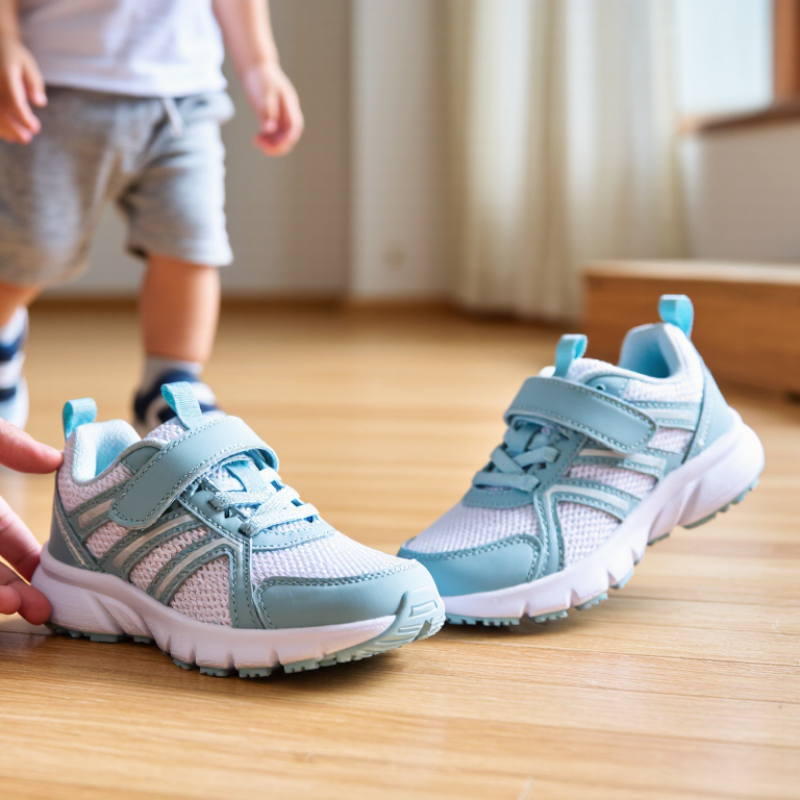
Understand Toddler Foot Growth and Tennis Shoe Needs
A toddler’s foot can outgrow a shoe before the shoe looks worn. The American Academy of Pediatrics’ HealthyChildren guidance recommends checking shoe fit every two to three months. That interval matters during fast growth, but it is only a prompt; inspect fit sooner if toes press the front or red marks remain after play. Measure both feet while your child stands, preferably late in the day. Feet can differ slightly. Use the longer one.
Tennis adds side-to-side stops, quick turns, and short bursts across hard courts. Look for a secure heel, a roomy toe box, and a sole that bends near the toes while resisting a twist through the middle. The American Orthopaedic Foot & Ankle Society advises choosing children’s shoes that fit comfortably from the start; toddlers should not have to “break in” painful footwear. Leave a little growing room, not a large gap that lets the foot slide. Small detail. It changes stability.
Try shoes with the socks your toddler will wear, then watch a few steps and gentle turns. Check for heel slipping, toe curling, or a stiff stride. A snug shoe may seem safer, but tight toes are not a training tool. I would recheck fit after a growth spurt, even if the calendar says it is early.
How to Choose the Best Toddler Tennis Shoes? - Understand Toddler Foot Growth and Tennis Shoe Needs
| What to assess | Toddler shoe guidance | How to check |
|---|---|---|
| Foot growth | Toddler feet grow at different rates, so age alone cannot determine shoe size. Recheck fit regularly; many families measure every 2–3 months and whenever shoes seem tight. | Measure both feet while the child is standing, and fit the larger foot. Check length and width rather than relying only on the size printed inside the shoe. |
| Toe space | Allow about 10–12 mm (roughly ⅜–½ inch) between the longest toe and the end of the shoe as a practical fitting guide. | With the child standing, feel for space in front of the longest toe. Make sure toes can spread and are not pressed together. |
| Width and shape | A roomy toe box can accommodate natural toe movement. The shoe should hold the foot securely without squeezing the sides or leaving the heel loose. | Look for bulging over the sole, red marks, or toes pressing against the upper. Compare both feet, since they may differ in size. |
| Court movement | For tennis or active court play, choose a secure fit and a stable sole that supports side-to-side movement. A general-purpose sneaker may not offer the same court-specific traction and support. | Have the child walk, turn, and take a few side steps. The heel should stay in place, and the shoe should not twist or slide excessively. |
| Outsole and surface | Match the outsole to the playing surface. Indoor courts may require non-marking soles; outdoor courts need a durable tread suitable for that surface. | Check the venue’s footwear rules. Avoid excessively worn tread, which can reduce grip. |
| Fastening and security | A secure fastening helps keep the foot from sliding. Hook-and-loop straps can be convenient for toddlers who are learning to manage shoes. | Fasten the shoe snugly without tightening it enough to cause pressure or discomfort. Recheck the fit after fastening. |
| Comfort and wear | Choose a lightweight, comfortable shoe that bends near the forefoot. New shoes should feel comfortable from the start rather than requiring a long break-in period. | Try shoes on with the socks the child will wear for play. Stop using them if they cause persistent rubbing, pain, or blisters. |
Fit varies by child and shoe design. If a child has ongoing foot pain, unusual walking changes, or a foot condition, seek advice from a pediatric health professional.