
CALL TODAY for FREE In home consultation
SEND EMAIL
1995 East Norse Avenue
Cudahy, Wisconsin 53110
414-727-2524
4445 W Forest Home Avenue
Milwaukee, Wisconsin 53219
414-727-2525
2140 American Drive
Neenah, Wisconsin 54956
920-257-6060
65 Copeland Avenue
La Crosse, Wisconsin 54603
608-784-9980
Choosing the right mobility van is more personal than comparing prices or counting seats. It affects daily independence, family routines, safety, and confidence on the road. A suitable van should fit the driver or passenger, not force the person to adapt uncomfortably.
Ralph Braun, founder of BraunAbility and a pioneer in accessible transportation, once said, “I wanted to be able to go where I wanted to go.” That simple goal still guides smart mobility decisions today. A mobility van may need a side-entry or rear-entry ramp, enough interior height, secure wheelchair restraints, and hand controls. Each feature should match real habits, such as entering from a narrow driveway or loading a power chair after shopping.
Start with an honest assessment of the user’s mobility needs. Measure the wheelchair, including its footrests and battery position. Check the ramp angle, doorway clearance, turning space, and transfer height. A van that looks spacious in a showroom may feel restrictive in a garage. Test it in realistic conditions. Park it on a slope. Fold the ramp. Secure the chair. Try the controls.
Budget matters, but the lowest purchase price may not be the lowest long-term cost. Maintenance, conversion quality, resale value, and local service support deserve equal attention. Certified dealers and experienced occupational therapists can provide useful guidance. Still, expert advice cannot replace personal testing. Some recommendations may sound perfect but fail in everyday use. The best choice is practical, safe, and comfortable enough for ordinary journeys, including the inconvenient ones.
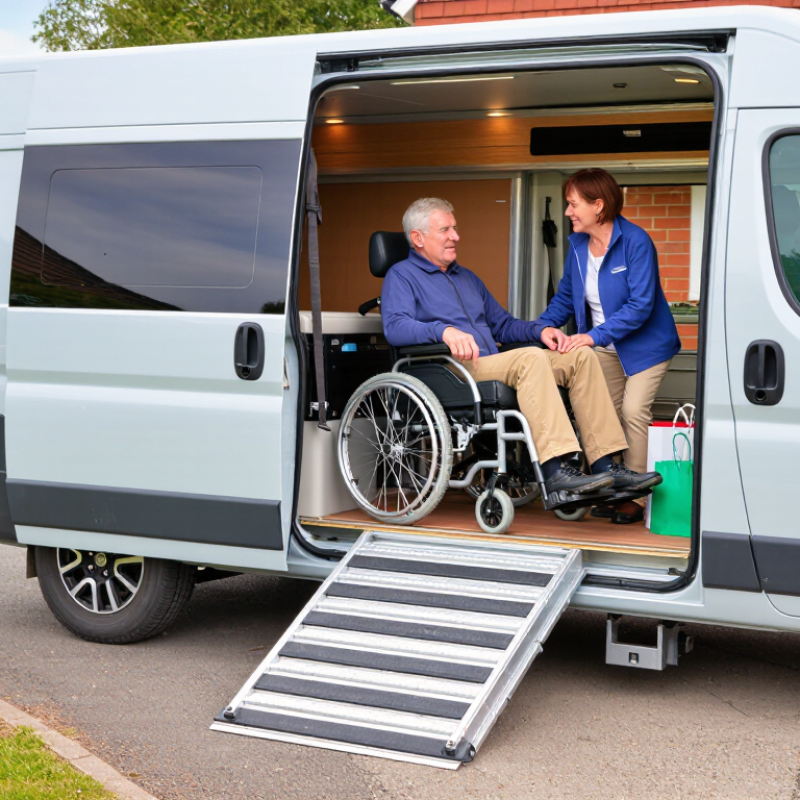
Defining your mobility needs is the most important step before choosing a mobility van. Start with the person’s actual routine, not an idealized plan. Will the vehicle carry a wheelchair, scooter, walking aid, or several passengers? Measure the mobility device carefully, including its height, width, turning space, and weight. A few centimeters can affect comfort and safe loading.
Think about daily use cases. A short urban trip needs easy parking and quick access. Longer journeys may require supportive seating, climate control, and extra storage. Consider who will drive, how often transfers happen, and whether assistance is available.
Door width, ramp angle, interior headroom, and secure restraint points deserve professional inspection. Try entering and exiting the vehicle several times. One test can reveal an awkward step that measurements miss. Needs may also change, which makes the choice less certain.
Tips: Write down three typical journeys and one difficult journey. Bring the actual mobility device for a practical assessment. Check loading time, turning space, and visibility from every seat. Ask an experienced mobility adviser to review the setup. Do not rely only on photographs. A vehicle may look spacious but feel restrictive inside. Revisiting your assumptions is useful, even when the first plan seems sensible.
How to Choose the Right Mobility Van?
The right van begins with the passenger, not the vehicle. Consider whether the user transfers independently, remains in a wheelchair, or needs caregiver support. A full-size van offers more cabin height and turning space. A compact van may suit narrow streets and smaller parking areas. Side-entry models often provide easier curbside loading, while rear-entry designs can simplify access in tight parking spaces.
Inspect the access features in real conditions. A powered ramp should deploy smoothly and support the user’s combined weight. Check its slope, surface grip, and storage position. A lift may help some passengers, but it usually needs more operating space. Test the door opening with winter clothing, footrests, and a caregiver nearby. Small clearances become frustrating quickly. I once focused too much on ramp length and overlooked the handrail position.
Interior layout affects safety and daily comfort. Measure the wheelchair’s length, width, and turning radius before choosing a floor plan. Forward-facing wheelchair positions can improve travel comfort and restraint access. Side-facing positions may create more usable space, but they are not suitable for every passenger. Look for adjustable seating, clear sightlines, and reachable controls. The driver should not twist around to communicate.
Ask a qualified mobility specialist to inspect the conversion and vehicle structure. Request written weight limits and maintenance requirements. A showroom can hide practical problems. Bring the actual wheelchair and practice entering, securing, and exiting. The best layout is not always the largest one. It is the one that works calmly on an ordinary morning.
Compare van types, access features, and interior layouts before selecting a mobility vehicle.
Best for everyday driving and smaller parking spaces. Usually suits a side-entry ramp, one wheelchair position, and limited standing room.
Offers more usable floor length for a wheelchair plus additional passenger seating. Side-entry access and manual or powered ramps are common layouts.
Provides the greatest interior volume, easier standing access, and more space for multiple wheelchair users or flexible seating configurations.
The chart uses representative midpoints from commonly published interior-dimension ranges for each van category. Actual dimensions vary by body style, roof height, seats, ramp system, and conversion design. Measure the wheelchair, turning path, and required transfer space before purchase.
A mobility van should protect its passenger before adding convenience. The World Health Organization’s 2022 Global Report on Health Equity for Persons with Disabilities estimates that 1.3 billion people experience significant disability worldwide. That figure reminds buyers to assess real daily needs, not only vehicle appearance. Check the ramp angle, doorway width, head clearance, and securement points. Standards such as ISO 10542 and RESNA WC18 address wheelchair tie-down and occupant restraint performance. Ask for documented compliance, not vague promises.
Comfort also affects safety. A passenger who feels cramped may adjust position while moving. Look for supportive seating, smooth lift operation, low cabin noise, and climate control reaching the rear area. The CDC reports that millions of older adults receive treatment for fall injuries each year. A bright step area, stable handrails, and non-slip flooring can reduce avoidable risks. In practice, test the van with the actual wheelchair and user. A lower step is not automatically safer. I have learned that small height differences can change confidence significantly.
Tips: Measure the chair with cushions, footrests, and bags attached. Test loading on a slope, if possible. Confirm that restraints are easy to reach and release. Let the passenger sit through a longer drive. A short showroom visit can hide pressure points, vibration, or poor visibility. Review maintenance records and accessibility inspections. Safety is measurable, but comfort still needs honest reflection.
The purchase price is only the entry ticket. A reliable budget separates the van, conversion, taxes, financing, and delivery. Conversion costs depend on ramp style, lowered flooring, seating changes, and hand controls. Request an itemized quotation. Do not accept one total figure without specifications.
The 2024 AAA Your Driving Costs report places average annual vehicle ownership at $12,297 for a new vehicle. Its estimated maintenance, repair, and tire cost reaches $1,195 annually. These figures are useful benchmarks, but mobility vans may cost more because of heavier equipment and specialized repairs.
My first estimate was too optimistic. I ignored ramp servicing and replacement batteries.
Fuel deserves its own calculation. The U.S. Energy Information Administration reported an average regular gasoline price of $3.52 per gallon in 2023. At 15,000 miles, an 18-mpg van would use about 833 gallons, or roughly $2,932 annually. Your result may differ sharply. Record real fuel use for three months.
Include insurance, registration, parking, inspection, and emergency transport. The Bureau of Labor Statistics also tracks rising vehicle repair costs, so leave a reserve of at least 10 percent. Small omissions become expensive.
A five-year worksheet should show purchase, conversion, annual running costs, and likely resale value. Ask a qualified mobility-vehicle evaluator to inspect fit, access, and equipment condition before payment.
How to Choose the Right Mobility Van?
Inspect, Test, and Select the Best Mobility Van for Your Needs
Start with a careful inspection before discussing price or appearance. Check the ramp or lift for smooth movement, stable handrails, and secure locking points. Examine wheelchair tie-downs, floor anchors, door seals, and interior lighting. Look beneath the van for fluid leaks, damaged wiring, or uneven wear on the tires. Measure the entry height and cabin width with your actual wheelchair.
Small details matter.
During a test drive, test more than acceleration. Try braking gently and firmly on a quiet road. Listen for rattles around the lift, ramp, and cabin panels. Check visibility when reversing and turning through a narrow space. Ask a passenger to test the controls while you remain seated. The van should feel predictable, not merely powerful.
I once underestimated how much turning space a larger vehicle needed. That mistake made everyday parking stressful. Have a qualified mobility technician inspect the conversion and explain its maintenance history. Request a demonstration of emergency release features and restraint operation. Compare seating comfort after at least thirty minutes, not five. A suitable van should support safe transfers, steady posture, and easy control access. If the steering wheel, pedals, or switches feel awkward, do not ignore that warning.
1995 E Norse Ave
Cudahy, WI 53110
Phone: 414-486-6249
Fax: 414-486-5728