
Top 10 Most Popular Canadian Cigarette Brands?

A list of the most popular top 10 canadian cigarettes can look simple, but popularity depends on what is measured. Sales, brand recognition, regional availability, and historical familiarity can produce different results. This introduction frames the ranking as a guide to brands discussed in Canada, not a definitive measure of quality or safety. The list should be read with care. Market data changes, and public rankings do not always disclose their methods.

The brands ahead may be familiar names, yet familiarity is not a health claim. The World Health Organization has repeatedly warned about tobacco’s serious risks. Former WHO Director-General Dr. Margaret Chan put it plainly: “Tobacco is the only legal drug that kills many of its users when used exactly as intended by manufacturers.” That warning matters more than any position on a list. Cigarette use carries substantial health risks, and no brand should be presented as a safer choice. This article will compare recognition and market context, while noting where reliable, current figures are unavailable. Some details may remain uncertain. That is worth saying openly. A ranking can organize information, but it cannot tell every reader what is popular in their community or why. The goal here is context, not promotion.
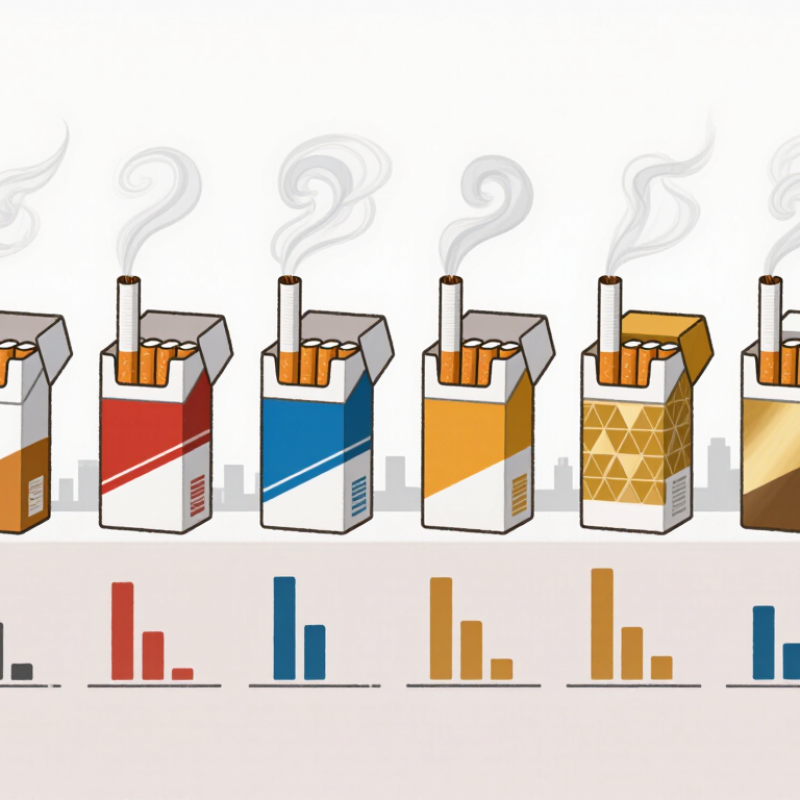
Top 10 Most Popular Canadian Cigarette Brands?

How Popularity Is Measured in Canada's Cigarette Market

Popularity in Canada’s cigarette market is not a single score. A useful starting point is retail volume share: the proportion of cigarette units sold that belong to each brand. Euromonitor International’s Tobacco in Canada report tracks market performance, while retail value can show how price changes affect spending. The measures answer different questions. A higher sales value does not always mean more packs sold.

Survey data adds context. Health Canada’s 2022 Canadian Tobacco and Nicotine Survey found that about 10% of Canadians aged 15 and older smoked cigarettes, daily or occasionally. That figure describes the overall market, not brand preference. Rankings should therefore distinguish sales data from consumer surveys, and state the year and population covered.

Small shifts matter. They can reflect price, availability, or changing habits rather than a sudden change in loyalty. But this is imperfect. Public reports may not disclose brand-level unit sales, and survey answers can miss occasional purchases. A careful “top 10” list should identify its data source, use comparable periods, and avoid treating online attention as proof of market share.

Canada's 10 Most Popular Cigarette Brands

Popularity among cigarette products in Canada is not a permanent leaderboard. Rankings can shift by province, reporting period, retail availability, and measurement method: sales volume, market share, or consumer surveys. A list called “Canada’s 10 Most Popular Cigarette Brands” should name its data source and date. Without those details, a numbered ranking may seem more certain than the evidence supports.

That distinction matters.

Established products may retain recognition, while price, package format, and local preferences influence what people choose. These patterns do not show that one product is safer or better. Cigarette smoke carries serious health risks, and popularity does not change that.

Treating a sales ranking as a recommendation is an easy mistake.

Tips: Check the publication year and whether the figures come from sales records or surveys. Compare results across similar regions and time periods. Treat unsourced “top ten” claims cautiously. If you smoke, a healthcare professional or provincial quit-support service can discuss evidence-based ways to stop. Small step. Still worth taking.

Brand Profiles: History, Ownership, and Product Lines

Canadian cigarette profiles are shaped by a long history of domestic manufacturing, mergers, and changing ownership. Many familiar labels now sit within portfolios managed by a small number of large tobacco groups. Without naming individual companies, ownership records and dated packaging can help distinguish a brand’s original history from its current corporate home. That distinction is easy to miss.

Product lines have often included variations in filter design, size, and packaging. These differences describe market positioning; they do not establish meaningful health differences. Health Canada’s 2022 Canadian Tobacco and Nicotine Survey reported that 11% of Canadians aged 15 and older had smoked cigarettes in the previous 30 days. The survey offers useful context for understanding the market, but it does not rank brands by popularity. Not the same thing.

A careful “top ten” profile should therefore explain how rankings were measured, such as retail sales, survey responses, or shelf visibility. Health Canada’s tobacco sales reporting provides another useful lens by tracking product sales submitted under federal reporting requirements. Together, these sources can support profiles that distinguish verified ownership and product history from marketing claims. Packaging changes, corporate acquisitions, and incomplete public data can blur the picture. I would treat a shelf impression as a clue, not proof.

Federal and Provincial Rules Governing Cigarette Sales

In Canada, cigarette sales are governed by federal law and provincial or territorial rules. Federal requirements establish national standards for packaging, health warnings, promotion, and product regulation. Retail packs carry prescribed warnings and must follow plain-packaging rules. Store displays and advertising are restricted, so shoppers may see little beyond a price list or a closed cabinet. These details matter at the counter.

Minimum purchase ages are set by provincial and territorial laws, and they are not identical everywhere. Retailers must check identification when a customer appears young; exact procedures can vary by jurisdiction. Federal and provincial excise taxes also affect the final price. Required markings help identify products subject to applicable duties. Online and delivery sales may involve additional age checks and local conditions. Retailers should consult current government guidance, since rules and enforcement details can change. The system is detailed, but not always easy to follow. A small sign can be outdated. That deserves attention.

Top 10 Most Popular Canadian Cigarette Brands? - Federal and Provincial Rules Governing Cigarette Sales
Scope Jurisdiction Rule or requirement Implication for cigarette sales
This table summarizes sales regulations, not brand popularity rankings. It contains no company or brand names.
Federal rules
Minimum age Canada Federal law prohibits selling or providing tobacco products to anyone under 18. Retailers must follow the federal minimum and any higher minimum age set by the province or territory.
Packaging Canada Tobacco packaging must meet federal standardized-packaging requirements and display prescribed health warnings. Packaging and warning labels must comply with federal specifications before products are offered for sale.
Promotion Canada Federal law restricts tobacco promotion, including promotion that is misleading or appeals to young people. Retail advertising and promotional materials must comply with federal restrictions as well as applicable provincial rules.
Excise duties Canada Federal excise duties apply to tobacco products; provinces and territories may also impose their own tobacco taxes. Applicable federal and regional tax requirements affect the sale and pricing of tobacco products.
Provincial and territorial minimum purchase ages
Minimum age Alberta 18 years Retailers may not sell tobacco to anyone below the applicable legal age.
Minimum age British Columbia 19 years Retailers must apply the provincial minimum age, which is higher than the federal minimum.
Minimum age Manitoba 18 years Retailers may not sell tobacco to anyone below the applicable legal age.
Minimum age New Brunswick 19 years Retailers must apply the provincial minimum age, which is higher than the federal minimum.
Minimum age Newfoundland and Labrador 19 years Retailers must apply the provincial minimum age, which is higher than the federal minimum.
Minimum age Nova Scotia 19 years Retailers must apply the provincial minimum age, which is higher than the federal minimum.
Minimum age Ontario 19 years Retailers must apply the provincial minimum age, which is higher than the federal minimum.
Minimum age Prince Edward Island 21 years Retailers must apply the provincial minimum age, the highest minimum age in Canada.
Minimum age Quebec 18 years Retailers may not sell tobacco to anyone below the applicable legal age.
Minimum age Saskatchewan 18 years Retailers may not sell tobacco to anyone below the applicable legal age.
Minimum age Northwest Territories 19 years Retailers must apply the territorial minimum age, which is higher than the federal minimum.
Minimum age Nunavut 19 years Retailers must apply the territorial minimum age, which is higher than the federal minimum.
Minimum age Yukon 19 years Retailers must apply the territorial minimum age, which is higher than the federal minimum.
Minimum-age rules can change. Retailers should confirm current federal, provincial, and territorial requirements before making a sale.

Trends Shaping Canada's Cigarette Market

Canada’s cigarette market is shaped by changing habits, public-health measures, and household budgets. Smoking has become less common over time, though the pace of change differs across age groups and regions. The shift is uneven. In some communities, cigarettes remain part of daily routines; elsewhere, fewer people report smoking. These patterns matter more than a simple ranking of popular products.

Price and regulation influence what adult smokers encounter at retail counters. Taxes can make a pack noticeably more expensive, while health warnings and standardized packaging keep risks visible. Provincial rules and local access also create differences from one region to another. A shopper may see a narrow shelf in one store and a broader selection in another. That detail can be easy to overlook. Market reports also use different dates and definitions, so comparisons should be treated cautiously. A sales figure alone cannot explain why people smoke, quit, or change their habits. The picture is incomplete, and consumer trends should not be mistaken for evidence of safety: cigarette use carries serious health risks.

ACCESS ABILITY Home Medical Store has a Beautiful showroom in Cudahy To Serve You!

Corporate Office And Store
Cudahy, Wisconsin

1995 E Norse Ave
Cudahy, WI 53110
Phone: 414-486-6249
Fax: 414-486-5728