
Top Red Light Therapy Spa Equipment Suppliers?

Choosing the right Red Light Therapy Spa equipment supplier requires more than comparing panel sizes or promotional prices. A professional spa needs dependable devices, clear technical specifications, and support that continues after installation. Wavelength accuracy, irradiance measurements, treatment distance, cooling systems, eye protection, and session controls all deserve careful review. Small details matter. A loose cable or unclear timer can disrupt a busy treatment room.

Dr. Michael R. Hamblin, a leading photobiomodulation researcher, describes the field this way: “Photobiomodulation is the use of light to stimulate healing, relieve pain, and reduce inflammation.” His statement reflects the technology’s clinical potential, but it also encourages responsible expectations. Red light therapy should not be marketed as a universal cure. Supplier claims should match published evidence, product documentation, and realistic treatment goals. Some vendors sound convincing. Their specifications may still be incomplete.

This guide examines top Red Light Therapy Spa equipment suppliers through an experience-based and professional lens. It considers device performance, safety documentation, staff training, warranties, maintenance, and customer service. It also looks at how suppliers support different spa environments, from compact facial rooms to larger wellness studios. A strong supplier should explain technical limits clearly, not hide them behind bright photographs and vague promises. That judgment can be difficult when every brand claims superiority. Still, careful comparison protects both the spa’s investment and its clients’ trust. The best choice may not be the cheapest or most famous option. It should be the most transparent, supportable, and suitable for daily professional use.
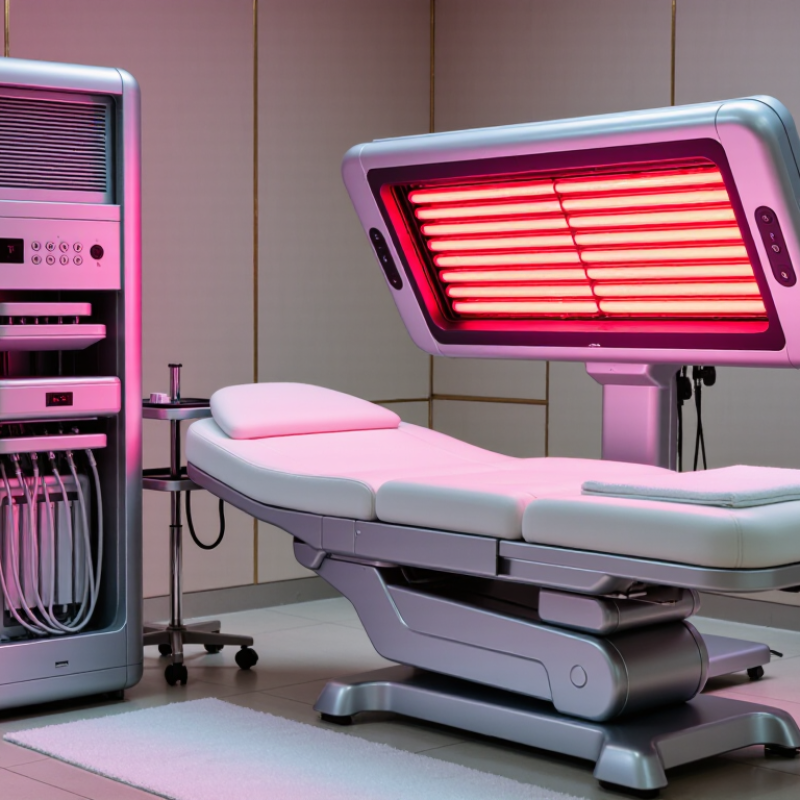
Top Red Light Therapy Spa Equipment Suppliers?

What Is Red Light Therapy Spa Equipment?

What Is Red Light Therapy Spa Equipment?

Red light therapy spa equipment uses light-emitting diodes to deliver red and near-infrared wavelengths to the skin. Common red wavelengths range from red 630–660 nanometers, while near-infrared devices often use 810–850 nanometers. These systems include standing panels, reclining beds, facial canopies, and smaller targeted units.

The equipment does not tan the skin. It aims to provide non-invasive photobiomodulation, a process studied for cellular energy and tissue-support responses. Treatment quality depends on wavelength, irradiance, exposure time, and distance from the light source. A bright panel is not automatically a better panel. That assumption needs questioning.

Grand View Research reported continued growth in the global photobiomodulation market, supported by wellness and cosmetic applications. The Global Wellness Institute valued the broader wellness economy at 6.3 trillion US dollars in 2023. These figures show commercial interest, not guaranteed treatment results. Peer-reviewed research also reports mixed outcomes across skin, pain, and recovery applications. Spa operators should describe equipment accurately and avoid medical promises.

Tips: Ask suppliers for independent irradiance tests, wavelength tolerances, and electrical safety documentation. Check whether measurements apply at the client’s actual treatment distance. Cleanable surfaces matter in busy rooms. Provide eye protection when the manufacturer requires it. Record session time and client feedback, but remember that self-reported improvement can be imperfect. Temperature, comfort, and staff training also influence the real customer experience.

Which Features Define a High-Quality Equipment Supplier?

Top Red Light Therapy Spa Equipment Suppliers?

Which Features Define a High-Quality Equipment Supplier?

A high-quality red light therapy equipment supplier provides more than attractive panels and polished sales materials. Real expertise shows in accurate wavelength data, measured irradiance, and clear treatment guidance. The supplier should explain how distance, exposure time, and skin coverage affect each session. Ask for independent test reports, electrical safety documentation, and calibration details. Vague specifications create avoidable risks.

Clear answers matter.

In practice, reliable equipment should offer stable light output, adjustable intensity, and comfortable temperature control. Cooling fans should remain quiet during a busy spa schedule. Controls must be simple enough for staff to use consistently. A strong supplier also provides installation support, staff training, maintenance instructions, and responsive technical service. Warranty terms should explain repair timelines, replacement parts, and service limitations. These details often reveal more than a low purchase price.

Evidence still deserves careful attention. A responsible supplier separates measured performance from promotional claims and avoids promising universal results. Look for transparent testing methods and realistic guidance for different users. I would also ask how frequently the supplier updates safety instructions and product documentation. No supplier is perfect, and some support promises may sound stronger than the actual service experience. A trial period, reference checks, or a live equipment demonstration can expose those gaps before a spa makes a major investment.

How to Compare Leading Red Light Therapy Equipment Suppliers

How to Compare Leading Red Light Therapy Equipment Suppliers

The wellness economy reached $6.3 trillion in 2023, according to the Global Wellness Institute’s 2024 report. That growth attracts many red light therapy equipment suppliers. Market size alone proves nothing.

Ask for measured irradiance at the treatment surface, not only advertised wattage. Dose equals irradiance multiplied by time. A useful supplier should provide wavelength ranges, test distance, measurement equipment, and calibration dates. Many panels claim 660 or 850 nanometers, yet their output may vary across the treatment area. That matters.

Look for independent laboratory reports using ISO 17025-accredited testing. Electrical and photobiological safety documentation should reference applicable IEC standards, including IEC 62471 where relevant. The supplier should explain eye protection, heat management, session limits, and cleaning procedures in plain language. Vague answers are warning signs.

Check warranty length, replacement-part access, installation training, and response times. A 2023 review in Photobiomodulation, Photomedicine, and Laser Surgery noted that study outcomes differ because wavelength, dose, timing, and treatment schedules vary. Therefore, suppliers should support written protocols rather than promise universal results. I would also compare energy consumption and service costs over three years. This step is often missed. A cheaper device can become expensive after one failed control board. Ask for customer references from comparable clinics, then verify whether reported results came from controlled measurements or casual impressions.

Top Red Light Therapy Spa Equipment Suppliers? - How to Compare Leading Red Light Therapy Equipment Suppliers

Comparison Dimension What to Compare Useful Reference Data Evidence to Request Why It Matters
Wavelength Configuration Red light, near-infrared light, or a combined configuration Commonly published ranges include approximately 630–660 nm for red light and 810–850 nm for near-infrared light Independent spectral measurement or a detailed LED specification sheet Wavelength affects penetration, treatment protocols, and the type of claims that can be responsibly made
Irradiance at Treatment Distance Optical power delivered to the client’s skin, not only the LED’s electrical rating Should be stated in mW/cm² at a defined distance, such as direct contact or 15–30 cm Test report showing measurement method, distance, wavelength, and tolerance Irradiance is required to calculate a consistent treatment dose
Energy Dose Fluence delivered during each session Fluence is calculated as: irradiance × time; the unit is J/cm² Sample treatment protocol showing irradiance, session duration, and calculated fluence A transparent dose calculation makes protocols easier to reproduce and compare
Treatment Coverage Face-only, body-panel, bed-style, or modular coverage Compare active illuminated area, usable treatment distance, and the number of repositioning steps Technical drawing with active area dimensions and recommended positioning distance Larger or better-positioned coverage can improve workflow efficiency and session consistency
Session Control Timer accuracy, preset programs, intensity control, and independent wavelength control A programmable timer and clearly displayed treatment settings are preferable for repeatable service delivery User manual, control-panel specifications, and demonstration of saved protocols Consistent controls reduce operator variation between appointments
Thermal Management Cooling fans, passive heat dissipation, surface temperature, and noise level Ask for operating temperature and noise data measured under normal treatment conditions Thermal test results, maintenance instructions, and noise specification in dB(A) Lower heat and noise can improve client comfort and staff usability
Electrical Safety Protection against electric shock, overheating, abnormal operation, and power fluctuations Look for documented testing against applicable medical or electrical safety requirements Electrical safety test report, declaration of conformity, and installation requirements Proper safety documentation supports risk management in a commercial spa environment
Photobiological Safety Eye and skin exposure risks associated with the emitted optical radiation IEC 62471 is commonly used to evaluate photobiological safety of lamps and lamp systems Photobiological safety assessment and written eye-protection guidance Clear exposure controls help staff apply the equipment responsibly
Regulatory Position Whether the product is marketed as a cosmetic wellness device or regulated medical equipment in the target market Regulatory classification and permitted claims vary by country and intended use Registration details, intended-use statement, labeling, and applicable conformity documents The regulatory position determines which marketing and treatment claims are appropriate
Build Quality and Serviceability Frame strength, cable routing, replaceable parts, cleaning surfaces, and access for servicing Compare materials, moving-part design, replacement intervals, and expected operating hours Service manual, spare-parts list, maintenance schedule, and repair process Serviceable equipment can reduce downtime and long-term ownership costs
Warranty and Support Warranty duration, coverage exclusions, response time, remote support, and local repair availability Compare coverage for LEDs, power supplies, control systems, frame components, and labor Written warranty terms, service-level commitments, and escalation contact details Reliable support is important when equipment downtime directly affects appointment capacity
Installation and Training Delivery, assembly, electrical requirements, staff training, and operating documentation Compare installation time, room requirements, staff competency materials, and treatment protocols Installation checklist, training agenda, user manual, and cleaning instructions Good onboarding helps reduce setup errors and improves treatment consistency
Total Cost of Ownership Purchase price plus shipping, installation, electricity, consumables, servicing, and replacement parts Calculate cost per session using expected sessions, electricity consumption, and annual maintenance Formal quotation, power-consumption data, parts pricing, and maintenance estimate A lower purchase price does not necessarily result in a lower operating cost

Comparison note: Specifications should be verified under comparable conditions, including wavelength, treatment distance, measurement method, session duration, and intended market.

What Certifications and Safety Standards Should Suppliers Meet?

Choosing top red light therapy spa equipment suppliers requires more than comparing prices or light output. A credible supplier should provide clear certification records, test reports, and product traceability. For equipment used in professional settings, ISO 13485 certification can show controlled medical-device quality processes, where applicable. Electrical safety should align with IEC 60601-1 when the product falls within its scope. Photobiological safety testing, such as IEC 62471 assessment, is also important for evaluating eye and skin exposure risks.

Ask for the exact wavelength range, irradiance measurements, treatment distance, and timer accuracy. These details should appear in technical documents, not only in sales conversations. Suppliers should also explain electromagnetic compatibility testing and provide evidence of compliance with relevant regional requirements, such as European or United Kingdom conformity rules. Certifications must match the actual model. A certificate for a similar device is not enough.

Inspect the equipment in person when possible. Check cable insulation, emergency shutoff access, cooling vents, protective eyewear, and readable warning labels. Staff training materials should explain contraindications, cleaning procedures, session limits, and maintenance schedules. Useful suppliers record serial numbers and calibration dates. Be cautious with dramatic claims. Light therapy is not risk-free, and “FDA registered” does not automatically mean a product is clinically approved. Documentation can still contain gaps. I would ask an independent safety professional to review unclear reports before purchase, especially when the device will serve many clients daily.

Red Light Therapy Spa Equipment: Key Standards Suppliers Should Address

These standards and regulations cover electrical safety, electromagnetic compatibility, photobiological risk, quality management, and risk management. The years shown refer to the identified edition or revision baseline, not to a supplier certification.

How to Select the Right Supplier for Your Spa Business?

Choosing red light therapy equipment starts with your treatment plan, not a glossy catalogue. The Global Wellness Institute valued the global wellness economy at $6.3 trillion in 2023 and forecasts $9 trillion by 2028. That growth attracts capable suppliers and optimistic sellers. Ask for measured wavelength, irradiance at treatment distance, session limits, and maintenance records. “Looks powerful” is not a specification. Request independent test reports, not only product brochures. A reliable supplier should explain testing methods and performance limitations.

Your spa also needs operational evidence. The International Spa Association’s 2024 U.S. Industry Study reported approximately $21.3 billion in 2023 spa revenue and 192 million visits. Equipment must fit real rooms, staffing, and appointment turnover. Test the controls with a gloved hand. Check cleaning surfaces, eye-protection guidance, ventilation, electrical requirements, and emergency shutoff access. Ask whether training covers contraindication screening and honest client communication. Avoid suppliers promising disease treatment or guaranteed results. Such claims can damage trust and create compliance problems.

Compare three-year ownership costs, including installation, parts, calibration, software, shipping, and downtime. Confirm warranty response times in writing. Ask for two comparable spa references, then call them. Notice whether support answers technical questions or repeats sales language. A cheaper unit can become expensive when a session stops mid-afternoon. I would still leave room for uncertainty. Published studies use different protocols, and client outcomes vary. Select a supplier that documents limits, updates training, and accepts difficult questions. That matters more than a perfect promise.

ACCESS ABILITY Home Medical Store has a Beautiful showroom in Cudahy To Serve You!

Corporate Office And Store
Cudahy, Wisconsin

1995 E Norse Ave
Cudahy, WI 53110
Phone: 414-486-6249
Fax: 414-486-5728