Top Wheel Chair Options for Enhanced Mobility and Comfort?
In today's world, choosing the right wheel chair can greatly impact a person's quality of life. Mobility is essential for independence and comfort. According to Dr. Sarah Thompson, a renowned expert in mobility solutions, "The right wheel chair transforms not just movement, but the spirit." This statement underscores the importance of selecting a chair that suits both physical needs and emotional wellbeing.
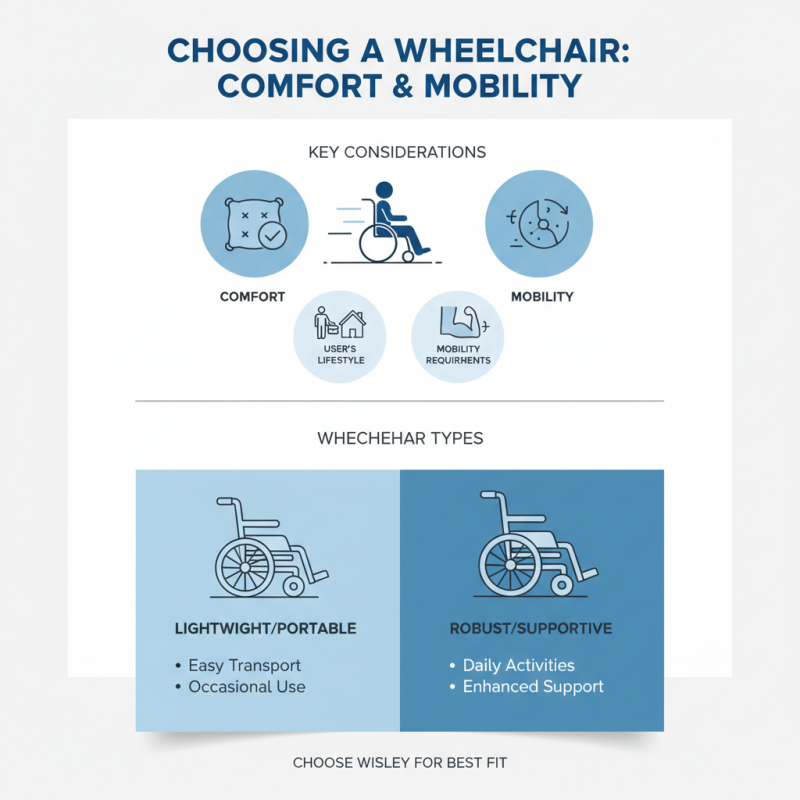
Many factors influence the choice of a wheel chair. Weight, durability, and adjustability are crucial. Additionally, users often have specific requirements based on their lifestyles. Some need lightweight options for easy transport, while others may prefer heavier models for stability. Sadly, many overlook their unique needs, settling for generic models that may not provide optimal comfort.
Moreover, the market is flooded with options, making the decision even more daunting. Each design, from manual to electric wheel chairs, comes with distinct features. It's vital to consider these features carefully. Often, first-time buyers express regrets due to hasty choices. Taking time to research and test different models can ensure better satisfaction. In the realm of wheel chairs, comfort and enhanced mobility should go hand in hand.

Overview of Wheelchair Types for Enhanced Mobility
When considering mobility aids, the type of wheelchair can significantly impact comfort and accessibility. There are various wheelchair types available.
Manual wheelchairs are lightweight and great for active users. However, they require upper body strength for propulsion.
Power wheelchairs, on the other hand, are ideal for those with limited mobility. They offer automated options but can be bulkier and less maneuverable in tight spaces.
Many users find tilt-in-space models beneficial. These wheelchairs allow users to shift weight and adjust seating positions, reducing pressure sores. According to industry reports, about 39% of wheelchair users experience skin issues due to prolonged sitting. So, selecting the right type becomes essential for overall health.
Tip: Always consider the user’s specific needs when choosing a wheelchair type. Testing different models can reveal what features are necessary for comfort. Focus on ease of use and the ability to control the chair effectively.
Adjusting to wheelchair life may take time. Users often reflect on their comfort levels. Some may find their initial choice lacking in support or fit. Remember, it's okay to reassess your needs as they may change over time.
Key Features to Consider for Comfort and Usability
When selecting a wheelchair, comfort and usability are critical factors. According to a recent industry study, over 70% of wheelchair users prioritize comfort. Key features include seat width, depth, and material. A properly fitted seat can reduce pressure sores and enhance overall comfort. Some users prefer breathable materials to improve ventilation during extended use.
Another vital feature is the wheelchair's weight. Lighter models allow for easier transport and maneuverability. A study found that users of lightweight chairs reported a 40% increase in mobility satisfaction. Be cautious, though; the lightest option is not always the most durable. Users should also consider the wheelchair’s turning radius. A tighter turning radius facilitates navigation in small spaces, crucial for daily activities.
Additionally, the presence of adjustable armrests is significant for usability. Many users report discomfort from fixed armrests. Adjustable options provide better support and adaptability. However, some armrest designs may not be as stable when adjusted. It’s essential to find a balance between adjustability and stability. User feedback often highlights the need for personalized features to enhance individual experiences.
Comparative Analysis of Manual and Electric Wheelchairs
When choosing between manual and electric wheelchairs, consider mobility needs and personal comfort.
Manual wheelchairs require physical strength to maneuver. They can be more challenging for users with limited upper body strength. The effort involved can lead to fatigue during longer journeys. However, they are often lighter and easier to transport.
Electric wheelchairs offer enhanced mobility with minimal physical effort. Users can navigate diverse terrains with ease. They also come with various features like adjustable seating and joystick controls. Yet, electric options can be heavier and may need regular maintenance. Finding a balance between convenience and the user’s lifestyle is crucial.
Some users might prefer the simplicity of manual wheelchairs but struggle with the physical demands. Others enjoy the independence of electric models but may feel overwhelmed with technology. Each option has its advantages and drawbacks. Reflecting on individual requirements is essential for making the right choice.
User Testimonials and Recommendations for Best Options
When exploring wheelchair options, user testimonials often highlight comfort and mobility. Many users express that weight and foldability are crucial factors in their choices. Reports indicate that a lightweight wheelchair can significantly enhance maneuverability, especially for users who need to lift it frequently.
Real-world experiences reveal that many struggle with the fit and support of their wheelchairs. One user mentioned how an adjustable backrest made a difference in daily comfort. Another testimonial noted the importance of good cushioning. It’s essential to find a balance between mobility and comfort.
**Tip:** Always try before you buy. Sit in different models to gauge comfort levels. Consider additional accessories, like seat cushions or leg rests, to enhance comfort further.
Listening to user feedback can guide you. Look for features that address individual needs. Consider how the wheelchair handles different terrains. This insight is invaluable as it reflects users' genuine experiences. Remember, a well-suited wheelchair can change lives, offering not just mobility but also independence.
Top Wheel Chair Options for Enhanced Mobility and Comfort