What Is a Charcuterie Board Set?
A Charcuterie Board Set is a serving collection designed to arrange and share cured meats, cheeses, fruit, crackers, and small accompaniments. Depending on the design, it may include a wooden or stone board, cheese knives, serving forks, bowls, and labels. The board gives foods a defined place, while separate tools make slicing and serving easier at a table or gathering. Some sets include more pieces than others. That matters. A compact set may suit a small household, while a larger one offers room for guests and varied portions. The word “charcuterie” can suggest meat, but many boards also feature vegetarian options such as nuts, olives, grapes, and spreads.
When evaluating a set, check its dimensions, surface, included utensils, and care instructions rather than judging appearance alone. Wood can bring warmth, but it often needs hand washing and thorough drying; stone and other materials have different care needs. A stable board with enough space helps prevent crowded arrangements and makes serving more comfortable. Looks are only part of it. Small bowls keep honey or jam from touching dry crackers, and a suitable cheese knife can make firm cheeses easier to portion. Still, no set solves every serving problem: board size, food choices, and cleanup all affect the experience. This guide explains what a Charcuterie Board Set typically contains, how its pieces work, and what to consider before choosing one for your home.
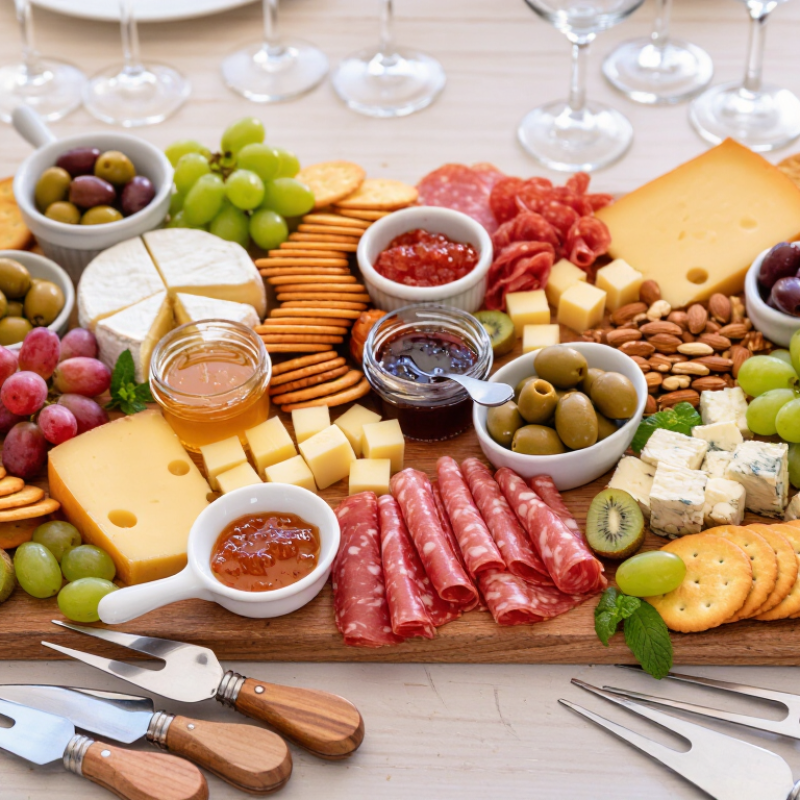
Definition and Core Components of a Charcuterie Board Set
A charcuterie board set is a group of serving pieces designed to present cured meats, cheeses, and accompaniments together. Its central piece is usually a flat board made from wood, slate, or another food-safe material. The board provides room to arrange sliced salami, cheese wedges, crackers, fruit, and small jars. Many sets also include cheese knives, serving forks, or small bowls. The exact pieces vary, so “set” does not always mean a complete collection of every tool.
Each component has a practical role. A small knife can portion firm cheese, while a fork helps guests serve olives or pickles without handling them directly. Bowls keep honey, nuts, or jam from spreading across the board. A board with a groove may catch juices from cut fruit, though it can also make arranging food feel less flexible.
Less can work.
When choosing a set, consider its surface size, ease of cleaning, and storage needs. A large board looks appealing, but it may be awkward to lift or fit in a cupboard. The most useful set is one that suits the foods you serve and leaves enough space for guests to reach them.
Board Materials, Sizes, and Common Design Features
What Is a Charcuterie Board Set?
A charcuterie board set usually includes a serving board and tools such as cheese knives or small forks. Materials affect both appearance and everyday use. Wood feels warm and works well for cheeses, sliced fruit, and crackers. Bamboo is lightweight, while slate and marble offer a cool, smooth surface. These harder materials can show scratches, so handle knives with care. Wood may develop marks over time. That is normal, but it can bother some hosts.
Board sizes range from compact trays for two people to larger boards for sharing. A small board fits neatly on a coffee table, but crowded ingredients are harder to serve. For a group, leave space between food sections and keep dips in small bowls. Common design features include juice grooves, handles, non-slip feet, and built-in compartments. Grooves can catch moisture from fruit, though they may make cleaning less straightforward.
Looks elegant. Not always practical.
Tips: Match the board to your usual serving space, not just its appearance. Check that knives feel comfortable and that the board fits your sink or storage shelf. A simple design is often easier to care for.
How Meats, Cheeses, and Accompaniments Are Selected and Arranged
A charcuterie board set works best when flavors and textures contrast. Choose two or three cheeses: a firm aged cheese, a soft spreadable one, and perhaps a mild option. Pair them with cured meats that vary in saltiness and shape, such as thin folded slices and small rolls. Keep portions realistic; a crowded board looks generous, but guests need room to reach. A little breathing space helps.
Add crisp crackers, sliced pear, grapes, olives, nuts, or a spoonful of jam. Each item should have a purpose: fruit can soften salty bites, while pickles bring acidity. Arrange larger items first, then fill gaps with small accompaniments. Keep strongly flavored ingredients apart when their juices or aromas might overwhelm delicate cheese. Place serving knives beside the cheeses. Simple, but useful. The arrangement rarely stays perfect once guests begin serving themselves, so flexibility matters more than symmetry. Keep chilled meats and cheeses cool until serving, and avoid leaving perishable foods out for extended periods. There is no single right balance; taste, season, and guest preferences can all shift the selection.
USDA Food-Safety Guidance: Keep Perishables at 40°F (4°C) or Below
What Is a Charcuterie Board Set?
A charcuterie board set usually pairs a serving board with small knives or utensils for arranging and serving cheeses, cured meats, fruit, and crackers. Its appearance matters, but temperature control matters more when the food is perishable. USDA Food Safety and Inspection Service guidance recommends keeping refrigerated foods at 40°F (4°C) or below. It identifies 40°F to 140°F as the “Danger Zone,” where bacteria can grow rapidly. Cold matters. Put out modest portions and keep the rest chilled, rather than filling the board all at once.
USDA guidance also says not to leave perishable food at room temperature for more than two hours, or more than one hour when the temperature is above 90°F (32°C). Serve cold items over ice or use a chilled tray, and replace empty portions with fresh, cold food. A clock is easy to ignore during a long gathering; that is exactly when it helps to set a reminder. Do not mix fresh food with pieces that have been sitting out. These small steps make a board safer without making it feel clinical.
What Is a Charcuterie Board Set? — USDA Food-Safety Guidance
Keep perishable foods at 40°F (4°C) or below. This chart shows how long perishable foods should be left unrefrigerated before they are discarded.
Discard perishable foods after 2 hours at room temperature, or after 1 hour when the temperature is above 90°F (32°C). Time out of refrigeration is cumulative. Source: USDA Food Safety and Inspection Service.
USDA Two-Hour Rule: Refrigerate Perishable Foods Promptly
A charcuterie board set usually includes a serving board and small knives or utensils for arranging cheeses, sliced meats, fruit, and crackers. The display looks inviting, but soft cheese, deli meat, and cut fruit can become unsafe when left warm too long. The USDA advises refrigerating perishable foods within two hours. If the temperature is above 90°F, the limit is one hour. Keep cold foods at 40°F or below.
Tips: Set out small portions and keep extra food chilled. Note the serving time. It is easy to lose track during a busy gathering. Use clean utensils for each item, and return perishable foods to the refrigerator promptly. If food has exceeded the time limit, discard it; smell and appearance cannot reliably show whether it is safe.
For a practical setup, place the board away from sunny windows, heaters, and warm ovens. Put out fresh portions as needed instead of topping up food that has been sitting out. A chilled serving tray can help, though it does not replace the time limit. I sometimes underestimate how quickly a room warms up, so checking the clock is a better habit than guessing.
What Is a Charcuterie Board Set? — USDA Two-Hour Rule: Refrigerate Perishable Foods Promptly
| Board Component | Typical Examples | Food-Safety Consideration | Safe Serving Practice |
| Board set | Serving board, small bowls, cheese knives, and serving utensils | The serving pieces are not a substitute for keeping perishable foods at safe temperatures. | Wash hands and clean food-contact surfaces and utensils before use. |
| Meats | Sliced deli meats, cooked sausage, or other ready-to-eat meats | Perishable meats should be kept refrigerated at 40°F (4°C) or below when not being served. | Put out small portions and return remaining food to the refrigerator promptly. |
| Cheeses | Soft, semi-soft, or sliced cheeses | Many cheeses used on boards are perishable and should not remain at room temperature for extended periods. | Keep extra portions chilled; use a clean knife or utensil for serving. |
| Cut fruit and vegetables | Cut melon, berries, sliced apples, or prepared vegetables | Cut produce that requires refrigeration should be treated as perishable. | Wash produce under running water before cutting and refrigerate prepared portions until serving. |
| Crackers, bread, and dry snacks | Crackers, breadsticks, or plain bread | Plain shelf-stable items are generally less temperature-sensitive than meat, cheese, and cut produce; toppings can change this. | Keep dry items separate from moist foods to preserve texture and reduce cross-contamination. |
| Dips and spreads | Hummus, dairy-based dips, or spreads requiring refrigeration | Refrigerate perishable dips at 40°F (4°C) or below when not being served. | Serve with a clean spoon and avoid returning used serving utensils to the storage container. |
| Room-temperature limit | Perishable items on a serving board | USDA guidance: refrigerate perishable food within 2 hours at room temperature, or within 1 hour when the temperature is above 90°F (32°C). | Discard perishable food left out longer than the applicable limit; do not rely on smell or appearance to judge safety. |
| Keeping food cold | Chilled meats, cheeses, cut produce, and dips | The refrigerator target for cold storage is 40°F (4°C) or below. | For longer gatherings, keep serving portions on ice or replenish the board with fresh chilled portions. |
Safety note: The two-hour limit applies to the total time perishable food spends unrefrigerated, including serving time.