
What Is a Filing Cabinet and How Is It Used?

A Filing Cabinet is more than a metal box with drawers. It is a practical storage system for organizing paper records, protecting sensitive documents, and improving daily retrieval. In an office, labeled folders may hold invoices, contracts, personnel forms, or maintenance reports. Each drawer creates a visible structure. That structure can reduce searching, but only when files are named and returned consistently.

Information-management expert John Mancini has described information as “the lifeblood of every organization.” His observation explains why a Filing Cabinet still matters, even in workplaces using digital tools. Paper records often require dependable physical access. A locked cabinet can also provide a clear first layer of protection against casual viewing, dust, and misplaced documents. It is not perfect security. It still needs controlled keys, sensible permissions, and regular review.

This guide explains what a Filing Cabinet is and how it is used in real working environments. You will see common cabinet types, drawer layouts, folder arrangements, and practical labeling methods. A lateral cabinet may suit wide files and frequent access. A vertical model may fit a narrow wall space. Small details matter, such as leaving room for new folders and avoiding overfilled drawers. An overpacked cabinet is difficult to use.

Some habits deserve reconsideration. Keeping every paper forever may feel safe, but it can create clutter and confusion. Retention decisions should follow organizational policies and applicable requirements. A Filing Cabinet works best as part of a broader records-management routine, not as a substitute for one. It stores information. People create reliability.
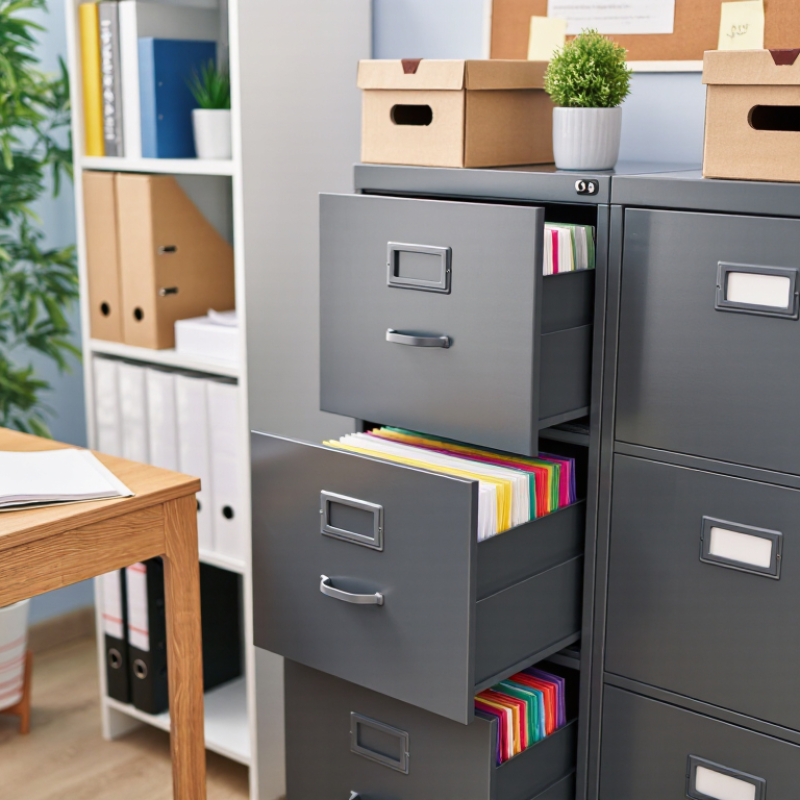
What Is a Filing Cabinet and How Is It Used?

Definition and Basic Purpose of a Filing Cabinet

What Is a Filing Cabinet and How Is It Used?

Definition and Basic Purpose of a Filing Cabinet

A filing cabinet is a storage unit designed to organize paper documents. It usually contains drawers that hold folders, forms, invoices, or personnel records. Its basic purpose is simple: protect information and make it easier to find. In a busy office, labeled folders can reduce search time and prevent papers from spreading across desks. A lockable drawer may also limit access to sensitive documents.

Filing cabinets come in vertical and lateral designs. Vertical models use tall drawers and fit narrow spaces. Lateral models are wider, so files can be viewed from side to side. In daily office work, people often arrange folders alphabetically, by date, department, or project. Clear labels matter. A neat drawer is useful only when its system remains consistent.

A cabinet is not a complete records-management solution. It cannot prevent every lost document or remove the need for regular review. Old files may occupy valuable space, while unclear labels create confusion. A practical habit is checking each drawer periodically and removing duplicates according to workplace retention rules. Fire-resistant construction can provide added protection, but it has limits. The cabinet still needs a dry, stable location and careful handling. Small details make the system dependable.

Main Types and Structural Features of Filing Cabinets

A filing cabinet is a storage unit designed to keep documents organized, protected, and easy to retrieve. Its form depends on the filing method, available floor space, and required document capacity. Vertical cabinets use tall drawers and suit offices with limited floor area. Lateral cabinets use wide drawers, allowing files to sit side by side. They also provide a useful surface for equipment or temporary paperwork. Mobile cabinets include casters and usually fit beneath desks. They work well in flexible workspaces, although overloaded drawers can make movement difficult.

The main structural feature is the drawer system. Full-extension slides let users reach documents at the back without excessive bending. Steel bodies provide strength, while powder-coated surfaces resist scratches and everyday corrosion. Some cabinets use reinforced corners and double-wall panels for greater durability. Label holders support quick identification. Locking mechanisms add controlled access, but a lock alone cannot replace sensible document handling. Anti-tip systems are also important because they prevent several drawers from opening at once. This detail is easy to overlook.

Capacity depends on drawer depth, internal clearance, and suspension strength. Letter-size and legal-size folders need different cabinet dimensions. I once planned storage by exterior width alone, then discovered the drawers could not hold thicker folders comfortably. That mistake changed my measuring process. I now check usable interior space, rail movement, and floor stability before selecting a cabinet. Poorly aligned drawers may scrape, wobble, or close unevenly. Small gaps matter. A well-designed cabinet should support daily access without forcing users to pull, lift, or twist awkwardly.

How to Organize and Store Documents in a Filing Cabinet

What Is a Filing Cabinet and How Is It Used?

A filing cabinet is a practical storage unit for paper records. It keeps documents grouped, protected, and easier to retrieve. In daily office work, I have found that a cabinet works best when every folder has a clear purpose. Random storage creates hidden delays.

Start by sorting papers into broad categories, such as finance, personnel, projects, and maintenance. Then divide each category by year, client, or document type. Use readable labels on the folder tabs. Put frequently used files in the top drawer and older records lower down. Keep folders upright, with enough space to remove one without disturbing others. A simple index sheet can show exactly where each category belongs. This small step saves time during busy afternoons. It also exposes weak filing habits. I sometimes label folders too generally, and that causes confusion later.

Tips: Remove duplicates before filing. Keep confidential papers in a restricted drawer. Do not overfill folders; bent pages slow retrieval and may hide important details. Review the cabinet monthly and move inactive records to suitable long-term storage, following your organization’s retention policy. Leave a small empty section for new documents. Otherwise, the system may fail within weeks.

Common Uses in Offices, Homes, and Public Institutions

A filing cabinet is a storage unit with drawers designed to keep documents organized. In offices, it holds contracts, invoices, personnel records, and project notes. Clear labels help staff find papers without opening every drawer. Lockable drawers provide added privacy for salary, medical, or client information. Keep access limited. In practice, a simple system often works best. However, poor indexing can turn a tidy cabinet into a paper maze.

At home, a compact cabinet can store tax papers, warranties, school records, and household receipts. It can also protect instruction manuals from crowded kitchen drawers. Families should agree on naming rules, because “Important” explains almost nothing. Digital copies may reduce paper volume, but some original documents still need careful storage. Check how long records should be kept before throwing them away. That step is easy to overlook.

Public institutions use filing cabinets for applications, permits, inspection notes, and historical records. Reception offices may keep active files nearby, while older materials move to controlled archive areas. Staff often combine cabinets with access logs and regular file reviews. Cabinets should not block walkways or emergency routes. Fire-resistant construction may offer extra protection, but it does not replace careful planning. A missing label can delay service for several minutes, which matters when many visitors are waiting.

Safety, Maintenance, and Selection Considerations

What Is a Filing Cabinet and How Is It Used?

A filing cabinet stores paper records, folders, and small office supplies in organized drawers. It supports quick retrieval and protects documents from dust, bending, and accidental loss. Its real value depends on safe placement, sensible loading, and regular inspection.

Safety starts with stability. The U.S. Consumer Product Safety Commission’s furniture tip-over data for 2018–2020 estimated an annual average of 22,000 emergency-department injuries. Tall cabinets should stand on level flooring and remain anchored when possible. Use anti-tip mechanisms that prevent multiple drawers from opening together. Never open several loaded drawers at once. OSHA’s material-storage rule also requires storage practices that prevent sliding, falling, or collapse. A heavy cabinet beside a doorway is a poor choice.

Maintenance is simple, but often neglected. Clean drawer tracks with a dry cloth, then check screws, locks, handles, and worn rollers. A loose drawer can catch clothing or pinch fingers. Avoid overloading. The U.S. Bureau of Labor Statistics reported 2.6 million nonfatal workplace injuries and illnesses in private industry during 2023, although that figure is not cabinet-specific. It still shows why small hazards deserve attention. For selection, compare drawer capacity, fire resistance claims, locking design, ventilation, and floor loading. ANSI/BIFMA X5.9 provides useful performance guidance for storage units. I still see buyers choosing appearance first. That mistake becomes expensive when records pile up.

What Is a Filing Cabinet and How Is It Used?

A filing cabinet is a storage unit with drawers designed to organize paper records. Select a cabinet that accommodates the document format you use most often, and keep drawers closed, evenly loaded, and free from excessive weight.

Selection note: A4 paper is 210 × 297 mm, US Letter paper is 215.9 × 279.4 mm, and US Legal paper is 215.9 × 355.6 mm. The cabinet drawer should be slightly larger than the document dimensions to allow folders to move freely. For safety, place heavier files in lower drawers, avoid overloading, anchor tall cabinets where appropriate, and lubricate or inspect drawer hardware during routine maintenance.

ACCESS ABILITY Home Medical Store has a Beautiful showroom in Cudahy To Serve You!

Corporate Office And Store
Cudahy, Wisconsin

1995 E Norse Ave
Cudahy, WI 53110
Phone: 414-486-6249
Fax: 414-486-5728