Why Choose a Wheel Chair Lift for Your Accessibility Needs?
Accessibility is vital for everyone. A wheel chair lift plays a crucial role in achieving this. It provides a safe and efficient way to navigate various environments. Whether at home or in public places, these lifts make a significant impact.
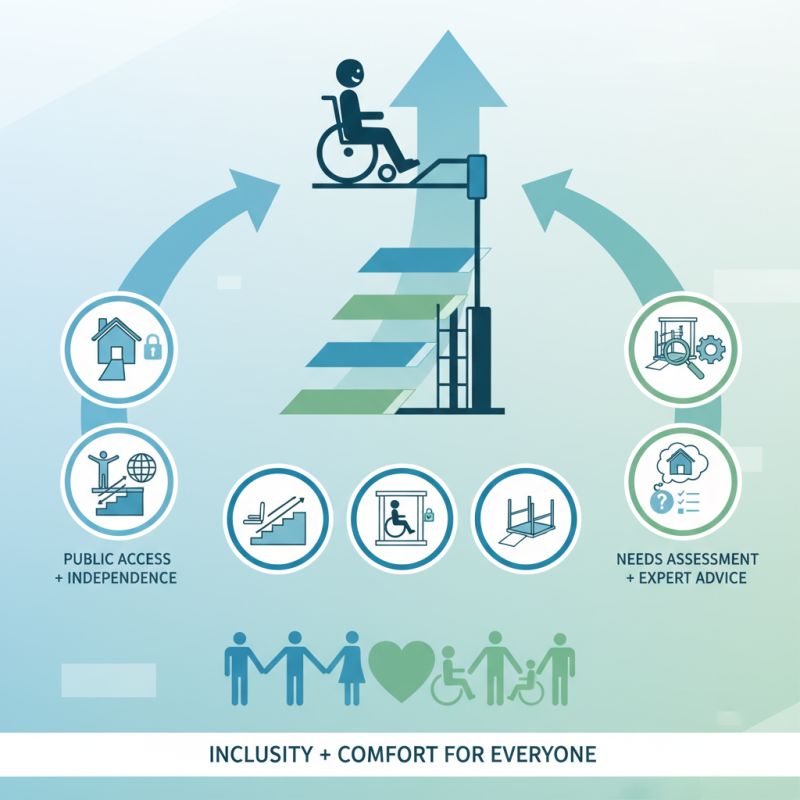
Using a wheel chair lift can enhance independence. Individuals who rely on wheelchairs often face challenges in accessing different levels. A properly installed lift can bridge that gap, making it easier for people to reach their desired locations. It's essential to choose a reliable lift that meets your specific needs.
Consider the various types of wheel chair lifts available. Each model offers different features and benefits. Research and expert advice can help you make an informed decision. Reflecting on your circumstances will guide you towards the best lift option for your situation. Remember, enhancing accessibility can transform lives, promoting inclusivity and comfort for everyone.
Benefits of Using a Wheelchair Lift for Accessibility
Wheelchair lifts play a crucial role in enhancing accessibility for individuals with mobility challenges. These devices create seamless transitions between different levels, such as from a home to a car, or between floors in a building. According to the National Institute on Disability, Independent Living, and Rehabilitation Research, over 60 million people in the U.S. experience some form of disability. Providing accessible solutions is not just essential; it's a necessity.
Using a wheelchair lift can significantly improve independence. These lifts can support up to 750 pounds, accommodating not just the user but also their caregiver if needed. A report from the World Health Organization emphasizes that accessible environments can boost mental well-being and social participation. However, many buildings are still not equipped with proper lifts, highlighting a gap in accessibility that needs addressing.
Tips: Regular maintenance of wheelchair lifts is crucial to ensure safety and functionality. Check for any wear and tear, and schedule professional inspections annually. User training can also enhance safe operation. Ultimately, accessibility should be a priority, not just an afterthought.
Types of Wheelchair Lifts Available in the Market
When considering wheelchair lifts, various options cater to specific accessibility needs. A prominent type is the vertical platform lift. These are designed for homes or public buildings with stairs. They can elevate a wheelchair user to different levels, making them essential for multi-story structures.
Another common type is the incline lift, which operates along staircases. Minor adjustments are required for installation. However, they may not serve all stair designs well. According to recent industry reports, both options increase accessibility by over 80% in urban areas where ramps are insufficient.
Furthermore, there are portable lifts available, which offer flexibility. Users can transport them to various locations. However, they may lack the sturdiness of fixed options. A survey from the Accessibility Providers Association indicates that 40% of users prefer fixed lifts for better safety and reliability. Understanding these choices fosters informed decisions for enhancing mobility.
Types of Wheelchair Lifts Available in the Market
Factors to Consider When Choosing a Wheelchair Lift
When selecting a wheelchair lift, several crucial factors come into play. First, consider the lift's weight capacity. Some lifts are designed for lighter wheelchairs, while others can accommodate heavier models. Understanding your specific needs is essential. A lift should easily support users and their mobility devices without strain.
Installation location is another key element. Indoor lifts often differ from outdoor models in terms of durability and weather resistance. Assess the space where the lift will be installed. Will it fit seamlessly? Is there sufficient power supply? Thoughtful measurements and assessments can save time and frustration later.
Lastly, don't overlook the importance of safety features. Look for lifts with handrails, non-slip surfaces, and emergency stop buttons. These details matter. Reflecting on past experiences can highlight what you might have missed initially. It's wise to evaluate your choices continuously, ensuring they meet both accessibility needs and personal safety standards.
Installation Process and Safety Features of Wheelchair Lifts
The installation process of wheelchair lifts is a crucial aspect of making spaces accessible. These lifts provide valuable independence to individuals with mobility challenges. According to the National Institute of Health, over 7 million Americans use wheelchairs. Installing a lift can significantly enhance their quality of life. A typical installation involves assessing the site, determining power sources, and ensuring compliance with safety codes.
Safety features are paramount in wheelchair lifts. Many models include automatic sensors that prevent accidents by detecting obstacles. Additionally, non-slip surfaces and safety straps ensure users remain secure during transit. A study from the American Society of Mechanical Engineers indicates that well-designed lifts reduce fall risk by 30%. Yet, it is essential to remind users of potential hazards. Users may overlook the need for regular maintenance checks, which can compromise safety.
Overall, wheelchair lifts are vital for accessibility but require careful follow-up. Individuals need to understand these systems appropriately function in their environment. Continued education on usage and maintenance fosters long-term safety and reliability.