CALL TODAY for FREE In home consultation
SEND EMAIL
1995 East Norse Avenue
Cudahy, Wisconsin 53110
414-727-2524
4445 W Forest Home Avenue
Milwaukee, Wisconsin 53219
414-727-2525
2140 American Drive
Neenah, Wisconsin 54956
920-257-6060
65 Copeland Avenue
La Crosse, Wisconsin 54603
608-784-9980
Choosing the best medical chairs for your facility is not simply a matter of matching colors, sizes, or purchase prices. The right chair must support safe patient positioning, efficient clinical work, and repeated cleaning throughout the day. It should fit the room, the procedure, and the people using it.
Dr. Alan Hedge, a respected ergonomics researcher, often emphasized, “The best posture is the next posture.” This principle matters in healthcare settings. A treatment chair should allow controlled movement, adjustable height, stable arm support, and comfortable access for clinicians. Patients may arrive anxious, weak, or unable to transfer independently. Small design details can affect dignity and safety.
Look closely at everyday conditions. Can staff adjust the chair without awkward bending? Does the upholstery resist fluid penetration and frequent disinfection? Are foot controls easy to locate beside a crowded examination table? These practical questions reveal more than a product brochure. Medical chairs also need suitable weight capacity, reliable locking systems, and serviceable components.
There is no universal best model. A chair that works well in a dermatology room may perform poorly in dialysis or infusion care. That distinction is easy to miss. Facility managers should compare patient needs, clinical workflows, infection-control requirements, available space, and maintenance support before deciding. Product testing with nurses and patients can expose weaknesses early.
The process may feel slower. It is often safer. This guide examines the features, materials, adjustments, and purchasing questions that help facilities choose medical chairs with greater confidence. Some compromises will remain unavoidable, but thoughtful evaluation can prevent expensive mistakes and improve daily care.
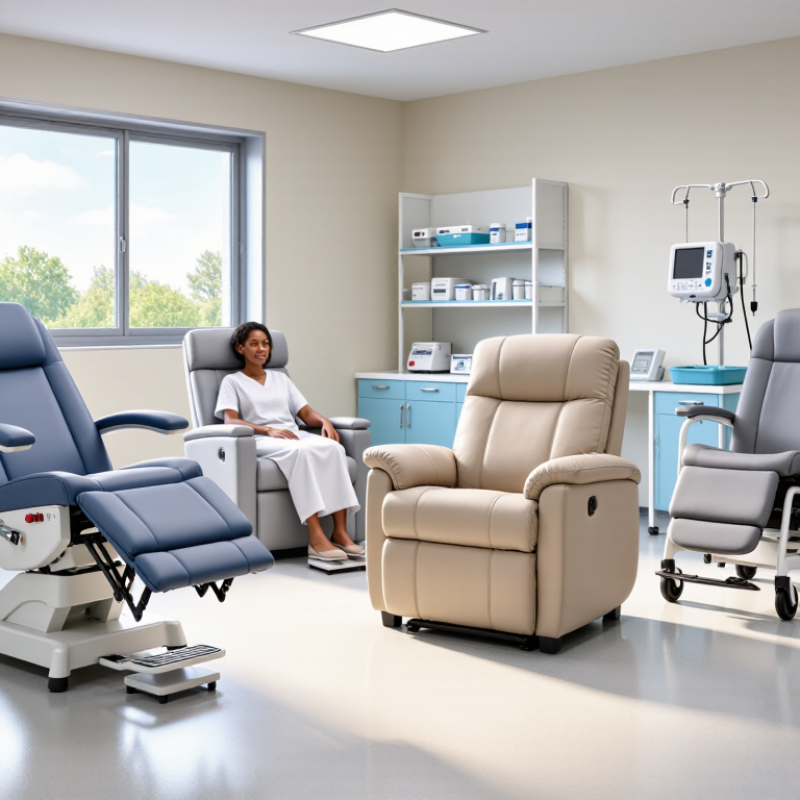
A medical chair should match the care delivered, not simply fill an available room. Start by defining its clinical purpose. Will staff use it for examinations, infusions, minor procedures, dialysis, recovery, or patient transport? Each task creates different demands for positioning, support, mobility, and cleaning. During facility assessments, I have seen attractive chairs fail because their armrests blocked equipment access. The clinical workflow must guide the purchase.
Identify every person who will use the chair. Patients may include older adults, children, people with limited mobility, or individuals recovering from treatment. Nurses and technicians need clear controls, safe transfer space, and simple adjustments. A chair that feels comfortable for a healthy patient may be difficult for someone with weakness or pain. Consider seat height, weight capacity, cushioning, recline range, foot support, and emergency access.
Small details matter.
Ask staff to demonstrate a typical procedure before selecting models. Watch where cables, trays, and waste containers are placed. Check whether the chair can pass through doors and fit beside essential equipment. Cleaning teams should assess seams, exposed hardware, and disinfectant compatibility. A checklist helps, but it can create false confidence. Real users often reveal problems that specifications miss. Trial sessions may also expose an uncomfortable truth: one chair may not serve every department equally.
Choosing medical chairs begins with patient risk, not appearance. In daily clinical work, small design details can prevent falls, pressure injuries, and transfer strain. Assess the chair beside the treatment area, where space, flooring, and staff movement affect safety. A stable base, lockable casters, and dependable brakes matter during every transfer. Height adjustment should support different patients and reduce bending for caregivers.
Patient comfort requires more than thick padding. Look for contoured support, breathable upholstery, and seams that do not press against fragile skin. Adjustable backrests and leg supports can help patients remain positioned during examinations or infusion sessions. Armrests should provide support without blocking safe entry and exit. Check weight capacity and dimensions against real patient data, not assumptions. A chair that feels spacious to one person may restrict another.
Infection control also shapes comfort and safety. Smooth, nonporous surfaces allow thorough cleaning between patients. Avoid deep gaps where fluids or debris can collect. Ask staff to operate controls with gloves and observe whether instructions are clear. Trial the chair with a patient, a nurse, and a caregiver present. Their feedback may expose awkward steps. No chair is perfect. A model can meet specifications and still slow care. Recheck maintenance access, replacement parts, and emergency positioning before purchase. Document inspection results and review them after real use.
Choosing medical chairs starts with the task, not the catalogue. Procedure chairs support examinations, treatment chairs need stable recline, and patient transport chairs prioritize mobility. In facility planning, this distinction prevents expensive mismatches. A chair with height, backrest, seat-depth, and leg-support adjustment can accommodate different users. However, more controls do not always mean better care. Staff may avoid complicated mechanisms during a busy appointment.
Ergonomics deserves measurable attention. The U.S. Bureau of Labor Statistics reported that musculoskeletal disorders represented about 26% of private-industry days-away-from-work cases in 2023. Adjustable seating can reduce awkward reaching and sustained bending, but only when staff can operate it correctly. The National Institute for Occupational Safety and Health recommends fitting workstations to the user and limiting prolonged awkward postures. Test the chair with gloved hands. Check cleaning access, brake visibility, and transfer height.
Space requirements can quietly decide the purchase. The 2010 ADA Standards specify a 30-by-48-inch minimum clear floor space for many accessible approaches, while turning areas may require a 60-inch diameter. These are planning references, not universal chair footprints. The Facility Guidelines Institute also emphasizes room-specific clearances around clinical equipment. Measure the chair fully reclined, with foot supports extended. Leave room for a caregiver, wheelchair, and emergency movement. I would not assume a compact chair is efficient. A narrow model may create dangerous congestion during transfers. Mock up the room with tape before ordering. Real movement exposes flaws that drawings often hide.
| Chair Type | Primary Applications | Typical Seat Height | Key Adjustability | Typical Weight Capacity | Approx. Chair Footprint | Recommended Working Clearance | Best Facility Fit |
|---|---|---|---|---|---|---|---|
| General Examination Chair | Routine physical examinations, consultations, minor clinical assessments | Approximately 45–65 cm (18–26 in) | Backrest recline; adjustable leg section on some models; manual or powered height adjustment | Approximately 150–225 kg (330–500 lb) | About 65–80 cm wide × 150–190 cm long | Allow at least 90 cm on the working side and 75–90 cm at the foot end | Primary care, outpatient clinics, family medicine, and multispecialty rooms |
| Treatment or Procedure Chair | Infusions, injections, wound care, minor procedures, and repeated treatments | Approximately 45–75 cm (18–30 in), depending on model | Powered backrest, leg-rest and height adjustment; Trendelenburg position on selected models; removable or adjustable armrests | Approximately 160–250 kg (350–550 lb) | About 75–95 cm wide × 160–205 cm long | Allow 100–120 cm on the clinical working side and clear access to emergency controls | Day treatment units, oncology clinics, ambulatory procedure areas, and specialty practices |
| Phlebotomy or Blood-Draw Chair | Blood collection, specimen collection, injections, and short outpatient procedures | Approximately 45–65 cm (18–26 in) | Adjustable or swing-away armrests; reclining backrest on many models; optional height adjustment | Approximately 135–225 kg (300–500 lb) | About 60–75 cm wide × 75–105 cm long when upright | Allow at least 90 cm beside the arm used for venipuncture and 75 cm behind the chair | Laboratories, blood-collection centers, urgent-care clinics, and high-throughput outpatient areas |
| Dental or Oral Examination Chair | Dental examinations, oral procedures, and procedures requiring precise patient positioning | Approximately 40–85 cm (16–33 in) | Powered seat height, backrest, headrest, leg support, and chair tilt; foot control commonly available | Approximately 135–200 kg (300–440 lb) | About 70–90 cm wide × 170–205 cm long | Allow approximately 90–120 cm around the clinician-access sides and adequate room for equipment | Dental surgeries, oral-health clinics, and procedure rooms with fixed clinical equipment |
| Dialysis or Extended-Treatment Recliner | Dialysis, chemotherapy, long infusions, and treatments lasting several hours | Approximately 45–65 cm (18–26 in) | Independent backrest and leg-rest adjustment; powered recline; position memory and patient hand control on some models | Approximately 160–250 kg (350–550 lb) | About 80–100 cm wide × 90–120 cm deep when upright | Allow 100–120 cm on the access side, space for clinical equipment, and unobstructed staff circulation | Dialysis centers, infusion suites, oncology departments, and long-stay treatment rooms |
| Bariatric Examination or Procedure Chair | Examinations and procedures for patients requiring a wider seat and higher load rating | Approximately 45–70 cm (18–28 in) | Powered height and backrest adjustment; reinforced frame; wide, removable, or adjustable armrests | Approximately 225–450 kg (500–1,000 lb) | About 85–110 cm wide × 160–210 cm long | Allow at least 120 cm on the transfer side and verify doorway, lift, and turning-circle dimensions | Facilities serving diverse patient populations, surgical consult areas, and high-dependency outpatient rooms |
Materials should support cleaning, patient comfort, and long service life. Choose nonporous upholstery with sealed seams and minimal crevices. These details reduce trapped moisture, dust, and organic residue. Avoid materials that crack after repeated exposure to approved disinfectants. A smooth surface is helpful, but it is not automatically hygienic.
The World Health Organization’s Global Report on Infection Prevention and Control (2022) states that about 7 in 100 acute-care patients in high-income countries acquire at least one healthcare-associated infection.
That figure makes routine decontamination a design requirement, not a cosmetic preference. Select chairs compatible with your facility’s disinfectant protocol. Check contact time, dilution, and material warnings. Follow local healthcare regulations and the manufacturer’s cleaning instructions. Never assume one product suits every surface.
Maintenance needs are equally important.
Inspect hinges, casters, upholstery, footrests, and adjustment controls on a scheduled basis. Loose hardware can affect positioning and patient safety. Damaged vinyl should be repaired or replaced quickly. Small tears become difficult cleaning zones. They often spread unnoticed.
Keep written service records, including cleaning failures and recurring repairs. This creates useful evidence for purchasing decisions.
In practice, teams may prioritize appearance over chemical resistance, which is an easy mistake. A chair that looks excellent today may become costly after months of intensive cleaning. Evaluate sample materials under real workflow conditions before approving a large purchase.
A medical chair should match daily patient flow, room size, and cleaning routines. Start with the total cost, not only the purchase price. Include delivery, installation, maintenance, replacement parts, and staff training. A cheaper chair may require frequent repairs. That can disrupt appointments and increase frustration for nurses.
Durability depends on more than a strong frame. Check weight capacity, upholstery seams, adjustable mechanisms, and resistance to common cleaning agents. Ask for test data and clear maintenance instructions. In a busy examination room, loose levers and cracked cushions become safety concerns quickly. We once underestimated how often chairs would be adjusted, so our original durability assumptions needed review.
Supplier support deserves equal attention. Request written warranty terms, repair response times, spare-part availability, and technician coverage. Ask whether replacement cushions and control components remain available for several years. A supplier that answers technical questions clearly is easier to trust. Delayed support can leave one room unusable.
Inspect a sample chair before placing a large order. Let nurses adjust it, clean it, and move it through the doorway. Their feedback may expose practical problems that brochures miss. Document every requirement, including delivery dates and service contacts. Keep a small contingency in the budget. Unexpected costs still occur.
1995 E Norse Ave
Cudahy, WI 53110
Phone: 414-486-6249
Fax: 414-486-5728