10 Tips for Choosing Mobility Lifts for Home

Choosing mobility lifts for home is a practical decision, not merely a purchase. The right system can make a narrow hallway, steep staircase, or raised entrance safer and easier to use. It should support daily routines without making the home feel clinical. Small details matter, including seat height, platform space, transfer direction, and the position of the controls.

Dr. Rory Cooper, a leading rehabilitation engineer and accessibility advocate, has said, “Accessibility is not a special feature; it is a basic requirement for participation.” His principle fits home lift selection closely. A lift must match the resident’s mobility, body weight, comfort, and future needs. It should also suit the building’s structure, available power supply, and emergency access plan. A qualified occupational therapist or certified installer can identify risks that a product brochure may overlook.

These ten tips examine the choices that deserve careful attention. They cover stair lifts, platform lifts, vertical porch lifts, maintenance, backup power, weather exposure, and installation quality. Look closely at the landing. Check the turning space. Ask who will service the equipment after installation. Do not rely only on attractive photographs or the lowest quote. That can be a costly mistake.

No lift solves every problem. Some homes need structural changes, and some users need transfer training. Personal experience also matters; a technically suitable lift may still feel awkward or intimidating. Thoughtful planning, professional assessment, and honest reflection can make mobility lifts for home safer, more comfortable, and more dependable.
10 Tips for Choosing Mobility Lifts for Home

Assess the User’s Mobility Needs and Home Accessibility

10 Tips for Choosing Mobility Lifts for Home

Assess the User’s Mobility Needs and Home Accessibility

Choosing a mobility lift begins with the person, not the equipment. Assess walking ability, balance, transfer skills, pain, fatigue, and cognitive comfort. A user who stands briefly may need different support from someone using a wheelchair full-time. Ask how the person manages mornings, stairs, and bathroom access. Small routines reveal major risks.

The World Health Organization reported in 2022 that about 1.3 billion people experience significant disability worldwide. In the United States, the Centers for Disease Control and Prevention reports that mobility disability affects roughly 13.7% of adults. These figures underline a practical point: needs vary widely. A professional assessment should measure stair width, landing space, door clearance, floor strength, lighting, and electrical access. Do not rely on photographs alone.

Look closely at transfers. Can the user sit upright, turn safely, and release a handrail? Is a caregiver available during power interruptions or emergencies? A lift may fit the staircase but still fail the household’s daily routine. That mistake is easy to make. I would also reassess after installation, because confidence, strength, and medication effects can change. AARP’s 2021 Home and Community Preferences Survey found that 77% of adults aged 50 and older want to remain in their current home. Safe access supports that goal, but only when the lift matches the user and the home.

Compare Lift Types for Stairs, Seats, Vehicles, and Vertical Movement

10 Tips for Choosing Mobility Lifts for Home

Compare Lift Types for Stairs, Seats, Vehicles, and Vertical Movement

Choosing a mobility lift starts with the movement that causes difficulty, not the equipment catalog. For stairs, compare straight and curved stair lifts, checking stair width, landings, weight limits, and emergency lowering. A narrow staircase may need a foldable seat or a different transfer plan. Measure twice. For seats, a powered lift recliner can reduce standing strain, but it still needs firm floor support and clear transfer space. Ask whether the user can operate the controls during pain, fatigue, or a power outage. That detail is often missed.

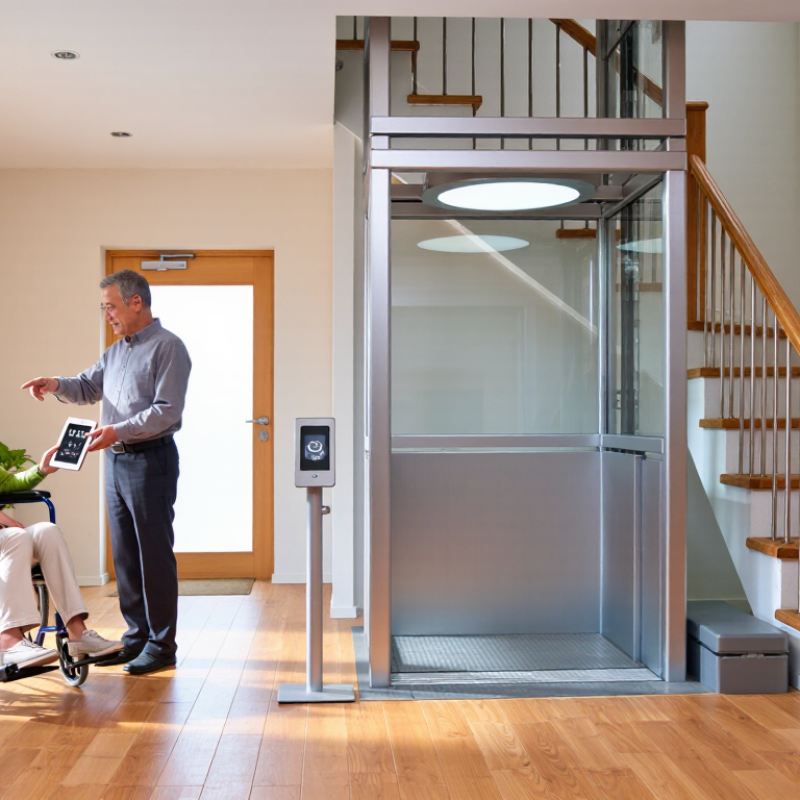
Vehicle lifts require a different review. Check loading height, chair dimensions, vehicle capacity, weather exposure, and secure attachment points. A lift that fits the driveway may block a door or create a dangerous slope. For vertical movement between floors, compare platform lifts and enclosed home elevators by travel height, doorway clearance, backup power, and maintenance access. Have a qualified installer verify structural and electrical needs before purchase. An occupational therapist can assess transfers, posture, and future mobility changes. Choose simple controls, visible indicators, nonslip surfaces, and manual release features. Do not judge safety by speed alone. Noise, service response, and cleaning effort matter every day. A careful checklist should include trial use, written load limits, and a realistic emergency plan. Even careful choices can age poorly. Recheck the setup after illness, falls, or home renovations.

Check Weight Capacity, Measurements, Safety Features, and Controls

10 Tips for Choosing Mobility Lifts for Home

Check the lift’s rated weight capacity against the user, wheelchair, and daily items. Add a sensible safety margin. Do not rely on appearance. The CDC reports that one in four adults aged 65 and older falls each year. A strained motor or unstable platform can increase risk during transfers. Ask a qualified installer to confirm capacity under real operating conditions, not only on paper.

Measure doorway widths, landing depth, ceiling height, stair angles, and turning space. Take measurements with doors open and furniture in place. A few centimeters can change the installation.

The World Health Organization reports that falls cause about 684,000 deaths annually worldwide, with adults over 60 facing the greatest risk of fatal falls.

Choose lifts with emergency lowering, obstruction sensors, non-slip surfaces, secure restraints, and battery backup where appropriate. Safety features need regular testing.

Controls should be reachable, clearly labeled, and simple enough during stress. Large buttons help users with limited grip strength or vision. Place controls at both ends when the route requires them.

Test the lift while wearing shoes and carrying a small bag. Small details matter. Review maintenance access, noise, lighting, and evacuation needs with an accessibility professional.

No checklist is perfect. Recheck the home after installation, because furniture and mobility needs can change.

Evaluate Installation Requirements, Maintenance, and Emergency Support

10 Tips for Choosing Mobility Lifts for Home

Tip 1: Request a professional site assessment before choosing a lift. Measure stair width, landing space, door clearance, and nearby power access.

Tip 2: Ask how much structural preparation the installation requires. Some homes need reinforced flooring, wall adjustments, or electrical work.

Tip 3: Confirm who handles permits and safety inspections. Responsibilities should be written clearly.

Tip 4: Consider installation time and household disruption. A rushed fitting can create avoidable problems.

Tip 5: Examine the maintenance schedule, including lubrication, battery checks, and safety testing.

Tip 6: Ask whether technicians can reach your area and how quickly they usually respond.

Tip 7: Check the cost of routine servicing and replacement parts. Low purchase prices may hide higher upkeep. I once underestimated doorway clearance. It mattered.

Tip 8: Request a written emergency-support plan. It should explain telephone assistance, onsite response times, and procedures during power failures.

Tip 9: Verify backup lowering systems and manual release methods. A family member should understand them before an emergency occurs.

Tip 10: Test the lift with the intended user, mobility aid, and everyday items. Comfort, noise, and control placement are easy to overlook.

Keep records of inspections and repairs. Also, ask difficult questions. Sales conversations can make every installation sound simple, but homes rarely behave perfectly.

Review Costs, Funding Options, Warranties, and Professional Advice

Choosing a mobility lift requires more than comparing prices. A 2021 AARP Home and Community Preferences Survey found that 77% of adults aged 50 and older want to remain in their homes. That preference makes long-term value important. Request itemized quotes covering equipment, delivery, installation, electrical work, maintenance, and removal. Ask whether a temporary rental could suit short-term recovery. Measure twice.

Funding can be difficult. In the United States, standard Medicare usually does not pay for home modifications. Medicaid home- and community-based waivers, veterans’ assistance, disability grants, and local housing programs may offer support. Rules differ by location. A benefits counselor can check eligibility before you pay a deposit. Genworth’s 2023 Cost of Care Survey reported a national median assisted-living cost of $5,350 monthly, but a lift should not be justified through fear or rushed comparisons.

Review warranty terms carefully. Check coverage periods, labor exclusions, battery replacement, service response times, and whether coverage transfers after moving. Get every promise in writing. An occupational therapist can assess transfers, balance, and future needs, while a qualified installer can inspect stairs, walls, power supply, and emergency access. Professional advice costs money, but incorrect measurements cost more. I would also ask for two independent assessments; one recommendation can miss a practical weakness. These checks support safer decisions, although no report can predict every household’s changing needs.

10 Tips for Choosing Mobility Lifts for Home

Typical U.S. installed-cost ranges by lift type

Costs vary according to travel height, staircase design, structural work, electrical requirements, customization, and local labor rates. Use these ranges for early planning, then request an in-home assessment and written quote. Check whether public programs, veterans’ assistance, insurance, tax benefits, or home-improvement grants may help fund the project. Confirm installation coverage, parts coverage, service response times, and warranty duration before choosing a lift.

Planning estimates in USD for common U.S. residential installations; actual prices differ by property and accessibility requirements.

ACCESS ABILITY Home Medical Store has a Beautiful showroom in Cudahy To Serve You!

Corporate Office And Store
Cudahy, Wisconsin

1995 E Norse Ave
Cudahy, WI 53110
Phone: 414-486-6249
Fax: 414-486-5728