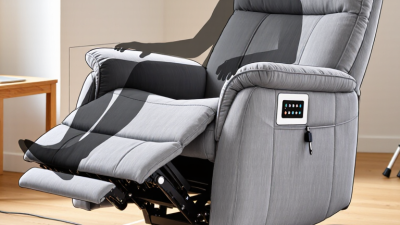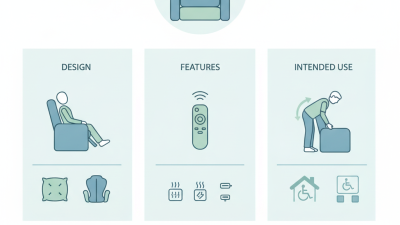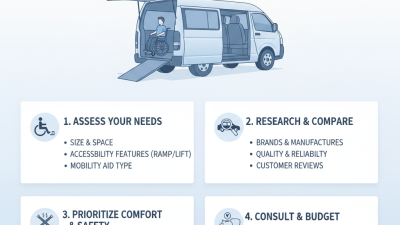
How to Choose Mobility Lift Chairs for Global Buyers?

Choosing mobility lift chairs for global buyers requires more than comparing prices, colors, and shipping offers. Each chair should match the user’s height, weight, leg length, balance, and daily routine. A chair that looks comfortable online may leave a shorter user’s feet hanging above the floor. That small gap can affect stability during standing.

Dr. Rory Cooper, a renowned rehabilitation engineering expert, has emphasized that assistive technology should “promote independence and participation.” This principle matters when evaluating mobility lift chairs. The lift mechanism should rise smoothly, without sudden movement or excessive noise. The remote should have large, clearly marked buttons. Emergency lowering, battery backup, upholstery durability, and replacement-part access also deserve attention. These details become important when local servicing is limited.

Global buyers must examine voltage compatibility, plug types, warranty coverage, and delivery conditions. A chair designed for one market may not operate safely in another electrical system. Confirm the product’s tested load capacity, fire-safety information, and user instructions before purchase. Ask whether technicians can support the chair after installation.

Still, product pages rarely show the whole experience. They may not reveal transfer difficulty, motor noise, or fabric heat after several hours. That is a weakness.

This guide compares practical features, supplier reliability, user fit, and after-sales support. It also questions attractive claims that lack measurable evidence. The best choice is not always the most expensive chair. It is the chair that supports safer movement, dependable comfort, and realistic long-term use.
How to Choose Mobility Lift Chairs for Global Buyers?

Frame Global Need: WHO Reports 1.3 Billion People Live With Disability

WHO estimates that 1.3 billion people, about 16% of the global population, live with significant disability. This figure shows why accessible seating deserves careful international attention. A mobility lift chair can support safer sitting, standing, and repositioning. It cannot replace individual clinical advice.

Global buyers should assess the user before comparing specifications. Check transfer ability, body weight, seat height, armrest support, and pressure comfort. Measure doorways, lift access, and room clearance. A chair that fits a showroom may fail in a small apartment. It happens.

Electrical requirements also need attention. Buyers should confirm local voltage, plug compatibility, emergency lowering options, and service availability. Ask whether replacement parts and trained technicians are accessible in the destination country. Regional safety requirements can differ, so independent certification and clear documentation matter.

In practice, caregivers often notice details that product sheets miss. A quiet motor may reduce anxiety, while washable upholstery can simplify daily care. However, extra functions can increase cost and maintenance. More features are not always better. My own assessment would remain cautious when user measurements are incomplete, because a well-intended purchase can still create awkward transfers or unsafe posture.

Define Product Types: Two-Position, Infinite-Position, and Lift-Only Chairs

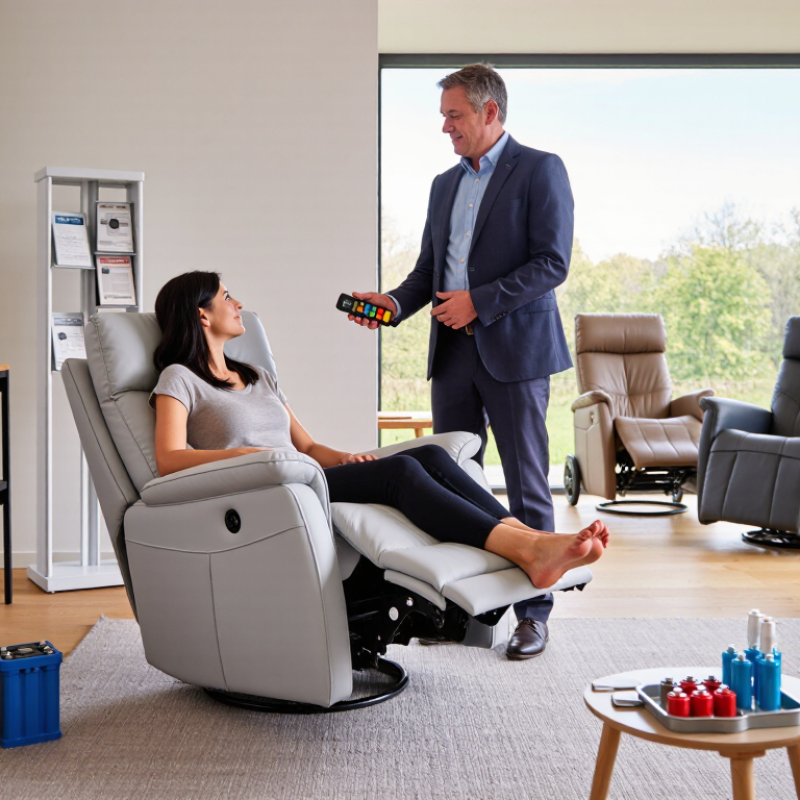
When choosing mobility lift chairs for global buyers, define the chair type before comparing features. A two-position chair usually supports upright sitting and gentle reclining. It suits reading, television, and short rest periods. Its simpler movement can be easier for first-time users. An infinite-position chair adjusts the backrest and footrest separately. Users can raise their legs, recline deeply, or find a sleeping position. However, more movement means more controls and more possible confusion. A lift-only chair focuses on helping users move from sitting to standing. It may not offer deep reclining, but it can work well in compact rooms or care settings.

Measure the user, doorway, and available floor space carefully. Check seat width, seat height, maximum load, remote-control design, and lifting speed. A chair that feels comfortable for ten minutes may feel unsuitable after two hours. Global buyers should also verify voltage, plug compatibility, motor documentation, upholstery durability, and local electrical requirements. Battery backup can be useful during outages, although it may add maintenance needs. Do not judge quality from appearance alone. The quietest motor is not always the most suitable choice.

Tips: Match the chair to daily routines, not only medical needs. Test whether the user can operate every button clearly. Leave space behind and in front of the chair. Ask for dimensional drawings and user instructions before ordering. A professional assessment may prevent an expensive mismatch.

Assess Fit and Load: Apply ISO 21856:2022 and Rated-Capacity Data

Choosing a mobility lift chair for global buyers starts with fit, not appearance.

Measure the user’s hip width, seated depth, lower-leg length, and transfer space. A chair may look spacious but still press the knees or leave the feet unsupported. Check the upright, reclined, and lift positions. Each position changes stability and access.

Use ISO 21856:2022 as a technical reference

Use ISO 21856:2022 as a technical reference for evaluating assistive products, including relevant safety, performance, and user-related considerations. Confirm that the product documentation identifies applicable tests and limitations. Do not treat the rated capacity as a simple body-weight figure. Review the declared maximum load, seating position, movement conditions, and any accessories that add force or weight. A conservative safety margin is sensible, especially for frequent transfers or uneven loading. Standards help, but they do not replace a professional assessment.

Tips:

Ask suppliers for test evidence, instructions, and maintenance requirements. Compare the rated capacity with the user’s actual weight, clothing, cushions, and transfer habits. Check whether the data applies to powered lifting and reclining together. Trial fitting is valuable. A short trial can reveal pressure behind the knees, unstable foot placement, or difficult controls. Do not rely only on a catalogue measurement. Human posture is less predictable than a spreadsheet. Some published dimensions may also be measured differently, so verify them directly before purchase.

Verify Safety: Check EN 12182, UL 962, Voltage, Frequency, and Plugs

Global buyers should treat safety verification as a purchasing requirement, not a final paperwork check. The WHO and UNICEF Global Report on Assistive Technology (2022) estimates that more than 2.5 billion people need assistive products worldwide. That number may exceed 3.5 billion by 2050. A lift chair supports daily transfers, so small electrical details matter.

Request technical files showing how the chair addresses EN 12182 requirements for assistive products. EN 12182 is not automatically a complete lift-chair certification. Ask for applicable test records, stability results, load limits, moving-part protection, and cleaning instructions. Also check UL 962 evidence for motor-operated household or commercial furnishings. A certificate without a matching model number is weak evidence. Very weak.

Inspect the rating label before shipment. Confirm voltage, frequency, rated current, and plug configuration for the destination country. A 230 V, 50 Hz chair may not suit a 120 V, 60 Hz supply. Check the transformer, control box, grounding method, and detachable power cord separately. A familiar plug is not proof of safety. In practice, buyers often verify the plug but overlook frequency compatibility. I have seen specifications copied between markets; that approach needs correction. Ask for photographs, test reports, and a sample inspection before approving bulk orders.

Select Suppliers: Compare Warranty, Spare Parts, Testing, and Logistics

How to Choose Mobility Lift Chairs for Global Buyers?

A reliable supplier should explain warranty coverage in plain language. Compare coverage periods for the frame, motor, controller, battery, and upholstery. Ask whether labor, replacement shipping, and technician support are included. Some warranties look generous but exclude frequent-use components. That detail can change the real cost.

Spare parts deserve equal attention. Request a parts list with prices, stock locations, and expected dispatch times. Ask whether controllers and motors remain compatible across production batches. A useful supplier can identify a chair from its serial number and provide fitting instructions. Keep common parts locally when possible. It reduces service delays.

Testing evidence should be specific, not decorative. Request load-test records, recline-cycle results, electrical safety documents, and inspection photos. Check whether testing covers the exact model and voltage configuration you will import. Sample units can reveal loose wiring or noisy actuators before a larger order. Logistics also needs careful comparison. Review carton dimensions, pallet stability, moisture protection, delivery terms, insurance responsibility, and customs documents. A damaged chair may cost more to handle than to purchase. Suppliers sometimes promise fast delivery without showing a realistic production schedule. That deserves a second question. Good purchasing is rarely perfect, and even experienced buyers can overlook regional service capacity.

How to Choose Mobility Lift Chairs for Global Buyers? - Select Suppliers: Compare Warranty, Spare Parts, Testing, and Logistics
Evaluation Dimension Recommended Buyer Benchmark Supplier Data to Compare Evidence to Request Global-Buyer Risk Check
Warranty Coverage Target at least 12 months for the complete chair; consider 24 months for the frame, motor, or actuator when commercially available. Full chair Motor Frame Controller Written warranty terms showing coverage period, exclusions, labor responsibility, freight responsibility, and claim procedure. Check whether the warranty starts at shipment, delivery, installation, or end-user sale. Confirm coverage for commercial and residential use separately.
Warranty Claim Process A documented claim-response target of 2–5 business days is preferable, with a defined replacement or repair process. Response time RMA process Remote diagnosis Sample RMA form, troubleshooting guide, service contact, and escalation procedure. Clarify who pays return freight, whether photo or video evidence is accepted, and how repeated failures are handled.
Spare-Parts Availability Critical replacement parts should remain available for approximately 5 years after the last production shipment. Actuator Hand control Power supply Cables Casters Parts list with item codes, compatibility by model, unit prices, minimum order quantities, and stock status. Check whether replacement parts are model-specific, interchangeable, or subject to future design changes.
Spare-Parts Lead Time Common electrical and mechanical parts should ideally ship within 3–10 business days when stocked. Stocked parts Made-to-order parts Emergency supply Recent stock report, standard lead-time table, and emergency-order procedure. Compare the availability of local stock, regional distribution, and direct shipment from the manufacturing site.
Electrical Safety Testing Testing must match the product classification and destination-market requirements; examples may include applicable IEC, EN, UL, or equivalent national requirements. Input voltage Leakage current Dielectric strength Ground continuity Test report or certificate showing the exact model, rated voltage, test standard, laboratory, issue date, and report number. Do not accept a certificate for a similar model without checking electrical ratings, actuator configuration, plug type, and control system.
Mechanical Safety Testing The chair should be evaluated for rated load, stability, pinch points, repeated movement, and structural durability. Load capacity Cycle testing Stability Shear points Test method, sample identification, applied load, number of cycles, acceptance criteria, and corrective-action records. Verify that the stated user weight limit includes dynamic movement and is not based only on a static frame load.
Motor and Actuator Performance Compare lifting force, recline range, operating noise, duty cycle, overload protection, and rated service life. Lifting force Noise level Duty cycle Thermal protection Actuator datasheet, duty-cycle specification, noise-test conditions, and endurance-test results. Check whether the performance data applies to the complete chair or only to the standalone actuator.
Material and Upholstery Information Material composition, cleaning instructions, flammability requirements, and color consistency should be documented for each product version. Fabric or leather type Abrasion resistance Flammability Cleaning method Material specification, laboratory test report where required, color card, and approved sample. Confirm that the tested upholstery is the same material and thickness used in mass production.
Product Configuration Confirm voltage, plug, frequency, remote-control language, lift height, seat width, recline angle, and maximum user weight for each market. 110–120 V 220–240 V 50/60 Hz Plug type Approved technical drawing, user manual, product specification sheet, and configuration matrix. Prevent mixed-voltage shipments by using separate model codes, carton labels, and pre-shipment verification.
Packaging Protection Packaging should protect the chair from compression, moisture, abrasion, and movement during international handling. Carton dimensions Gross weight Drop protection Moisture barrier Packaging specification, photographs, carton test results, pallet plan, and shipping marks. Calculate volumetric weight and container utilization using final packed dimensions, not showroom dimensions.
Shipping and Logistics The supplier should provide accurate packed dimensions, gross weight, loading quantity, HS-code support, and export documentation. EXW FOB CIF DDP options Commercial invoice, packing list, bill of lading instructions, certificate of origin where applicable, and freight quotation. Confirm Incoterms, insurance responsibility, destination customs requirements, demurrage risk, and delivery appointment procedures.
Lead Time and Production Capacity Compare normal production lead time, peak-season lead time, sample time, and confirmed monthly capacity. Sample lead time Mass production Peak season Capacity Production schedule, capacity statement, order milestone plan, and on-time delivery records with sensitive information removed. Separate component lead time from final assembly lead time, especially for motors, controllers, upholstery, and customized packaging.
Minimum Order Quantity Compare standard-model MOQ with the MOQ for custom fabric, private labeling, packaging, and electrical configurations. Sample order Trial order Custom order Repeat order Formal quotation showing MOQ, tooling fees, sample fees, customization fees, and refund conditions. Check whether a low initial MOQ creates higher unit prices, longer lead times, or limited spare-parts support.
Documentation and Manuals User manuals, assembly instructions, troubleshooting guides, labels, and safety warnings should be available in the required market languages. Manual format Translation Warning labels QR support Editable manual file, final PDF, label artwork, parts diagram, and revision-control record. Ensure the manual describes the actual remote control, emergency lowering method, weight limit, cleaning procedure, and electrical rating.
Quality-Control System Use documented incoming, in-process, and final inspections with traceability for major electrical and mechanical components. Incoming inspection Assembly inspection Final inspection Traceability Inspection checklist, sample final-inspection report, defect classification, and corrective-action report. Ask how defects are recorded by batch, model, production date, component supplier, and inspector.
Supplier Selection Score Use a weighted scorecard rather than price alone; warranty, safety evidence, spare parts, and delivery reliability should carry significant weight. Warranty: 20% Testing: 25% Parts: 20% Logistics: 20% Price: 15% Completed comparison sheet supported by documents, samples, factory-audit results, and reference shipment records. Reject suppliers that cannot provide verifiable safety documentation, clear warranty terms, or a reliable replacement-parts plan.
Note: Benchmarks are purchasing guidelines rather than universal legal requirements. The applicable safety, labeling, warranty, accessibility, electrical, and import rules depend on the destination country, product classification, and intended use.

ACCESS ABILITY Home Medical Store has a Beautiful showroom in Cudahy To Serve You!

Corporate Office And Store
Cudahy, Wisconsin

1995 E Norse Ave
Cudahy, WI 53110
Phone: 414-486-6249
Fax: 414-486-5728