How to Source Mobility Products from Global Suppliers
Sourcing mobility products from global suppliers requires more than comparing unit prices. The category includes wheelchairs, walkers, scooters, transfer aids, and pressure-relief accessories. Each product affects safety, independence, and daily dignity.
The WHO and UNICEF Global Report on Assistive Technology estimates that more than 2.5 billion people need at least one assistive product. This number may exceed 3.5 billion by 2050. Those figures reveal a growing market, but they also raise a practical question. Can suppliers deliver consistent quality at scale? Dr. Alana Officer, a leading WHO assistive-technology expert, stated, “Assistive technology is an essential part of universal health coverage.” That principle should guide every purchasing decision.
Reliable sourcing begins with evidence. Request ISO 13485 certification where relevant, recent test reports, production photographs, and traceability records. Inspect frame welds, brake cables, caster alignment, battery housings, and packaging protection. A sample wheelchair may perform well in a showroom but fail after repeated curb impacts. That possibility cannot be ignored.
The WHO Guidelines on the Provision of Manual Wheelchairs in Less-Resourced Settings also emphasize assessment, fitting, training, and follow-up. These needs extend beyond the factory gate. Buyers should examine spare-part availability, warranty response times, user instructions, and local repair capacity. A low quotation can become expensive when one missing wheel delays service for six weeks.
Some decisions remain imperfect. Supplier audits can miss problems between inspections. Forecasts can also be wrong. Therefore, strong sourcing plans combine documented compliance with small pilot orders, independent testing, and transparent communication. Global procurement works best when cost, safety, usability, and long-term support are measured together.
Define Mobility Product Categories and Sourcing Requirements
How to Source Mobility Products from Global Suppliers
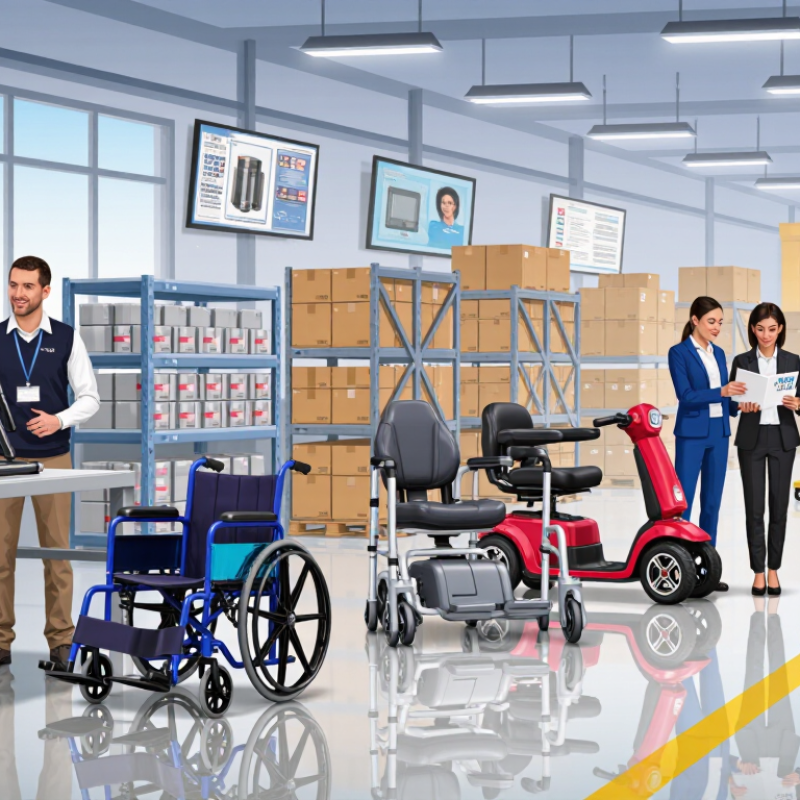
Define mobility categories before contacting suppliers. Common categories include manual wheelchairs, power wheelchairs, mobility scooters, walkers, transfer aids, and pressure-relief cushions. Each category serves different users, environments, and risk levels. Fit comes first.
The WHO and UNICEF Global Report on Assistive Technology estimates that more than 2.5 billion people need at least one assistive product. This number may reach 3.5 billion by 2050. These figures support demand, but they do not define your purchasing specification. Record user weight, seat width, transfer ability, terrain, storage space, climate, and expected daily usage. For powered products, specify battery type, charging time, range, incline performance, and replacement access. For manual equipment, check frame strength, folding dimensions, brake design, and corrosion resistance.
Ask suppliers for test reports, material details, inspection records, warranty terms, and traceability procedures. Reference relevant standards, such as ISO 7176 for wheelchairs, while confirming requirements in the destination market. Request samples under realistic conditions: uneven floors, narrow doorways, wet storage areas, and repeated folding. Measure twice.
A supplier may provide excellent documents but poor after-sales support. Require spare-part lists, repair instructions, packaging photographs, and response-time commitments. A spreadsheet can look complete and still hide a poor fit. I have seen sourcing teams overvalue unit price and underestimate maintenance, training, and returns. That mistake remains expensive.
Identify and Evaluate Potential Global Suppliers
Global mobility sourcing starts with an evidence-based supplier list, not a marketplace search. WHO and UNICEF’s 2022 Global Report on Assistive Technology estimates that more than 2.5 billion people need assistive products today. It projects this figure may exceed 3.5 billion by 2050. That demand attracts capable factories and careless intermediaries.
For each candidate, confirm the legal entity, factory address, ownership, product scope, and export history. Request relevant ISO 13485 certificates, recent test reports, material declarations, batch traceability, and recall procedures. Verify certificates with the issuing organization. Do not accept a PDF alone. A polished audit pack is not proof. Ask for production samples, then check braking distance, folding cycles, battery protection, surface finish, and packaging damage. Map every product against destination-market safety and labeling requirements.
Compare quotations through total landed cost, including tooling, inspection, freight, duties, warranty replacements, and currency changes. UNCTAD’s Review of Maritime Transport 2024 reports that maritime shipping carries over 80% of global trade by volume. Delays can therefore affect both inventory and patient access. Use a scorecard covering safety, quality, capacity, lead time, communication, and business continuity. Run a small pilot order before signing a long-term agreement. Even experienced buyers can overvalue price. I would distrust my first score and reassess it after a real shipment. Supplier promises often sound strongest before production pressure begins.
How to Source Mobility Products from Global Suppliers
Identify and Evaluate Potential Global Suppliers
| Supplier ID |
Source Market |
Primary Product Category |
Product Scope |
Documented Quality System |
Regulatory Evidence |
Typical MOQ |
Estimated Lead Time |
Export Experience |
Pre-Shipment Inspection |
Payment Terms |
Indicative Risk Level |
Evaluation Score |
Recommended Next Step |
| GS-001 |
Germany |
Manual wheelchairs |
Folding frames, attendant-propelled chairs, transit models |
ISO 13485 documented |
CE technical file available |
50 units |
8–12 weeks |
Established |
Yes |
30% deposit / 70% before shipment |
Low |
88/100 |
Request samples and verify test reports |
| GS-002 |
Taiwan |
Powered mobility devices |
Compact scooters, power chairs, battery-powered accessories |
ISO 9001 documented |
CE and EMC test records |
30 units |
10–14 weeks |
Established |
Yes |
20% deposit / 80% before shipment |
Medium |
86/100 |
Confirm battery transport documentation |
| GS-003 |
Vietnam |
Walking aids |
Rollators, walking frames, crutches, replacement wheels |
ISO 9001 documented |
Material and load test reports |
200 units |
6–10 weeks |
Moderate |
Available on request |
30% deposit / 70% before shipment |
Low |
82/100 |
Conduct an independent factory audit |
| GS-004 |
Poland |
Patient transfer equipment |
Mobile hoists, transfer chairs, slings and lifting accessories |
ISO 13485 documented |
CE and risk-management file |
25 units |
9–13 weeks |
Established |
Yes |
30% deposit / balance at shipment |
Low |
90/100 |
Review clinical safety and service procedures |
| GS-005 |
India |
Rehabilitation equipment |
Standing aids, therapy tables, parallel bars and exercise devices |
ISO 9001 documented |
Product test dossier available |
50 units |
8–12 weeks |
Moderate |
Available on request |
40% deposit / 60% before shipment |
Medium |
78/100 |
Validate structural-load testing and packaging |
| GS-006 |
Turkey |
Accessibility equipment |
Portable ramps, threshold ramps, grab rails and access platforms |
ISO 9001 documented |
Load and slip-resistance reports |
100 units |
5–8 weeks |
Established |
Yes |
30% deposit / 70% before shipment |
Low |
84/100 |
Check destination-market accessibility requirements |
| GS-007 |
Mexico |
Mobility seating |
Pressure-relief cushions, positioning supports and replacement covers |
ISO 13485 documented |
Biocompatibility and material records |
100 units |
6–9 weeks |
Moderate |
Yes |
30% deposit / 70% before shipment |
Medium |
81/100 |
Assess material durability and cleaning performance |
| GS-008 |
Netherlands |
Service and replacement parts |
Casters, brakes, batteries, controllers and maintenance kits |
ISO 9001 documented |
Traceability and material declarations |
25 units |
3–6 weeks |
Established |
Yes |
Open account after approval |
Low |
87/100 |
Confirm compatibility, warranty and spare-parts availability |
Evaluation dimensions:
Quality system
Regulatory documentation
Minimum order quantity
Production lead time
Export capability
Inspection controls
Commercial terms
Supply-chain risk
Scoring reference: supplier evaluation scores are indicative procurement-screening values based on documentation depth, product fit, delivery capability, quality controls and commercial risk. Final qualification should include sample testing, factory verification, regulatory review and a written quality agreement.
Compare Product Quality, Certifications, Pricing, and Lead Times
Sourcing mobility products starts with a physical quality check, not a spreadsheet.
Inspect welds, wheel locks, battery housings, upholstery seams, and folding joints. For powered products, test braking distance, charger heat, noise, and battery performance under load.
WHO’s Global Report on Assistive Technology (2022) estimates that more than 2.5 billion people need assistive products worldwide. Reliability is not optional.
Compare certifications by product risk and destination market. ISO 13485 supports a medical-device quality system, while ISO 7176 covers important wheelchair performance and safety tests. Electrical models may also require relevant IEC testing and local conformity procedures.
A certificate alone proves little. Request current test reports, factory audit records, calibration logs, and traceable corrective-action records. I have seen attractive documents hide weak inspection routines.
Price needs a landed-cost comparison. Include tooling, packaging, spare parts, testing, insurance, duties, and inland delivery. UNCTAD’s Review of Maritime Transport 2023 reported continued volatility in container shipping conditions, so a low factory price may age badly.
Lead times should separate production, inspection, port handling, and transit. The World Bank’s Logistics Performance Index 2023 compares 139 economies and shows why two suppliers with identical production schedules can deliver differently.
Ask for recent shipment records, not promises. Build a small pilot order. It may feel slower, but it exposes defects before a large commitment. My own evaluation can still be imperfect; user feedback often reveals failures that laboratory checks miss.
Manage Samples, Negotiations, Contracts, and Compliance
Sourcing mobility products globally requires more than comparing prices. It requires disciplined sample control. Request one production-level sample, not a showroom prototype. Test its frame, wheels, brakes, controls, and folded dimensions. Record results with dated photos. A sample may perform well indoors but fail on uneven pavement. That gap matters.
Negotiations should cover measurable details. Confirm load capacity, material grades, packaging strength, spare parts, and replacement procedures. Put every agreed specification into the contract. Include inspection rights, shipment deadlines, payment milestones, and remedies for defects. Avoid vague phrases such as “high quality.” They create arguments later. No contract is perfect, and unclear responsibilities can still survive careful review.
Tips: Keep a sample log with serial numbers, test results, and approved changes. Ask suppliers to confirm revisions in writing. Before shipment, review labels, manuals, certificates, and test reports against the destination market’s requirements. Check whether batteries, chargers, and electrical components need additional documentation. A qualified compliance professional should verify local rules, because requirements differ by product and country. Do not rely only on supplier statements. Independent inspection can reveal loose fasteners, weak cartons, or missing warnings. Small details become expensive after arrival.
Arrange Shipping, Quality Control, and Ongoing Supplier Management
How to Source Mobility Products from Global Suppliers
Reliable sourcing depends on more than finding a low factory price. Shipping plans, quality checks, and supplier communication must work together. Confirm carton dimensions, product weights, delivery terms, and required shipping documents before placing an order. A small measurement error can increase freight costs quickly. Build a realistic schedule with production time, inspection days, customs clearance, and a modest delay allowance.
Tips: Request a pre-production sample. Approve packaging photographs. Use a written inspection checklist. Check wheel locks, frame joints, brakes, labels, and protective wrapping. Record defects with clear photographs and serial references. An independent inspection can reveal problems that factory reports miss.
Our team once accepted a shipment after checking only product appearance. Several units later showed loose fasteners during handling. That mistake changed our process. We now test moving parts, inspect random cartons, and compare finished goods with the approved sample. The inspection plan should define acceptable defect levels and corrective actions. Do not rely on verbal promises. Written records create accountability.
Supplier management continues after delivery. Track defect rates, response times, shipment accuracy, and complaint resolution. Hold regular review calls with measurable action items. A supplier scorecard helps separate temporary delays from repeated performance issues. However, scoring alone is not enough. Ask why a problem occurred and verify whether the correction remains effective in the next production cycle. Keep a backup supplier qualified, even when the main supplier performs well.
How to Source Mobility Products from Global Suppliers
Typical international sourcing lead time by operational stage, including shipping, quality control, and ongoing supplier management.
Planning benchmarks are expressed in business days. Actual timing varies by product complexity, destination, inspection requirements, customs procedures, and supplier responsiveness.