What Are the Top 10 Mobility Scooters for Global Buyers?

Mobility scooters are becoming important tools for everyday independence, not luxury products. The World Health Organization estimates that 1.3 billion people live with significant disabilities worldwide. The United Nations also projects that 1 in 6 people will be aged 65 or older by 2050. These figures show why buyers need practical, safe, and accessible mobility choices.

This guide examines the top 10 mobility scooters for global buyers. The selection considers driving range, turning radius, ground clearance, seat comfort, maximum load, battery design, and transportability. A scooter that fits easily into a vehicle can matter more than a higher advertised range. A tight indoor turning circle may also matter more than rugged outdoor tires. Small details matter.

Industry research supports this growing focus. Grand View Research reports continued expansion in the global mobility scooters market, driven by aging populations and rising demand for personal mobility equipment. The WHO’s Global Report on Health Equity for Persons with Disabilities also stresses the importance of accessible products and services. Buyers should still verify local certification, warranty coverage, charging requirements, and repair support. Standards differ between markets.

No ranking is universal. A lightweight three-wheel model may suit a city apartment, while a four-wheel scooter may feel steadier on uneven paths. Advertised range can change with rider weight, temperature, hills, and tire pressure. That part is often overlooked. This comparison therefore balances specifications with real-world usability, dealer reliability, and long-term ownership concerns. The best choice is not always the most powerful one. It is the scooter that safely matches the buyer’s body, route, budget, and daily routine.
What Are the Top 10 Mobility Scooters for Global Buyers?

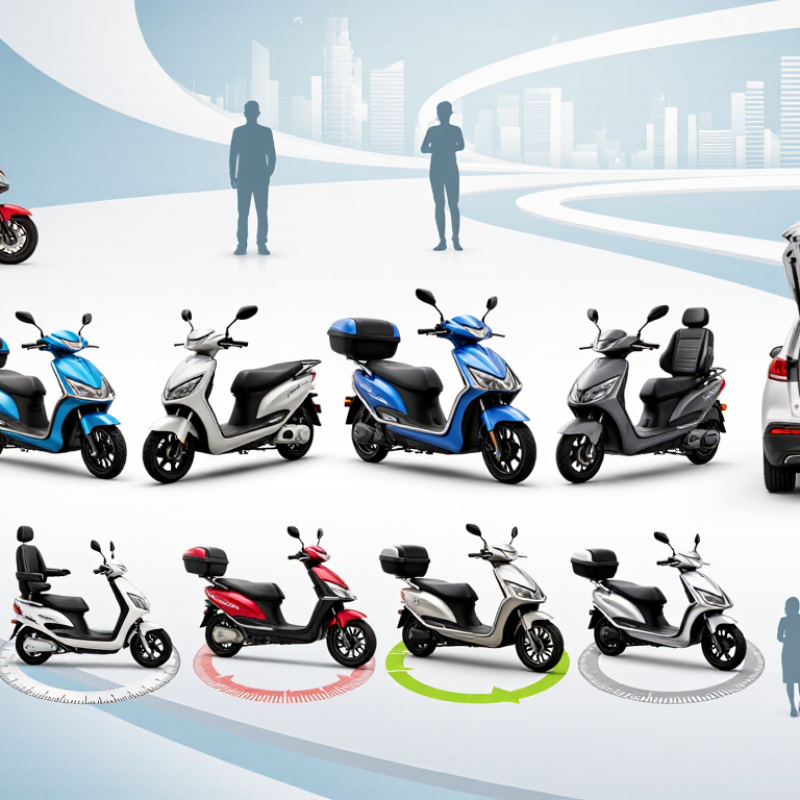
Global Mobility Scooter Market Scope: 3-Wheel, 4-Wheel, and Travel Models

What Are the Top 10 Mobility Scooters for Global Buyers?

Global Mobility Scooter Market Scope: 3-Wheel, 4-Wheel, and Travel Models

The top 10 mobility scooters should be compared by use case, not appearance alone. A strong review checks stability, turning space, battery range, seat support, controls, and service access. Buyers should also confirm local road rules, charging requirements, and safety certifications. Specifications can vary between markets.

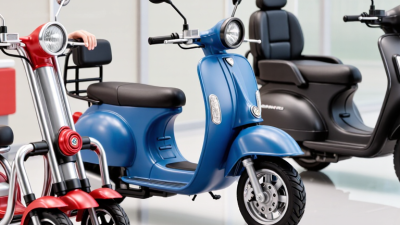
Three-wheel models usually offer a tighter turning radius. They suit indoor shopping areas, narrow hallways, and smooth pavements. However, their shorter footprint may feel less stable on uneven ground. Four-wheel models provide broader support and steadier handling. They are often better for outdoor paths, sloped driveways, and longer daily trips. A practical test includes stopping on a gentle incline and crossing a shallow surface change.

Travel models focus on portability. Many separate into lighter sections for car storage or apartment use. Check the heaviest piece, folded dimensions, airline policies, and battery rules before purchase. A compact scooter may fit a trunk but still feel cramped after twenty minutes. That detail is easy to miss.

In a realistic top-ten comparison, comfort should carry equal weight with speed. A well-padded seat, adjustable tiller, clear display, and responsive brakes matter during ordinary errands. Some published range figures use ideal conditions. Real distance may drop with hills, cold weather, heavier loads, or frequent stops. A ranking can still mislead. The best choice matches the user’s body, route, storage space, and support network.

Evaluation Criteria: Range, 136 kg Capacity, Speed, Safety, and Portability

Choosing the top 10 mobility scooters for global buyers requires more than comparing prices. Start with real-world range, not the advertised distance. A capable scooter should cover daily errands with reserve power for hills, cold weather, and battery aging. A 136 kg weight capacity is a useful baseline, but users should include clothing, shopping, and personal equipment. Overloading can reduce stability and range.

Speed should match the environment. Moderate speed often feels safer on crowded pavements, while responsive braking matters more than maximum numbers. Look for adjustable controls, bright front and rear lights, reflectors, anti-tip wheels, and a stable turning radius. A test ride reveals details that specifications hide. Is the seat comfortable after thirty minutes? Can the user release the throttle quickly? My assessment would not be perfect, because comfort depends heavily on body shape and posture.

Tips: Measure the car boot before buying. Check the folded weight, battery removal method, and charging time. Ask whether replacement batteries are available locally. A long-range model may be unsuitable if it is difficult to lift. Portability is not only about folding size; it includes handles, balance, and storage effort. Buyers should also confirm local transport and accessibility requirements, since rules and practical conditions differ between countries.

Top 10 Mobility Scooters Ranked by ISO 7176 Performance and User Needs

For global buyers, the top 10 mobility scooters should be ranked by ISO 7176 performance and real user needs. The ranking is practical, not a perfect laboratory league table. Compact travel scooters lead for aircraft-friendly storage and short urban trips. Four-wheel outdoor scooters follow for improved stability. Three-wheel models suit tighter indoor turning. Heavy-duty scooters serve longer routes and higher user loads. Folding scooters support commuters. Suspension models reduce jolts on uneven pavements. Low-step designs help users with limited hip movement. Modular scooters simplify transport and maintenance. Narrow scooters fit lifts and older apartments. Long-range models suit rural journeys.

ISO 7176 provides a useful testing framework. ISO 7176-2 examines dynamic stability, while ISO 7176-3 evaluates braking performance. ISO 7176-4 measures theoretical energy consumption and range. ISO 7176-5 addresses dimensions and mass, which matter during vehicle loading. Buyers should also check ISO 7176-8 strength testing and documented maximum user weight. Test conditions are not identical to daily streets. Wet slopes, loose gravel, and crowded entrances can change performance quickly.

The World Health Organization and UNICEF reported in Global Report on Assistive Technology that more than 2.5 billion people need assistive products worldwide. That figure may reach 3.5 billion by 2050. For this reason, comfort and service access deserve equal weight with test results. A quiet motor helps indoors. A visible battery gauge reduces uncertainty. Adjustable armrests prevent shoulder strain. Yet range claims can disappoint in cold weather or on hills. Buyers should request independent test details, warranty terms, spare-part access, and a supervised trial. Feel matters.

Regional Buying Guide: FDA Class II Rules, EU CE Marking, and Battery Limits

A credible top-10 mobility scooter list must begin with regional compliance, not appearance. The WHO Global Report on Assistive Technology estimates that more than 2.5 billion people need assistive products worldwide. That figure may exceed 3.5 billion by 2050. Demand is growing, but approval requirements remain local.

In the United States, buyers should verify the FDA product classification and establishment listing. Many powered mobility devices follow Class II regulatory pathways. FDA registration is not the same as FDA approval. Ask for the applicable product code, labeling, and electrical safety evidence. In Europe, CE marking under Regulation (EU) 2017/745 requires technical documentation, risk management, and clinical evaluation. Notified-body involvement depends on the device’s risk classification. A missing declaration of conformity is a serious warning sign.

Battery rules can decide whether a scooter travels easily. The IATA Dangerous Goods Regulations require airlines to assess mobility aids, battery type, and transport conditions. Removable lithium batteries commonly need airline approval, protected terminals, and clear watt-hour markings. Many carriers apply a 300 Wh limit to spare or removable batteries. UN 38.3 transport-test evidence should be available. Lead-acid batteries create different handling concerns. Check before booking.

A practical top-10 ranking should score tested range, turning radius, curb weight, ground clearance, battery removal, and local servicing. Manufacturer range claims can be optimistic. Real streets are less polite. Temperature, slopes, rider weight, and tire pressure change performance. I would also deduct points when compliance documents are vague, even if the scooter feels excellent during a short demonstration.

What Are the Top 10 Mobility Scooters for Global Buyers? - Regional Buying Guide: FDA Class II Rules, EU CE Marking, and Battery Limits
No. Mobility Scooter Type Best Use Typical Max. Speed Typical Real-World Range Common Battery Configuration Approx. Product Weight Turning Radius Global Regulatory and Transport Considerations
1 Travel Folding Scooter Short urban trips, hotels, cruises, and users who need easy storage. 6 km/h (3.7 mph) 10–16 km 24 V lithium-ion pack; commonly 120–240 Wh 18–30 kg 0.9–1.2 m For the United States, powered mobility scooters are generally regulated as Class II medical devices when marketed for medical use; an applicable FDA 510(k) pathway may apply. In the EU, CE marking under the Medical Device Regulation (EU) 2017/745 may be required. Removable lithium batteries must be checked against the airline’s approval and watt-hour limits.
2 Lightweight Portable Scooter Daily indoor and outdoor use with frequent car-boot transportation. 6–8 km/h (3.7–5 mph) 12–22 km 24 V lithium-ion or sealed lead-acid; 180–300 Wh typical 20–38 kg 1.0–1.3 m Confirm the intended-use claims, labeling, electrical safety documentation, and battery test documentation. For air travel, a removable lithium-ion battery is commonly limited to 300 Wh for mobility aids, but airline approval and packing instructions still apply.
3 Three-Wheel Indoor Scooter Shopping centers, corridors, apartments, and other tight indoor spaces. 6–8 km/h (3.7–5 mph) 15–25 km 24 V sealed lead-acid or lithium-ion; 240–480 Wh 35–55 kg 0.75–1.0 m A three-wheel layout normally provides a tighter turning circle but less lateral stability than a comparable four-wheel layout. CE-related technical documentation should address stability, EMC, charger safety, and risk management where applicable.
4 Four-Wheel Compact Scooter General-purpose use on sidewalks, paved paths, and moderate indoor routes. 6–8 km/h (3.7–5 mph) 18–30 km 24 V sealed lead-acid or lithium-ion; 300–600 Wh 45–70 kg 1.1–1.4 m Four-wheel designs generally offer greater directional stability. Buyers should check local speed limits, sidewalk rules, charger compatibility, and whether the importer is responsible for local conformity and post-market obligations.
5 Mid-Size Road Scooter Longer neighborhood journeys, shopping, and improved outdoor comfort. 8–12 km/h (5–7.5 mph) 25–40 km 24 V or 36 V sealed lead-acid; approximately 500–900 Wh 65–95 kg 1.3–1.6 m Higher-speed products may be subject to additional road-use, lighting, registration, or insurance requirements depending on the country. EU importers should verify the applicable MDR classification and maintain the required technical file and declaration of conformity.
6 Heavy-Duty Outdoor Scooter Higher user weight capacity, uneven pavements, and extended outdoor use. 8–15 km/h (5–9.3 mph) 30–55 km 24 V or 48 V lead-acid or lithium-ion; approximately 700–1,500 Wh 90–150 kg 1.5–2.0 m Large battery systems often exceed common airline limits and may require removal, special cargo handling, or may be refused for passenger travel. Confirm the maximum user mass, incline rating, braking performance, and ground-clearance claims using documented test methods.
7 All-Terrain Scooter Firm outdoor paths, parks, gravel surfaces, and moderate slopes. 8–12 km/h (5–7.5 mph) 25–45 km 24 V or 48 V battery system; approximately 600–1,200 Wh 80–135 kg 1.5–2.1 m Off-road capability does not automatically mean road legality. Buyers should check tire, lighting, braking, water-resistance, slope, and rollover information. CE marking is not a universal substitute for country-specific road approval or registration.
8 Suspension Comfort Scooter Users prioritizing ride comfort on longer paved routes and uneven sidewalks. 8–12 km/h (5–7.5 mph) 25–45 km 24 V sealed lead-acid or lithium-ion; approximately 600–1,000 Wh 70–115 kg 1.4–1.8 m Suspension improves comfort but adds weight and may complicate transport. Verify the charger input range, replacement-battery availability, electromagnetic compatibility information, and whether the battery can be safely disconnected for shipping.
9 Narrow Indoor Mobility Scooter Small homes, care facilities, elevators, narrow aisles, and indoor maneuvering. 4–6 km/h (2.5–3.7 mph) 10–20 km 12 V or 24 V sealed lead-acid; approximately 180–450 Wh 30–60 kg 0.7–1.0 m Measure doorway width, elevator dimensions, seat height, and turning space before purchase. Battery transport rules still apply even when the scooter itself is compact; airline acceptance is determined by the carrier and battery specification.
10 Modular Disassemblable Scooter Users who need removable sections for vehicle loading and occasional travel. 6–8 km/h (3.7–5 mph) 15–30 km 24 V sealed lead-acid or lithium-ion; approximately 240–600 Wh 40–80 kg total; lightest section commonly 10–18 kg 1.0–1.4 m Disassembly improves car transport but does not guarantee air-travel acceptance. Lithium-ion mobility-aid batteries are commonly subject to a 300 Wh limit per battery under airline guidance; spare batteries generally require protected terminals and operator approval. Non-spillable batteries also require carrier-specific handling.
Buyer verification note: Ranges, speeds, weights, and battery capacities are representative market ranges rather than specifications for a particular product. Actual performance depends on user mass, temperature, terrain, tire pressure, battery age, and test conditions. FDA classification and clearance requirements depend on the product’s intended use and claims. In the EU, the importer should verify the applicable Medical Device Regulation classification, CE documentation, authorized representative requirements, labeling, and post-market obligations. Always obtain written confirmation from the airline before travel.

Ownership Costs: Battery Life, Charging Time, Warranty, and Service Coverage

What Are the Top 10 Mobility Scooters for Global Buyers?

Ownership cost can change the ranking quickly. A low purchase price may hide battery replacement, transport, and service expenses. The WHO and UNICEF Global Report on Assistive Technology (2022) stresses that affordability includes maintenance and continued access, not only the initial price.

Battery chemistry matters. Battery University’s BU-808 technical review reports that lithium-ion batteries commonly deliver about 500–1,000 full cycles, depending on heat, charging habits, and storage. A scooter used five days weekly may reach that range within two to four years. Charging often takes six to eight hours, but the manual remains decisive. Check the battery price, charger replacement cost, and whether charging works with local voltage. IEC 61960 testing standards can help buyers compare stated capacity more carefully. Real-world range is usually lower on hills, rough paths, or cold days.

Tips: Request a written warranty before payment. Confirm coverage for the battery, charger, controller, and frame separately. Ask who performs repairs in your country. A two-year warranty means little without nearby parts and trained technicians. The European Commission’s repairability work repeatedly highlights spare-parts access as a practical ownership issue. My ranking would favor transparent service networks over impressive range claims. That is less exciting, but more honest. Keep invoices and charging records. They may protect a warranty claim. Warranty exclusions can be surprisingly broad.

ACCESS ABILITY Home Medical Store has a Beautiful showroom in Cudahy To Serve You!

Corporate Office And Store
Cudahy, Wisconsin

1995 E Norse Ave
Cudahy, WI 53110
Phone: 414-486-6249
Fax: 414-486-5728