
How to Choose the Best Home Stair Lift?
Choosing the right home stair lifts starts with the person who will use one, not a product brochure. Consider how they move between rooms, whether they use a cane or walker, and how comfortably they can sit and stand. A lift should make familiar routines easier, such as reaching a bedroom upstairs or carrying a cup of tea without facing each step alone. Small details matter. A narrow hallway, a door near the landing, or limited space at the bottom can affect which models are practical. The most expensive option is not automatically the safest or most suitable. No single model fits every home.
Before comparing prices, arrange an assessment of the staircase and the user’s needs. Measure the stairs, note any bends or landings, and check where the seat must fold away. Straight and curved staircases usually require different equipment, so an installer should confirm what can fit. Ask about seat belts, swivel seats, controls, backup power, installation, servicing, and warranty terms. If the user has trouble transferring or controlling the lift, discuss those concerns with a qualified professional. Also consider who will provide maintenance and how quickly help is available if the lift stops working. These questions may feel fussy, but they can prevent an awkward purchase. This guide explains what to compare, what to ask, and how to balance comfort, safety, home layout, and budget. The right choice is personal, and sometimes the first assessment changes the plan. That is worth knowing early.
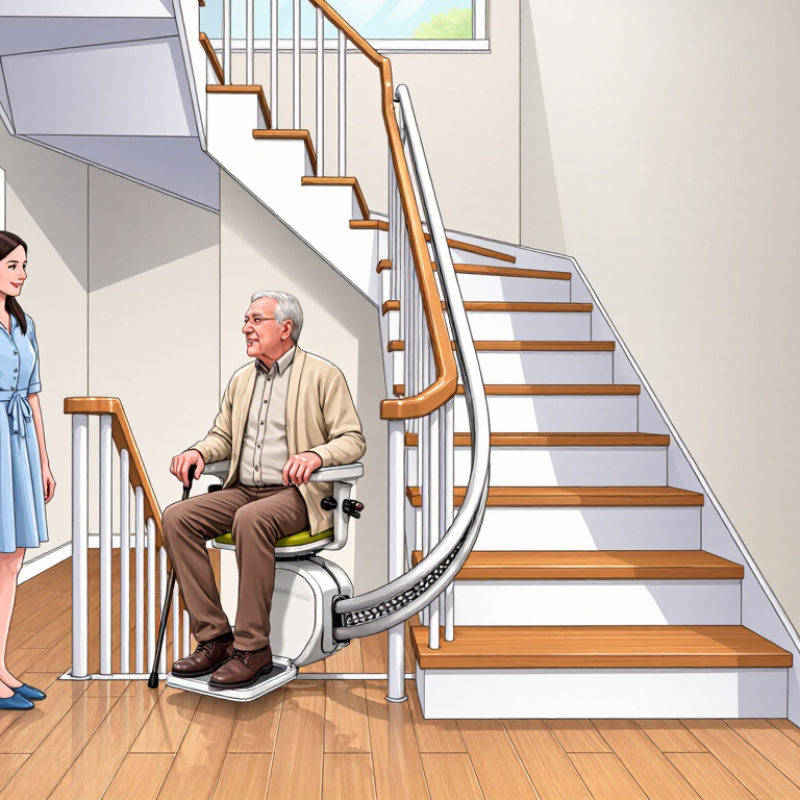
Assess the User’s Mobility Needs and Staircase Layout
Choosing a home stair lift starts with the person who will use it, not just the staircase. Notice how they manage sitting, standing, turning, and transferring onto a seat. Can they grip a rail comfortably? Do pain, fatigue, balance, or memory vary during the day? Small details matter. A short conversation with the user and, when appropriate, an occupational therapist can clarify what support is needed. Avoid assuming that someone who walks well on level ground can safely manage every transfer. Needs may change, too, so revisit the assessment if mobility declines.
Then examine the stairs in person. Measure their width, length, and available space at both landings. Note curves, narrow turns, door swings, radiators, and anything that could obstruct a folded seat or track. Measure twice. A staircase that looks straight may still have a tight turn near the top. The user should be able to sit down and rise without twisting awkwardly, while other household members retain a safe passage. Photos can help, but they cannot replace a site survey by a qualified installer. I would not choose a model from measurements alone; the person’s comfort and the home’s clearances need to work together.
How to Choose the Best Home Stair Lift? — Assess the User’s Mobility Needs and Staircase Layout
| Assessment Area | What to Check | How It Affects the Choice | Practical Next Step |
|---|---|---|---|
| Ability to transfer | Can the user sit down on and stand up from a seat safely, with or without assistance? | A seated stair lift may suit someone who can transfer reliably. Difficulty with transfers may require an occupational therapist or other qualified professional to assess alternatives and support needs. | Observe a normal chair transfer and discuss any assistance needed with the user and their care team. |
| Sitting balance and posture | Can the user remain seated and upright during a ride? Consider pain, involuntary movement, and the ability to use a seat belt. | Seat shape, armrests, footrest support, and restraint arrangements should match the user’s needs and the lift’s instructions. | Ask the installer about available adjustments and demonstrate how the user will sit and secure the restraint. |
| Weight and equipment | Check the user’s weight and whether they need to carry a walking aid, oxygen equipment, or other items. | The selected lift must remain within its stated load limit. Items carried on the ride may affect balance, clearance, or safe operation. | Confirm the manufacturer’s rated capacity and plan how mobility aids and personal items will be moved separately if needed. |
| Ability to operate controls | Can the user comfortably reach and operate the controls? Consider grip strength, vision, memory, and dexterity. | Control position and design should be usable from the seat and at the landing. Remote controls may help when another person needs to call or park the lift. | Try the controls during a demonstration and check that the user can stop the lift and follow the operating instructions. |
| Staircase type | Identify whether the stairs are straight or include a turn, curve, intermediate landing, or change in direction. | Straight staircases may accommodate a straight rail. Curved or multi-flight stairs typically require a rail designed and measured for the specific staircase. | Have a qualified installer measure the full route, including turns and landings. |
| Stair width and clearance | Measure the usable width and note handrails, doors, radiators, trim, and other obstructions. | The rail, seat, and folded parts must fit without creating an unsafe obstruction. Required clearance varies by lift and home layout. | Ask the installer to assess the staircase in both the in-use and folded positions; do not rely on a single width measurement. |
| Top and bottom landings | Check whether there is enough space to get on and off safely, open nearby doors, and turn or move away from the stairs. | Landing space can affect where the lift parks and whether a swivel seat or a different parking position is needed. | Include door swings, nearby corridors, and the user’s transfer method in the site assessment. |
| Power and charging | Ask how the lift is powered and where charging points or electrical connections are needed. | Many stair lifts use rechargeable batteries, but charging arrangements and operation during a power interruption vary by model. | Confirm charging locations, backup behavior, and the supplier’s maintenance instructions before installation. |
| Other household members | Consider whether other residents need to use the stairs and whether the lift can be folded or parked clear of the route. | A folded seat and footrest may reduce obstruction, but the remaining passage width depends on the staircase and equipment. | Ask the installer to demonstrate the folded position and verify that the stairs remain usable for the household. |
| Changing needs and support | Consider whether mobility or transfer ability may change, and who can assist with everyday use. | A suitable choice should work with the user’s current abilities while taking safe assistance and future reassessment into account. | Discuss changing needs with a healthcare professional and review servicing, warranty, and emergency support arrangements. |
Note: Stair dimensions, clearance requirements, weight limits, and safe operating procedures vary by equipment and home. Arrange an in-home assessment by a qualified stair-lift installer before choosing or installing a lift.
Related Posts
-
7 Best Home Stair Lifts for Safe Easy Access
-
2026 Best Mobility Lift Types for Global Buyers?
-
How to Choose the Best Lift Chairs in 2026?
-

2026 Best Mobility Scooters and Wheelchairs for Global Buyers?
-
How to Choose the Right Mobility Van?
-

Top Mobility Scooter Lifts for Enhanced Accessibility and Convenience?