How to Choose the Best Mobility Scooters in 2026?

In 2026, the best mobility scooter is not necessarily the newest, fastest, or most expensive model. It is the one that fits your daily routes, physical needs, and storage space. A scooter that handles a smooth shop floor may struggle on uneven pavement or a steep driveway. Small details count.

This guide compares practical features, including turning radius, seat comfort, battery range, portability, and weight capacity. It also explains how to read manufacturer specifications without treating advertised range as a guarantee. Temperature, hills, rider weight, and battery age can affect real-world performance. A short test ride can reveal awkward controls or a difficult transfer that product photos cannot show.

The phrase “mobility scooters on mobility” may appear in searches, but useful advice should go beyond keywords and sales claims. Compare reliable product documentation, ask about servicing and replacement batteries, and consider advice from a qualified healthcare professional when your needs are changing. A dealer demonstration may help, though one brief ride will not answer everything. I would not choose from a feature list alone; even experienced buyers can overlook everyday obstacles, such as a narrow doorway or a heavy scooter lift. The sections ahead offer a clear way to weigh those trade-offs and choose with fewer surprises.
How to Choose the Best Mobility Scooters in 2026?

Map daily distances, terrain, and rider needs before choosing a scooter

Before comparing scooters, write down the trips you actually make. Measure a typical day, including the return journey, detours, and any time spent moving around indoors. A short shopping trip can involve more distance than expected. Keep a little range in reserve; hills, cold weather, rider weight, and frequent stops can all affect battery use. Published range figures are useful, but they may not match your routine.

Terrain matters just as much. Note whether your route includes cracked pavement, steep driveways, gravel paths, or tight shop aisles. Larger wheels and higher ground clearance can help on uneven surfaces, while a compact scooter may turn more easily indoors. There is a trade-off. A scooter that feels stable outside may be awkward in a narrow hallway, so test it in spaces you use often.

Then consider the rider, not just the route. Check seat comfort, legroom, control reach, turning space, and the ease of getting on and off. If possible, try the controls while seated and ask a qualified mobility professional about fit. Small details matter. A stiff hand or limited balance can change what feels manageable. I would not assume one test ride settles everything; fatigue later in the day can reveal problems that a quick demonstration misses.

Compare three-wheel turning space with four-wheel stability and load capacity

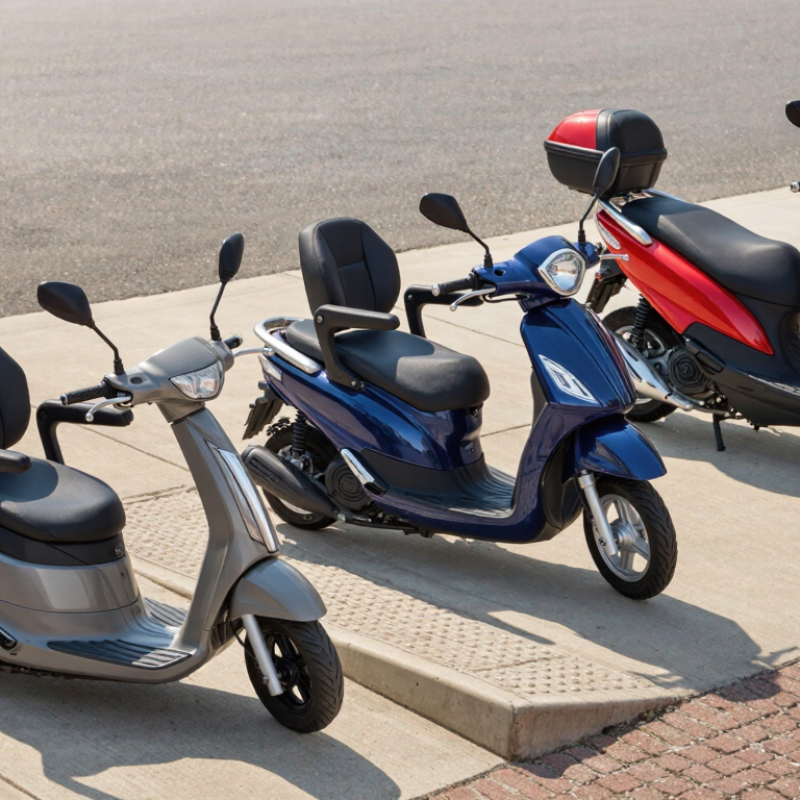
A three-wheel mobility scooter usually needs less space to turn, which can matter in a small kitchen, crowded shop, or narrow apartment hallway. Its open front wheel area may make it easier to approach a table or pivot around a chair. Measure the tightest doorway and turning area at home before choosing. A compact turning radius sounds useful, but it does not guarantee easy handling on every surface.

Four-wheel models generally offer a wider, steadier base, which can feel reassuring on uneven paths or ramps. They may also support a higher stated load, but check the manual for the exact limit and include bags or other carried items. Stability and capacity vary by model, so the wheel count alone is not enough. It is easy to overvalue a tight turn and overlook balance, or assume four wheels solve every outdoor challenge. That shortcut can mislead. If possible, test both layouts with the seat adjusted, make a slow turn, and try a surface similar to your usual route. A short test may reveal more than a specification sheet.

Check advertised range against ISO 7176-4 distance measurement

How to Choose the Best Mobility Scooters in 2026?

An advertised range is useful only when you know how it was measured. Check whether the figure comes from testing under ISO 7176-4, which provides a method for measuring the distance a powered mobility device can travel. Ask for the test conditions, not just the number. A result from a controlled test may differ from everyday use. Rider weight, hills, frequent stops, temperature, and battery condition can all affect distance. A long range on paper is not a promise.

Tips: Compare scooters using the same measurement method. Ask whether the test used a level surface and what load was carried. Then consider your usual route: a flat trip to a nearby shop differs from a hilly commute. Leave a practical buffer instead of planning to use every advertised mile. Small details matter.

Read the manual and test the scooter, if possible, with a realistic load and route. Note the battery level before and after a familiar journey. That won’t replace standardized testing, but it can help you judge whether the stated range suits your routine. I would not treat one test figure as a perfect forecast; real trips are messier.

How to Choose the Best Mobility Scooters in 2026? — Check Advertised Range Against ISO 7176-4 Distance Measurement

Comparison dimension What the specification means What to verify before buying Why it matters
Advertised maximum range The distance stated by the seller or manufacturer. It may be based on controlled test conditions rather than typical daily use. Ask for the test method, route conditions, payload, speed, battery configuration, and whether the figure is a measured result or an estimate. A range number without its test conditions is difficult to compare fairly with another scooter.
ISO 7176-4 distance measurement ISO 7176-4 specifies a method for determining the theoretical distance range of electrically powered wheelchairs and scooters from energy-consumption measurement. Look for a report or test statement that identifies ISO 7176-4 and the tested scooter configuration. Check that the result refers to the same battery setup as the product offered. A standard-based result provides a more consistent basis for comparison, but it is not a promise of the distance every rider will achieve.
Test conditions and rider load Range can be affected by the test load and operating conditions used during measurement. Compare the stated test load with your expected rider weight and any carried items. Ask whether the test used a level, controlled route. Greater load, slopes, frequent stops, and other demanding conditions can increase energy use and reduce distance.
Battery capacity and configuration Battery voltage and ampere-hours describe electrical characteristics; nominal watt-hours can be calculated as volts multiplied by ampere-hours. Confirm the battery voltage, ampere-hour rating, number of batteries, battery type, and whether the stated range applies to the included configuration. Battery figures help describe the system, but they do not by themselves establish the scooter’s usable range.
Battery condition and charging Available battery energy can change with age, storage, charging practices, and battery condition. Check the charging instructions, expected battery replacement requirements, and the warranty terms for the battery. A scooter with an older or poorly maintained battery may travel less far than its original test result suggests.
Route, terrain, and surfaces Uphill travel, rough surfaces, soft ground, and repeated changes in direction can require more energy than steady travel on a smooth route. Match the scooter’s intended use to your usual route, including slopes, kerbs, surface types, and indoor or outdoor travel. Your route may differ substantially from a controlled distance-measurement test.
Speed and stop-start use Driving speed and frequent acceleration or stopping can affect energy consumption. Check the scooter’s speed settings and consider how often your trips involve traffic, crossings, or short journeys with frequent stops. Real-world energy use depends on how the scooter is driven, not only on its battery capacity.
Tyres, wheels, and maintenance Tyre type, tyre condition, and general mechanical condition can affect rolling resistance and energy use. Review the maintenance schedule and check tyre pressure where applicable, tyre wear, brakes, and wheel condition. Correct maintenance supports safe operation and helps avoid unnecessary resistance that can reduce distance.
Practical travel allowance A user’s achievable distance may be lower than a published test figure because personal and route conditions vary. Compare the scooter’s supported test information with your daily round-trip distance, and allow for route changes and battery ageing. Choosing a scooter with a suitable margin helps reduce the risk of running short of charge during normal use.

Buying tip: Treat advertised range as a comparison figure, not a guaranteed daily distance. Ask for the ISO 7176-4 test information and compare results only when the scooter configuration and test conditions are clear.

Verify UK speed limits: 4 mph on pavements and up to 8 mph on roads

How to Choose the Best Mobility Scooters in 2026?

When comparing mobility scooters in the UK, check the permitted speed for each vehicle class. Class 2 scooters are limited to 4 mph and are designed for pavement use. Class 3 scooters can travel at up to 8 mph on roads, but must be limited to 4 mph on pavements. These are maximum speeds, not targets for every journey. A crowded high street or uneven paving may call for a slower pace.

Tips: Ask the seller to demonstrate the speed controls. Check that the pavement setting works before you ride. Try turning and braking in a clear, level area.

Also consider where you travel most. A Class 3 scooter may suit regular road journeys, while a smaller scooter can be easier to manage indoors or in shops. Check the route, visibility, seat comfort, and storage space, not just the speed figure. A quick test ride can reveal awkward controls or a tight turning circle.

I would still question any choice based only on top speed; comfort and confidence matter more on an ordinary Tuesday than a number on a product sheet.

Budget for upkeep and check Medicare Part B’s typical 80% coverage after the deductible

A scooter’s purchase price is only part of its real cost. Set aside money for battery replacement, tire repairs, routine servicing, and transport if the scooter stops working. Ask for a written estimate of likely upkeep before choosing a model. A battery that loses charge halfway through a grocery trip can quickly turn a bargain into a burden. It happens.

Medicare Part B may cover a mobility scooter when it is considered medically necessary and ordered after an in-person evaluation by an eligible health care provider. For covered durable medical equipment, Medicare generally pays 80% of the Medicare-approved amount after you meet the Part B deductible; you are usually responsible for the remaining 20%. Coverage is not automatic. Your diagnosis, medical records, prior authorization rules, and supplier participation can affect payment. Confirm current requirements and costs with Medicare or your plan before ordering, since approved amounts and coverage details may change. Get the supplier’s estimate in writing, including any amount Medicare may not approve. I would not rely on a verbal “it should be covered.”

ACCESS ABILITY Home Medical Store has a Beautiful showroom in Cudahy To Serve You!

Corporate Office And Store
Cudahy, Wisconsin

1995 E Norse Ave
Cudahy, WI 53110
Phone: 414-486-6249
Fax: 414-486-5728